
Chiropractic care
Chiropractic Adjustments
A Hands-On Approach to Musculoskeletal Care
Chiropractic adjustments commonly involve spinal manipulation: controlled force applied to selected spinal joints. Whether this approach is appropriate depends on your history, examination findings, symptoms and individual circumstances.
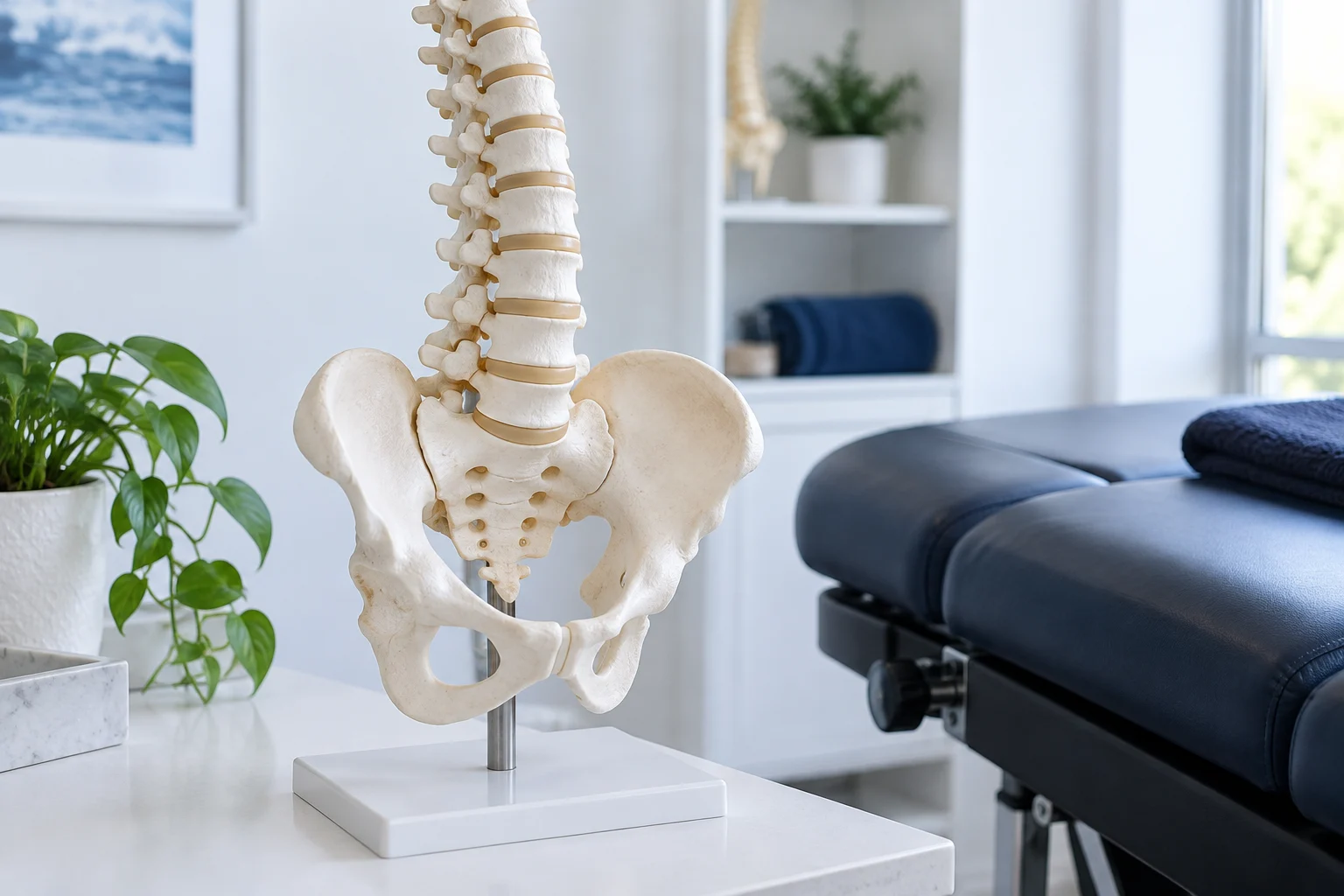
Understanding the technique
What Is a Chiropractic Adjustment?
Spinal manipulation uses a controlled thrust at a spinal joint, delivered by hand or with a device. Force and technique can vary. Mobilization is a related approach that moves a joint without a thrust.
This describes joint movement, not bones being put back into place or a correction of disease-causing spinal misalignment.
During treatment
What Happens During an Adjustment?
Positioning depends on the area and technique. Dr. Goldstein explains the approach before applying controlled movement or force. Tell them about discomfort or concerns.
Some techniques produce a pop associated with pressure changes in a joint. A sound is not required, and it does not establish that treatment worked. The approach may be modified for the individual.
Selected musculoskeletal concerns
When Might Spinal Manipulation Be Considered?
It may be considered for selected low-back or neck-pain presentations as one option within conservative care. Pain or restricted movement alone does not determine whether manipulation is suitable.
Explore Conditions & Concerns →What the evidence says
What Can Chiropractic Adjustments Realistically Do?
Low-Back Pain
Research suggests small or modest improvements in pain and function for some low-back pain presentations. The 2026 Cochrane review of chronic low-back pain found little to no difference in pain and small functional improvement compared with other conservative care, with low to very low certainty.
Neck Pain & Expectations
Some neck-pain studies suggest benefit, but evidence is limited by small studies, differing methods and inconsistent results. Response varies. These findings do not establish a cure, permanent correction or superiority to all alternatives.
Before treatment
Not Every Patient Needs an Adjustment
Evaluation considers symptoms, examination and neurological findings, trauma history, medical conditions, medications, prior records and your preferences.
Another conservative approach or referral may be more appropriate. Attending an evaluation does not mean you have agreed to an adjustment.
An informed decision
Are Chiropractic Adjustments Safe?
Temporary soreness, discomfort, stiffness or headache can occur. Serious complications have also been reported. They are rare, but their frequency cannot be estimated precisely.
Neck manipulation has been associated with tears in neck arteries that can lead to stroke. Whether manipulation causes these tears remains debated; this uncertainty does not remove the need to discuss the potential risk.
Review individual risks, health history and alternatives before deciding.
Read NIH NCCIH Safety Information →Clinical judgment matters
When Might an Adjustment Be Modified or Avoided?
Suspected fracture, significant trauma, progressive neurological symptoms, severe osteoporosis, certain vascular conditions or bone or joint infection may require medical assessment and avoiding manipulation.
These are examples, not a self-screening checklist. Age, health history, comfort and preferences also inform technique selection. Choosing a lower-force approach does not make every condition suitable for treatment.
After a collision
Adjustments After a Car Accident
An accident does not automatically make manipulation appropriate. Evaluation may indicate a need for medical assessment, imaging, referral, modified care or rehabilitation instead. Not every patient with whiplash should be adjusted.
Explore Auto Accident Care →Active patient care
Adjustments for Sports & Active Patients
Selected active patients with musculoskeletal complaints may discuss manipulation as one part of care after evaluation. Its use is not a promise of better performance, injury prevention or faster recovery.
Explore Sports Injury Care →An active part of care
Adjustments & Rehabilitation
Manual care may accompany exercise, movement and self-management when appropriate. NICE recommends considering manual therapy for low-back pain only within a package that includes exercise.
An adjustment is not a prerequisite for exercise. Progression should fit your abilities and response.
Explore Rehabilitation →Consider the options
Other Approaches May Be Part of Care
Other available approaches include manual therapy, rehabilitation, IASTM, shockwave therapy, laser therapy, and decompression and traction. Availability is not a recommendation for every complaint; the evidence and suitability differ by condition.
Custom orthotics are a separate personalized support product.
Explore Services →Your choice
Your Comfort & Preferences Matter
Ask about technique, alternatives, comfort or a preference for lower-force approaches. You can decline manipulation, including neck manipulation. Consent is not automatic.
Discuss what an alternative can reasonably offer and whether it is appropriate for your circumstances.
Meet Dr. Goldstein
Chiropractic Care with Dr. Brett Goldstein
Dr. Brett Goldstein, D.C. begins with evaluation and individualized recommendations. Technique selection, rehabilitation and referral or co-management depend on the findings and your needs.
Meet Dr. Goldstein →Your first conversation
What to Expect at Your Visit
Discuss Your Concerns
Share symptoms, history and preferences.
Evaluation
Review movement and relevant examination findings.
Review Options
Discuss potential benefits, risks and alternatives.
Treatment If Appropriate
Proceed only when appropriate and with your agreement.
Treatment proceeds only when appropriate. It may not begin at the first visit.
Common questions
Chiropractic Adjustment FAQs
What is a chiropractic adjustment?
A technique using controlled force at selected joints, commonly in the spine. The approach and force vary with the technique and individual circumstances.
Is spinal manipulation the same thing?
Spinal manipulation is the medical term commonly used for spinal adjustments involving a controlled thrust. Mobilization is different: it uses movement without a thrust.
Why does an adjustment sometimes make a popping sound?
A pop can occur with pressure changes and gas-cavity formation in a joint. It is not proof that a bone moved back into place, and a sound is not required for manipulation to have occurred.
Does an adjustment put my spine back into alignment?
An adjustment is better described as controlled force and movement at a joint, not literally putting vertebrae back into place. A realignment explanation is not required to describe spinal manipulation.
Does every patient need an adjustment?
No. Evaluation, clinical findings and your preferences guide the options. Another approach or referral may be more appropriate.
Are chiropractic adjustments safe?
Temporary soreness, stiffness or headache can occur. Rare serious complications have been reported, including vascular and neurological problems associated with neck manipulation. Discuss individual risks and alternatives before deciding.
Can I be adjusted after a car accident?
Not automatically. Trauma history and examination come first; some findings require medical assessment, imaging, referral or a different approach.
Can chiropractic adjustments help back pain?
Spinal manipulation may offer small improvements in pain or function for selected low-back pain presentations. Benefits vary and are not guaranteed.
Can adjustments be combined with rehabilitation?
Yes, when appropriate. Exercise and self-management may be part of care; an adjustment is not required before exercise.
What if I do not want my neck adjusted?
Tell Dr. Goldstein before treatment. You can decline neck manipulation and discuss alternatives; your consent is not assumed.
How many adjustments will I need?
There is no fixed number for everyone. Recommendations and reassessment depend on your findings, goals and response. An adjustment at the first visit is not guaranteed.
Medical Information
General educational information, not individualized medical advice or a substitute for medical assessment or emergency care.
Sources: NIH NCCIH · Mayo Clinic · MedlinePlus: Evaluation & safety · Cochrane: Chronic low-back pain · NICE NG59 · Audible-pop systematic review
Chiropractic care
Wondering Whether an Adjustment Is Appropriate for You?
Start with an evaluation and a conversation about your symptoms, examination findings, preferences and appropriate treatment options.
Online scheduling is currently unavailable. No appointment request is sent from this page.
Contact the Office →