Shockwave therapy
Radial Shockwave Therapy for Musculoskeletal Care
A Noninvasive Treatment Option for Selected Musculoskeletal Problems
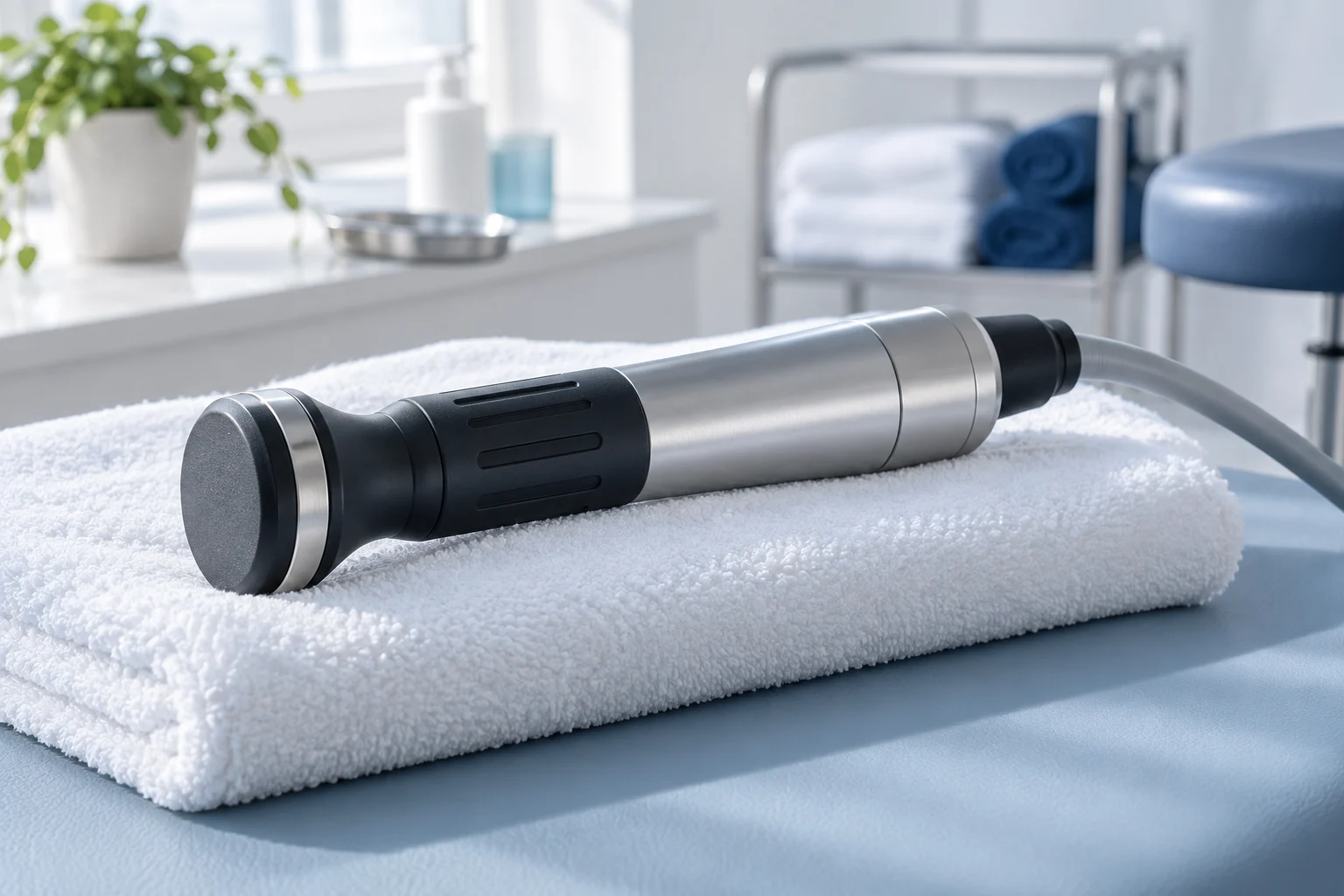
Dr. Goldstein offers radial shockwave therapy, also called radial pressure wave therapy. A handheld applicator delivers repeated pressure pulses through the skin to the treatment area. Whether it is appropriate depends on your condition, evaluation and available evidence.
Understanding the technology
What Is Shockwave Therapy?
The office uses radial pressure wave therapy. The applicator delivers pressure pulses that spread outward from the point of contact with the skin.
Radial pressure wave therapy is not an electrical shock, electrical stimulation, therapeutic ultrasound or surgery. Focused shockwave therapy is a different technology and is not offered at this office.
During treatment
What Happens During a Shockwave Session?
Dr. Goldstein identifies the treatment area and places a handheld applicator against the skin, using coupling gel where needed. The device delivers repeated pulses.
Settings may be adjusted for tolerance. Duration and treatment schedules depend on the device, protocol and clinical circumstances; there is no single schedule for everyone.
Your experience
What Does Shockwave Therapy Feel Like?
Treatment can feel like repetitive tapping or pulsing. It may be uncomfortable, particularly over a sensitive area.
Tell Dr. Goldstein about discomfort. He may be able to adjust treatment, but it may still be uncomfortable.
What the research shows
What Conditions Has Shockwave Therapy Been Studied For?
The conditions below have been studied using different shockwave technologies. This is a research overview, not a list of conditions automatically treated with the radial device at this office. Dr. Goldstein considers the evidence relevant to radial pressure wave therapy and your diagnosis before recommending care.
Persistent Plantar Heel Pain
Studied as a noninvasive option for persistent plantar heel pain, with treatment decisions based on assessment and prior care.
Achilles Tendinopathy
Studied for Achilles tendon problems at different locations. Research has not consistently shown added benefit; tendon loading remains an important consideration.
Patellar Tendinopathy
Studied for patellar tendon-related pain. Added benefit alongside exercise has not been consistently demonstrated.
Lateral Elbow Tendinopathy
Studied for persistent lateral elbow tendon pain. Research findings vary, so options should be discussed in the context of the individual presentation.
Calcific Rotator-Cuff Tendinopathy
Studied for rotator-cuff problems with calcification. Findings do not establish a routine benefit or apply to all causes of shoulder pain.
Results from other shockwave technologies cannot automatically be applied to radial pressure wave therapy. Dr. Goldstein will discuss the potential benefits, limitations and alternatives for your condition.
A selected persistent presentation
Shockwave for Plantar Heel Pain
Shockwave therapy has been studied as a noninvasive treatment option for persistent plantar heel pain. Evaluation and a review of prior care help determine whether it is appropriate within an individualized plan.
Foot support is a separate consideration based on assessment; orthotics and shockwave do not have to be used together.
Learn About Custom Orthotics →Diagnosis matters
Shockwave & Tendon-Related Problems
Shockwave has been studied for several tendon-related conditions and may be considered for selected presentations. The diagnosis, tendon location and treatment protocol matter.
Exercise or progressive tendon loading may remain important. Treatment decisions should consider condition-specific research and changes in symptoms and function.
Part of a broader plan
Combining Shockwave with Rehabilitation
Rehabilitation, progressive exercise and activity adjustment may be important components of care for tendon-related and other musculoskeletal problems. They can be incorporated alongside shockwave when appropriate.
Explore Rehabilitation →Activity and individual needs
Shockwave for Sports & Active Patients
Some active patients with an appropriate musculoskeletal presentation may discuss shockwave as one option. Decisions depend on the condition, not simply participation in sport.
An individualized plan considers symptoms, activity demands and rehabilitation needs. Return-to-activity decisions depend on clinical progress.
Explore Sports Injury Care →Realistic expectations
What to Expect from Shockwave Therapy
Response varies between individuals. Appropriateness depends on the condition and evaluation, with realistic goals discussed before treatment.
Shockwave may be one part of a broader care plan that includes rehabilitation or other conservative care. Progress can be monitored over time, with the plan adjusted or referral considered when appropriate.
Understanding the risks
What Are the Possible Side Effects?
Temporary discomfort, soreness, redness, swelling, bruising or an increase in symptoms can occur. These local reactions differ from less common complications.
Tendon ruptures have been reported following treatment; reports do not by themselves establish that treatment caused them. Discuss risks for the particular condition and technology before proceeding.
History and treatment area
When Might Shockwave Be Avoided or Modified?
Tell Dr. Goldstein about pregnancy, bleeding or clotting problems, blood-thinning medication, and infection or cancer in the proposed treatment area. These can affect whether, where or how treatment is considered.
Restrictions vary by technology and tissue. This is not a self-clearance checklist, and you should not stop prescribed medication on your own. A suspected serious injury needs appropriate medical evaluation.
An individualized plan
How Does Shockwave Fit with Other Care?
Based on your evaluation, Dr. Goldstein may discuss rehabilitation, activity changes, steps to follow at home, hands-on care or other conservative options.
The plan is individualized, with referral or co-management when appropriate.
Explore Services →Evaluation first
Shockwave Therapy with Dr. Goldstein
Dr. Brett Goldstein, D.C. starts with an evaluation and a conversation about whether shockwave is appropriate for you. He considers the evidence, your circumstances and what you can realistically expect.
Your plan may include rehabilitation. Dr. Goldstein will reassess your response and may recommend a referral or care shared with another clinician when needed.
Meet Dr. Goldstein →A considered approach
What to Expect at Your Visit
Discuss the Problem
Share symptoms, activity demands and prior care.
Evaluation
Review history and relevant examination findings.
Review Treatment Options
Discuss evidence, risks, alternatives and your preferences.
Shockwave If Appropriate
Treatment is considered only if suitable; it is not guaranteed at the first visit.
Common questions
Shockwave Therapy FAQs
What is shockwave therapy?
At this office, shockwave refers to radial pressure wave therapy. A handheld applicator delivers repeated pressure pulses through the skin. Dr. Goldstein evaluates whether it is appropriate for your condition.
Is shockwave the same as an electrical shock?
No. The treatment applies mechanical acoustic or pressure energy through the skin, not an electrical shock.
What does treatment feel like?
Repeated tapping or pulsing against the treatment area. Sensation varies with the area and settings.
What conditions has shockwave been studied for?
Research covers persistent plantar heel pain and several tendon-related problems, using different shockwave technologies. Those findings do not all apply to the radial treatment offered here. Dr. Goldstein considers the evidence for your condition and the office device before recommending care.
Does shockwave heal damaged tissue?
Research continues to investigate biological effects. Clinical decisions should be based on evidence for the specific condition and measurable outcomes such as symptoms and function, rather than assuming universal tissue regeneration.
How many sessions will I need?
There is no predetermined number for everyone. Whether to proceed or continue depends on the condition, device, protocol, response and reassessment.
Is shockwave painful?
It can be uncomfortable or painful. Tell Dr. Goldstein; settings may sometimes be adjusted for tolerance.
Are there side effects?
Temporary discomfort, soreness, redness, swelling or bruising can occur. Less common complications have also been reported. Your history and treatment area should be reviewed before deciding.
Can athletes use shockwave therapy?
Selected active patients may discuss shockwave for an appropriate condition. Evaluation, activity demands and rehabilitation needs guide the plan.
Is rehabilitation still important?
Yes. Individualized exercise and tendon loading may remain important and can be incorporated alongside shockwave when appropriate.
Is everyone a candidate?
No. The condition, medical history, treatment area, technology, risks and alternatives all matter. Evaluation comes first.
Medical Information
This page provides general educational information and does not replace individual medical evaluation or emergency care.
Sources: Mayo Clinic: technology and safety; plantar heel pain review; Achilles review; patellar review; NICE: tennis elbow; NICE: calcific shoulder tendinopathy. Reviewed September 2026.
Shockwave therapy
Wondering Whether Shockwave Is Appropriate for You?
Start with an evaluation and a conversation about your symptoms, diagnosis or examination findings, treatment options and what you can realistically expect.