Patient Exercise Library

Posture & Movement Awareness

Review the posture and upper-body movements selected during your visit.

A reminder of movements you may have been shown in the office—not an individual exercise prescription for every visitor. Your personal care instructions come first.

Exercise pictures use AI demonstration models—not Dr. Goldstein or real patients. Follow your individual care instructions.

Before You Begin · Safety & Setup

Use only the movements and equipment demonstrated during care. For floor exercises, make sure you can safely get down and up. You do not need to complete every exercise.

Follow restrictions after injury or surgery. Stop for sharp or increasing pain, new numbness or tingling, weakness or significant dizziness. Seek advice before restarting if symptoms persist.

Posture

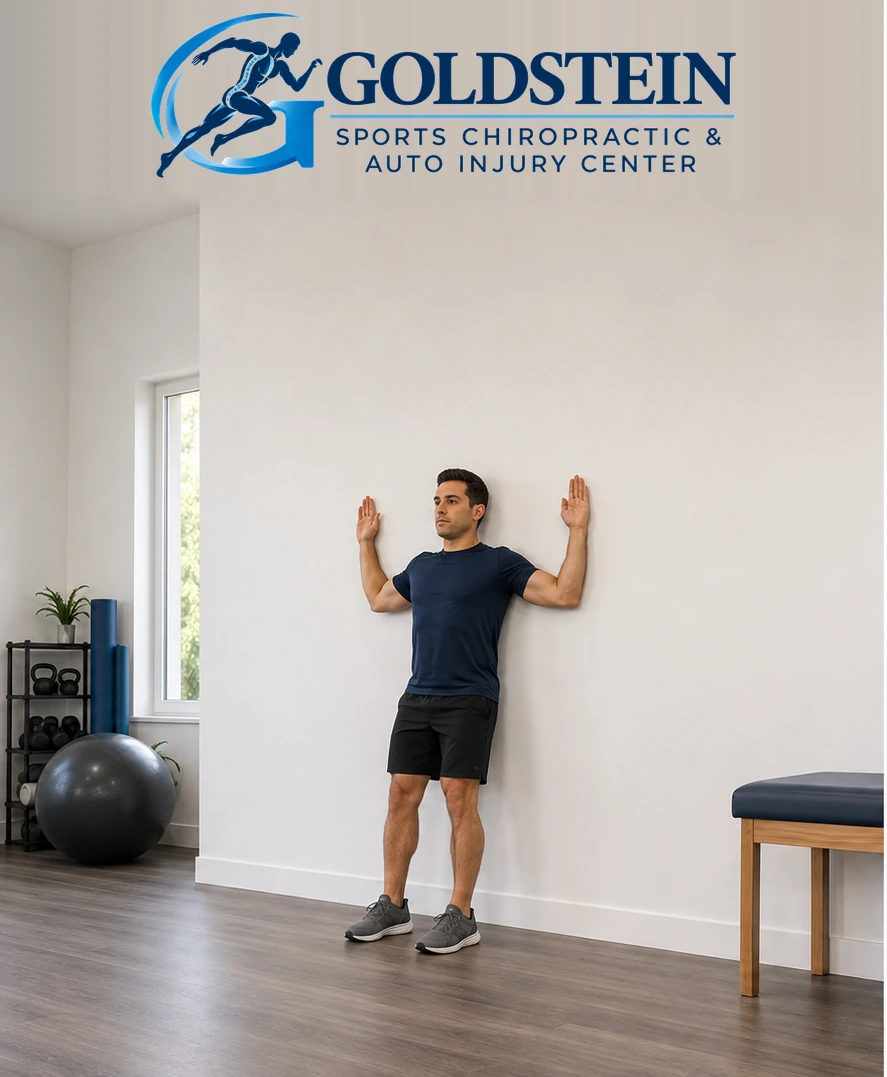
Wall Angels

Shoulder mobility with wall support.

Sets
2–3
Reps
10–15
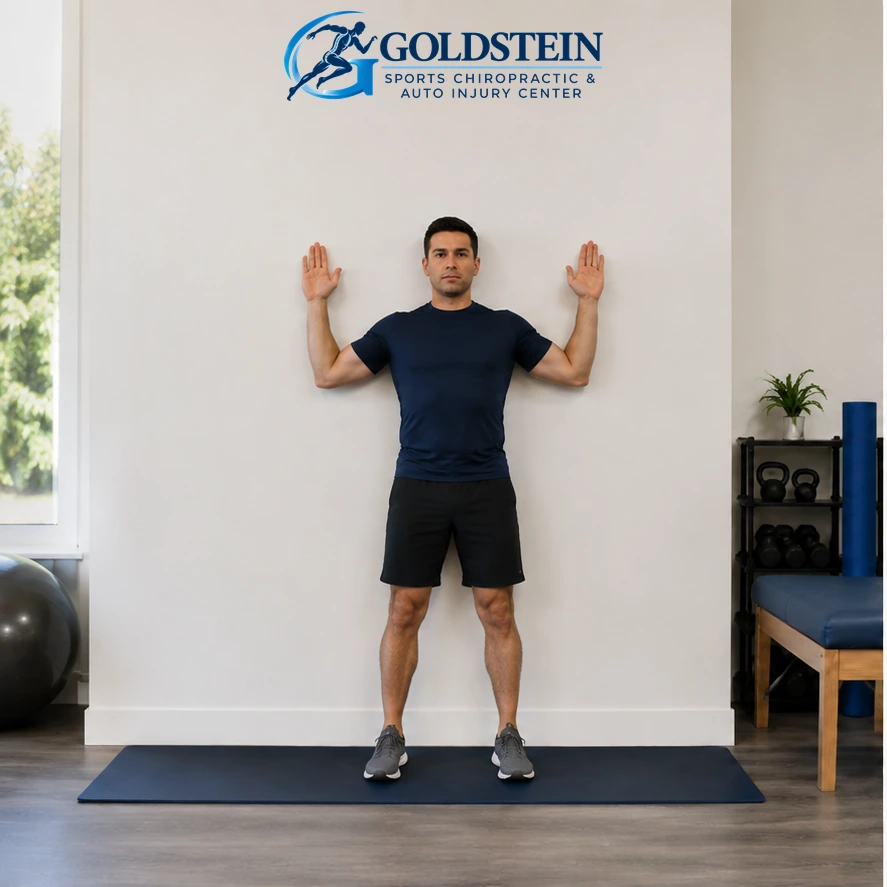
Start position. Temporary AI model demonstrating Wall Angels, not Dr. Goldstein. Start and movement positions are described in the instructions.

Start position

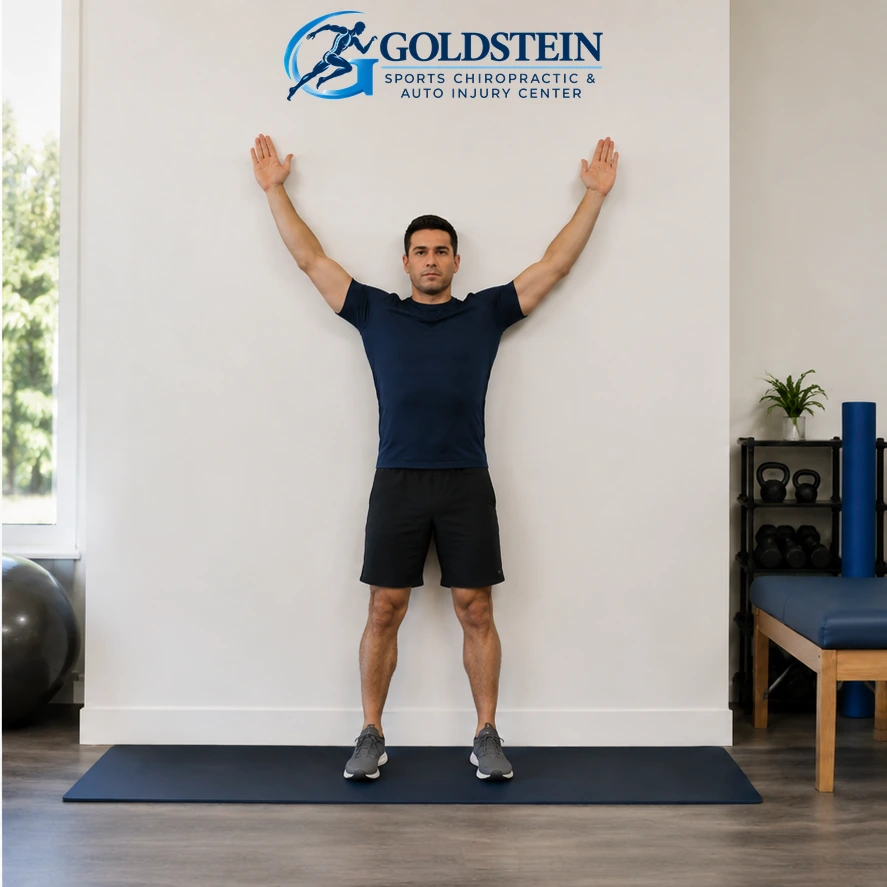
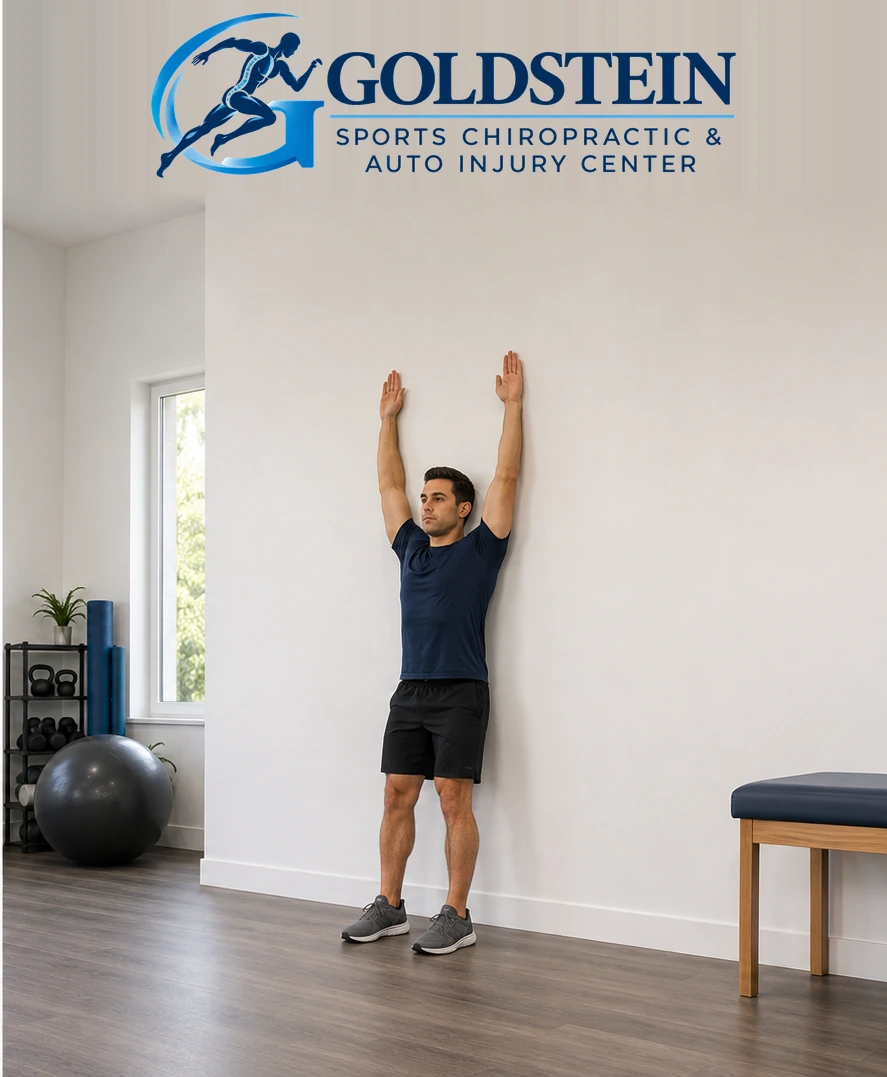
Movement position. Temporary AI model demonstrating Wall Angels, not Dr. Goldstein. Start and movement positions are described in the instructions.

Movement position

Exercise videoComing soon

Starting Position

Stand with your back against a clear wall, feet shoulder-width apart.

How to Do It

  1. Place your arms against the wall with elbows bent to 90 degrees and palms facing forward.
  2. Slide your arms upward, keeping contact as comfortably possible.
  3. Lower to the starting position.

What You Should Feel

Gentle movement around the shoulders.

Common Mistake

Avoid arching your lower back to gain reach.

Stop or Modify If

Stop for shoulder pinching, neck pain or increasing symptoms.
Back to Exercise Menu

Posture

Cat-Cow Stretch

Explore controlled spinal movement.

Sets
2–3
Reps
10–15
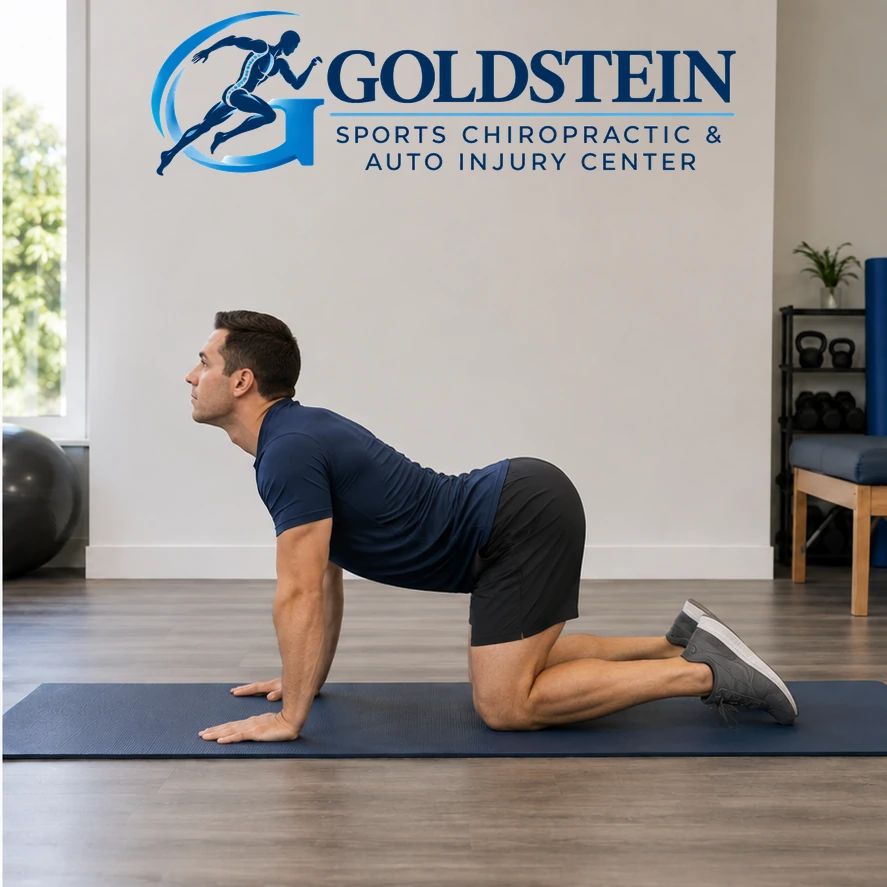
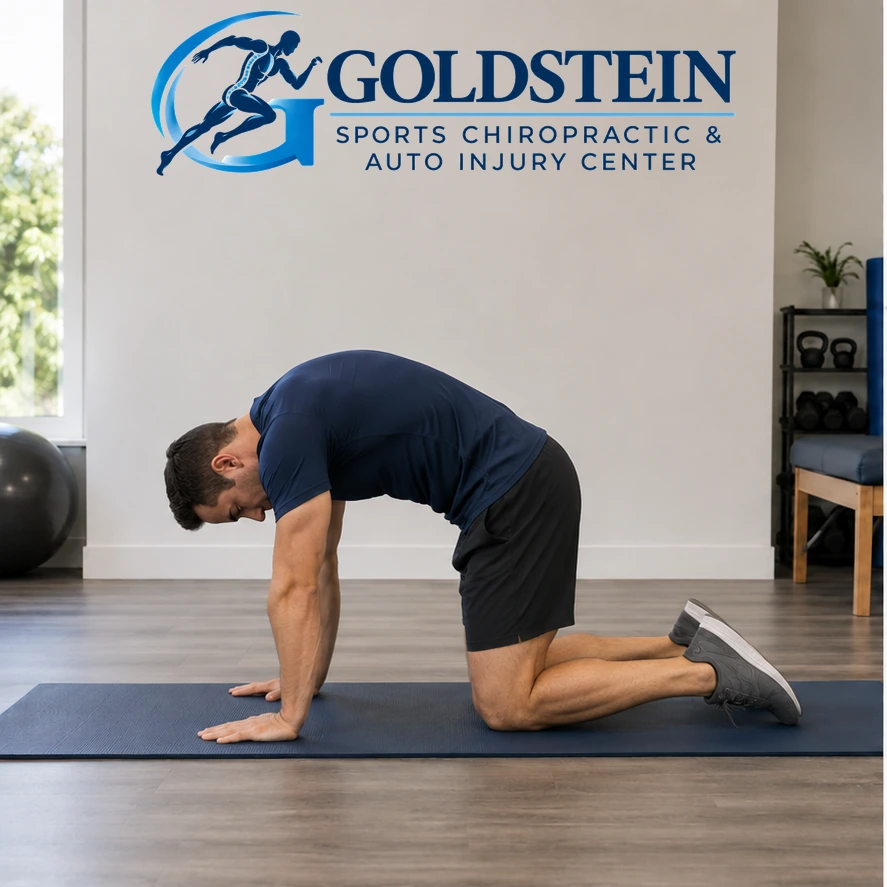
Rounded position. Temporary AI model demonstrating Cat-Cow Stretch, not Dr. Goldstein. Start and movement positions are described in the instructions.

Rounded position

Extended position. Temporary AI model demonstrating Cat-Cow Stretch, not Dr. Goldstein. Start and movement positions are described in the instructions.

Extended position

Exercise videoComing soon

Starting Position

Begin on hands and knees, hands under shoulders and knees under hips.

How to Do It

  1. Round your back toward the ceiling and ease your chin toward your chest.
  2. Then gently lower your belly and lift your head and tailbone.
  3. Alternate slowly within a comfortable range.

What You Should Feel

Gentle movement through the back.

Common Mistake

Avoid forcing either end of the movement.

Stop or Modify If

Stop for increasing back pain or symptoms into a leg.

Back to Exercise Menu

Posture

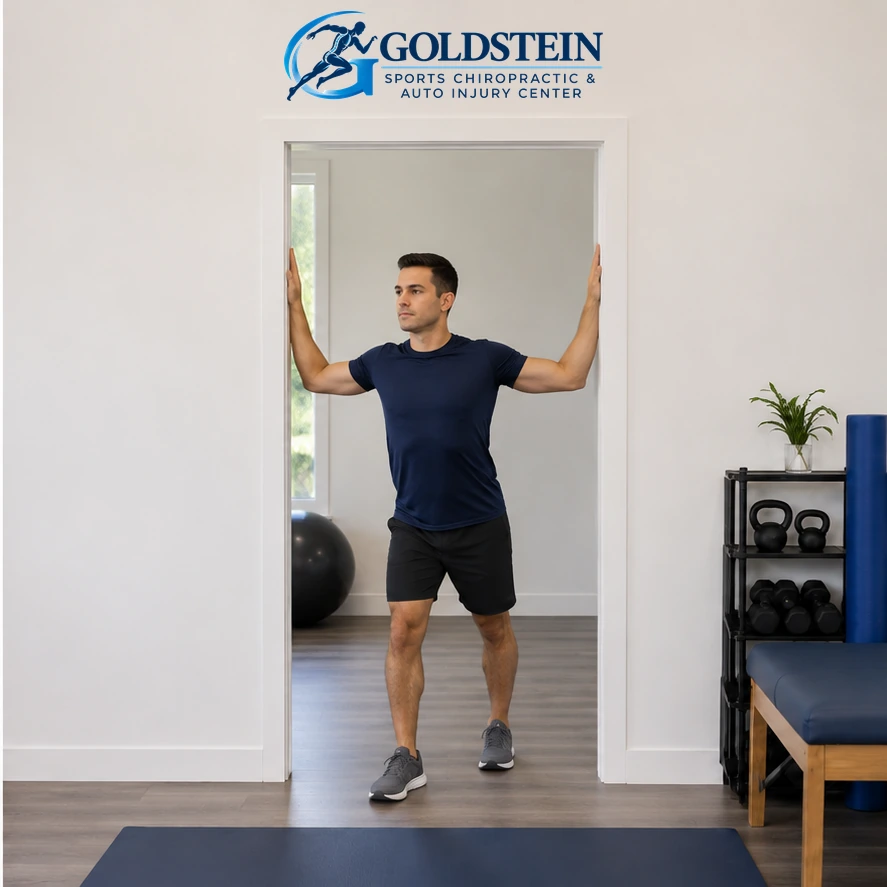
Doorway Pec Stretch

Explore a gentle chest stretch.

Hold
20–30 sec
Repeats
2–3
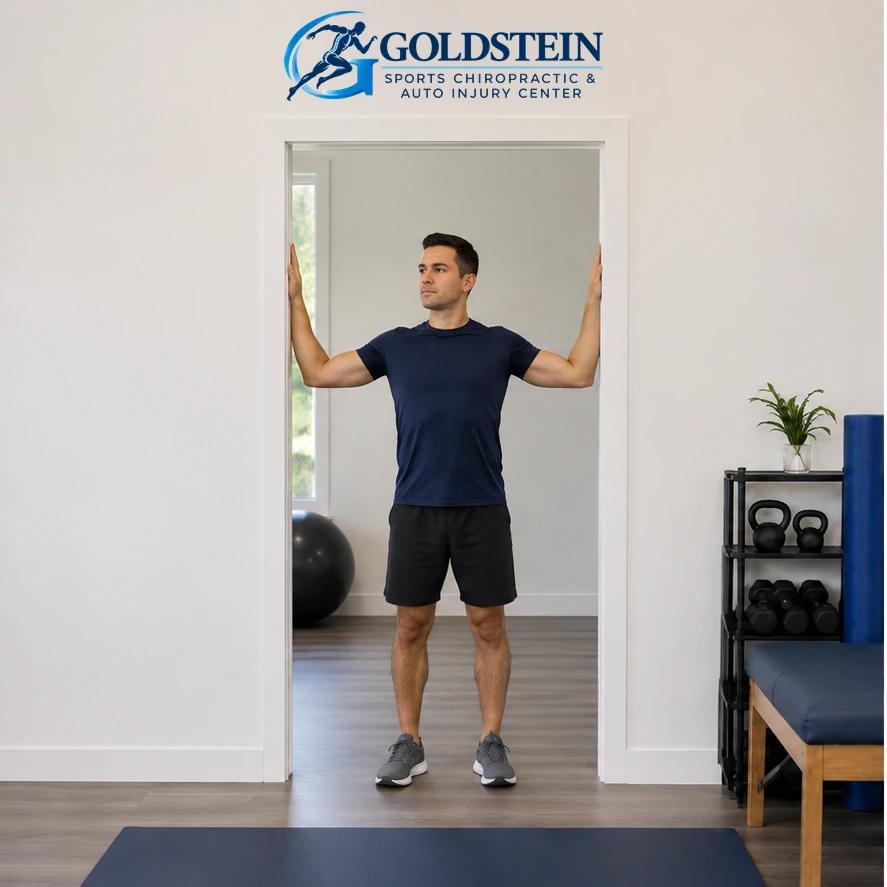
Start position. Temporary AI model demonstrating Doorway Pec Stretch, not Dr. Goldstein. Start and movement positions are described in the instructions.

Start position

Movement position. Temporary AI model demonstrating Doorway Pec Stretch, not Dr. Goldstein. Start and movement positions are described in the instructions.

Movement position

Exercise videoComing soon

Starting Position

Stand securely in a doorway with forearms against the frame and elbows bent to 90 degrees.

How to Do It

  1. Lean forward only until you feel a gentle chest stretch.
  2. Hold without bouncing.
  3. Ease back to release the stretch.

What You Should Feel

A gentle stretch across the chest, not pinching at the shoulder.

Stop or Modify If

Stop for shoulder pain, arm tingling or numbness.

Back to Exercise Menu

Posture

Open Book Stretch

Practice upper-back rotation.

Sets
2
Reps
10 each side
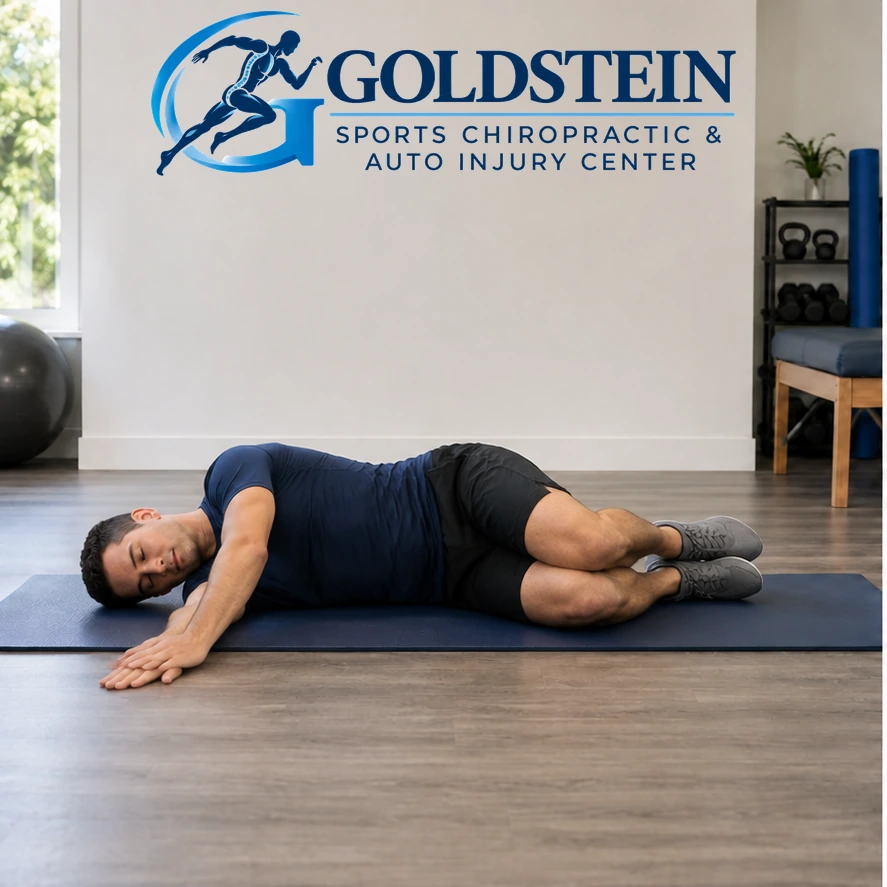
Start position. Temporary AI model demonstrating Open Book Stretch, not Dr. Goldstein. Start and movement positions are described in the instructions.

Start position

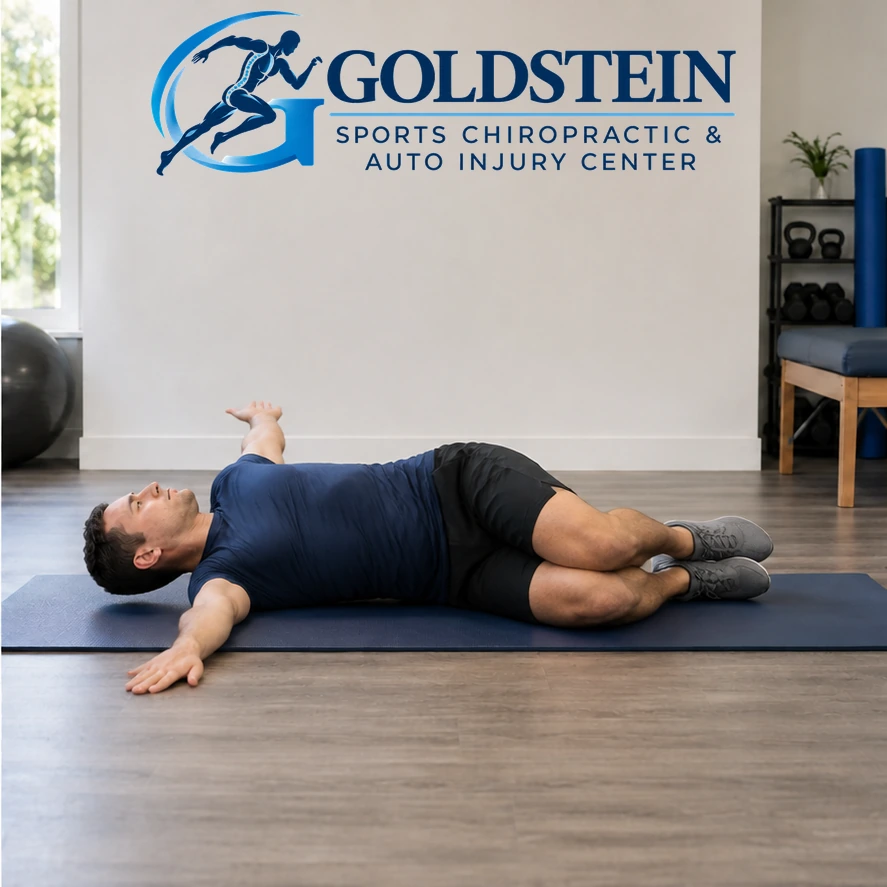
Movement position. Temporary AI model demonstrating Open Book Stretch, not Dr. Goldstein. Start and movement positions are described in the instructions.

Movement position

Exercise videoComing soon

Starting Position

Lie on your side with knees bent and both arms extended in front.

How to Do It

  1. Move the top arm across your body as you open your chest.
  2. Follow the hand with your eyes while keeping the lower body still.
  3. Return slowly. Repeat on the opposite side.

What You Should Feel

A gentle stretch through the chest and upper back.

Common Mistake

Keep the hips from rolling backward.

Stop or Modify If

Stop for increasing back, neck or shoulder symptoms.
Back to Exercise Menu

Posture

Foam Roller Chest Opener

Explore supported chest opening.

Hold
1–2 min
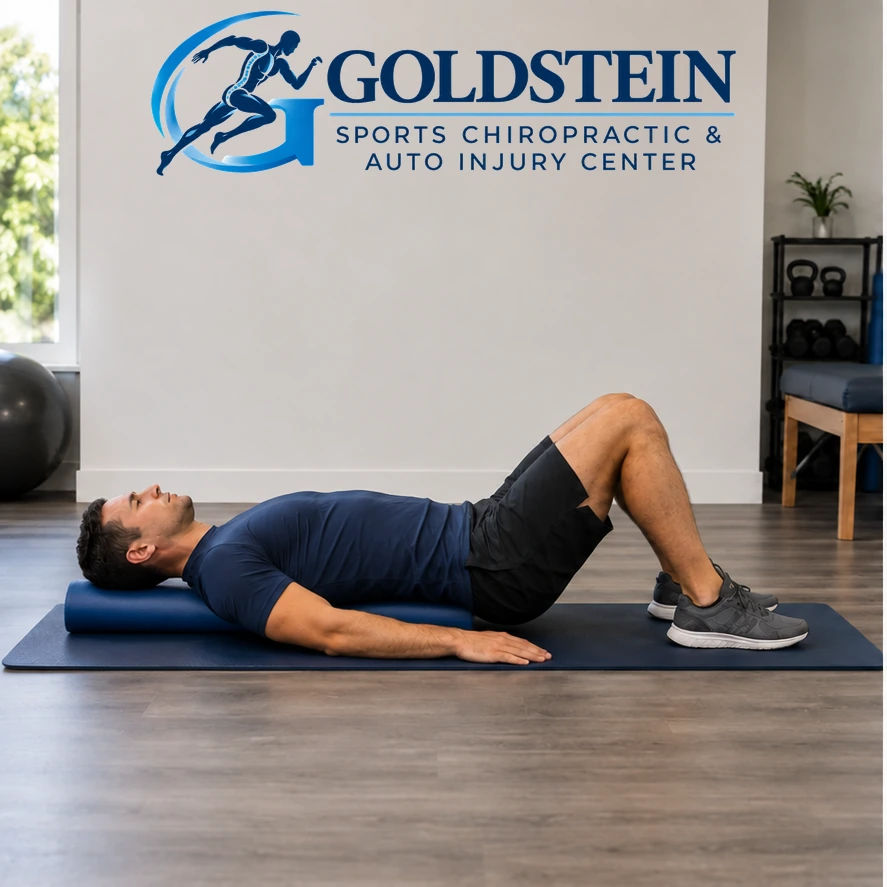
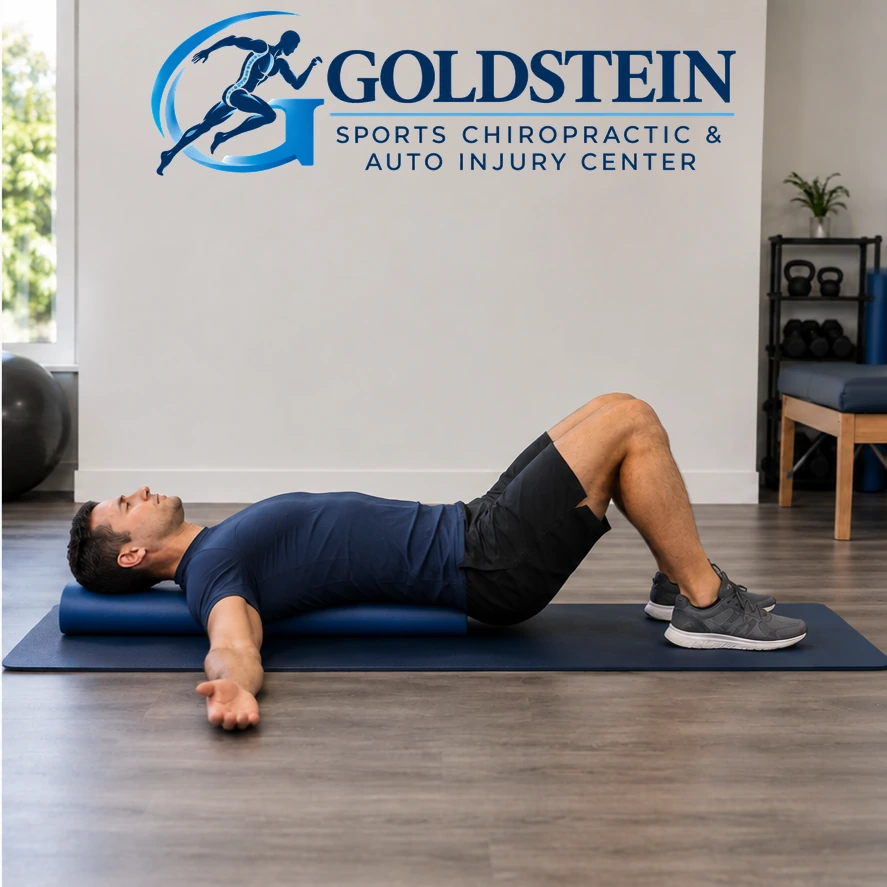
Start position. Temporary AI model demonstrating Foam Roller Chest Opener, not Dr. Goldstein. Start and movement positions are described in the instructions.

Start position

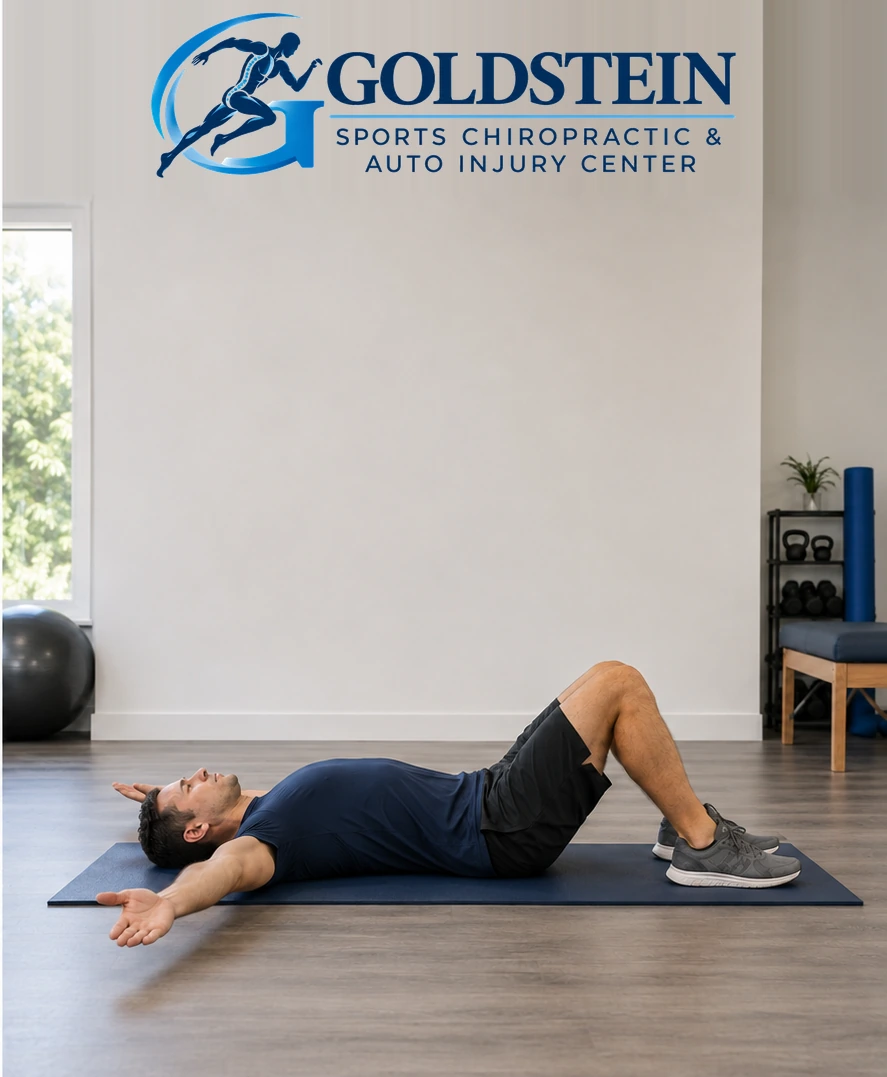
Movement position. Temporary AI model demonstrating Foam Roller Chest Opener, not Dr. Goldstein. Start and movement positions are described in the instructions.

Movement position

Exercise videoComing soon

Starting Position

Lie on your back with a foam roller running lengthwise along your spine. Use only a setup you can enter and leave safely.

How to Do It

  1. Open the arms out to the sides with palms upward.
  2. Let the chest relax without forcing the shoulders toward the floor.
  3. Hold comfortably, then bring the arms back in to release.

What You Should Feel

A gentle chest and front-of-shoulder stretch.

Stop or Modify If

Stop if the position causes pain or feels unstable.

Back to Exercise Menu

Posture

Diaphragmatic Breathing

Practice relaxed breathing awareness.

Duration
5–10 min
Frequency
Daily
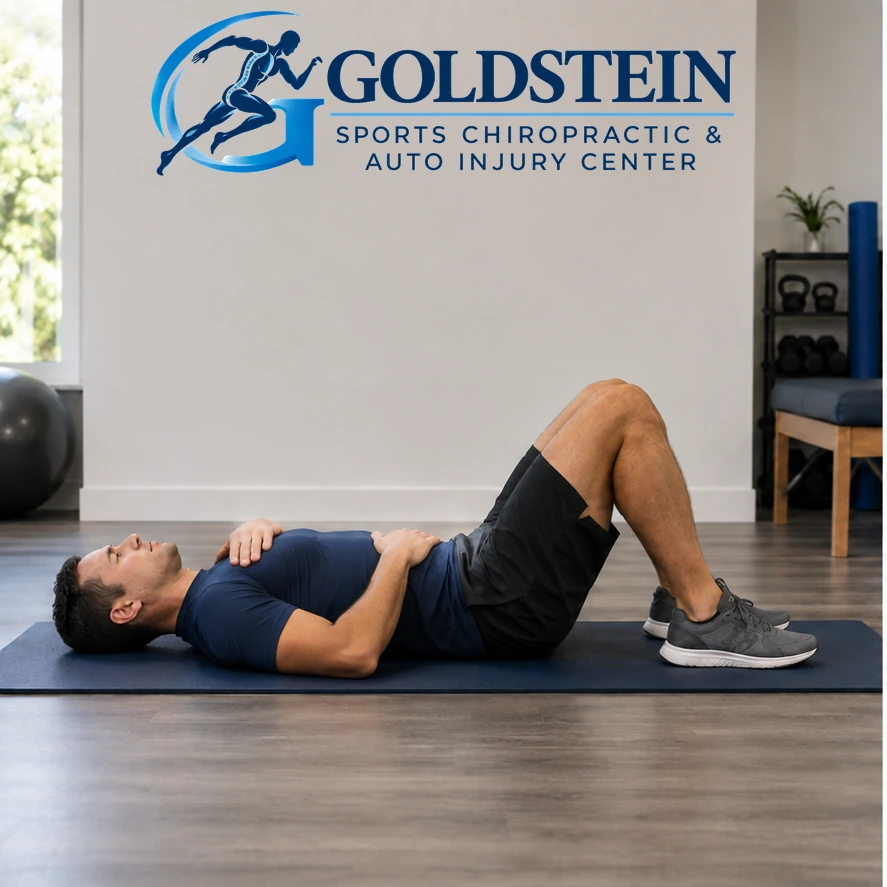
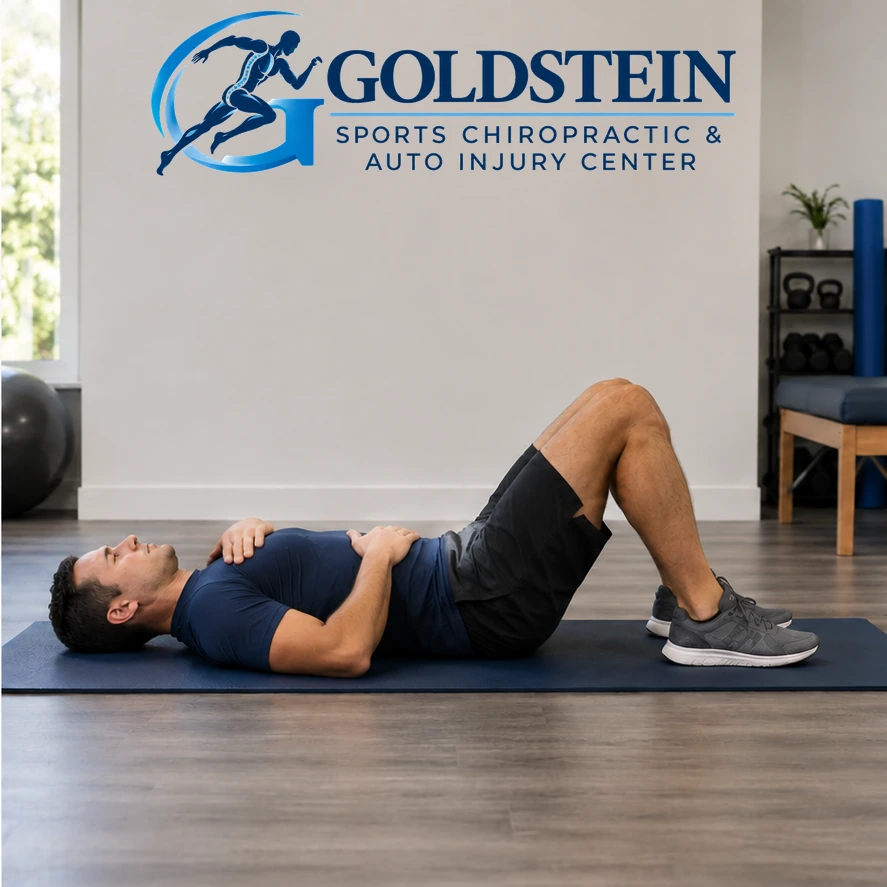
Relaxed exhale. Temporary AI model demonstrating Diaphragmatic Breathing, not Dr. Goldstein. Start and movement positions are described in the instructions.

Relaxed exhale

Gentle inhale. Temporary AI model demonstrating Diaphragmatic Breathing, not Dr. Goldstein. Start and movement positions are described in the instructions.

Gentle inhale

Exercise videoComing soon

Starting Position

Lie on your back with knees bent and feet flat. Place one hand on your chest and the other on your abdomen.

How to Do It

  1. Inhale slowly through your nose, allowing your abdomen to rise while your chest stays relatively still.
  2. Exhale slowly through your mouth, allowing the abdomen to fall.
  3. Continue without forcing the breath.

What You Should Feel

Easy breathing and gentle movement beneath the lower hand.

Stop or Modify If

Stop if you feel lightheaded or uncomfortable.

Back to Exercise Menu

Posture

Prone Ys and Ts

Practice controlled shoulder-blade muscle work.

Sets
2
Reps
10 each movement
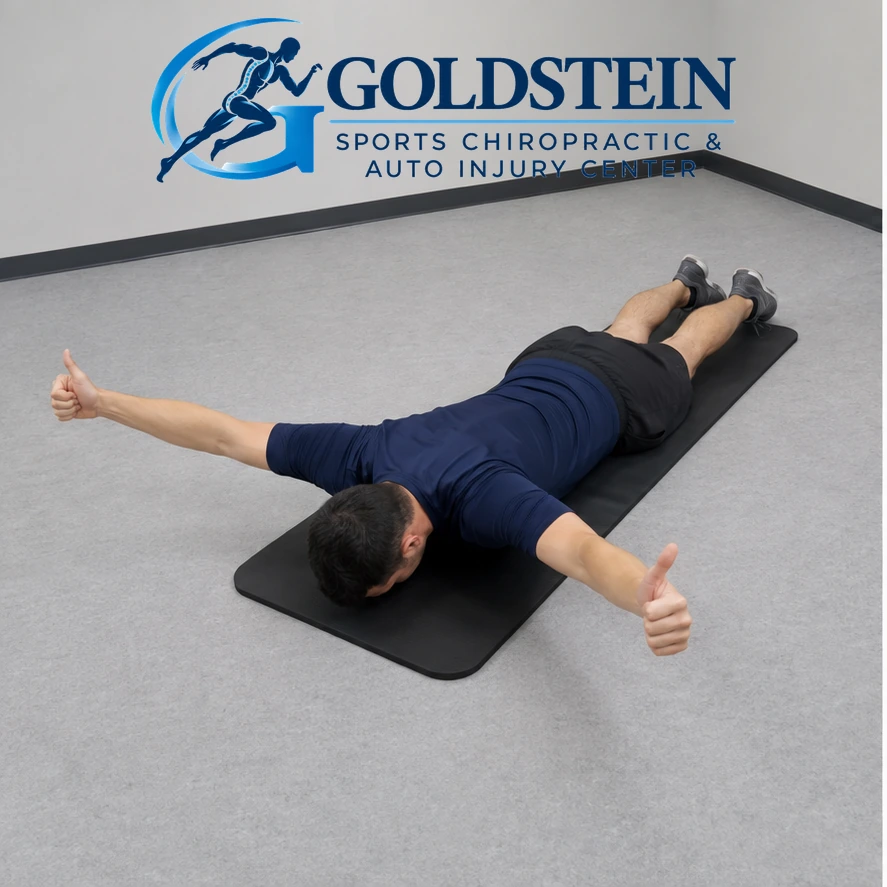
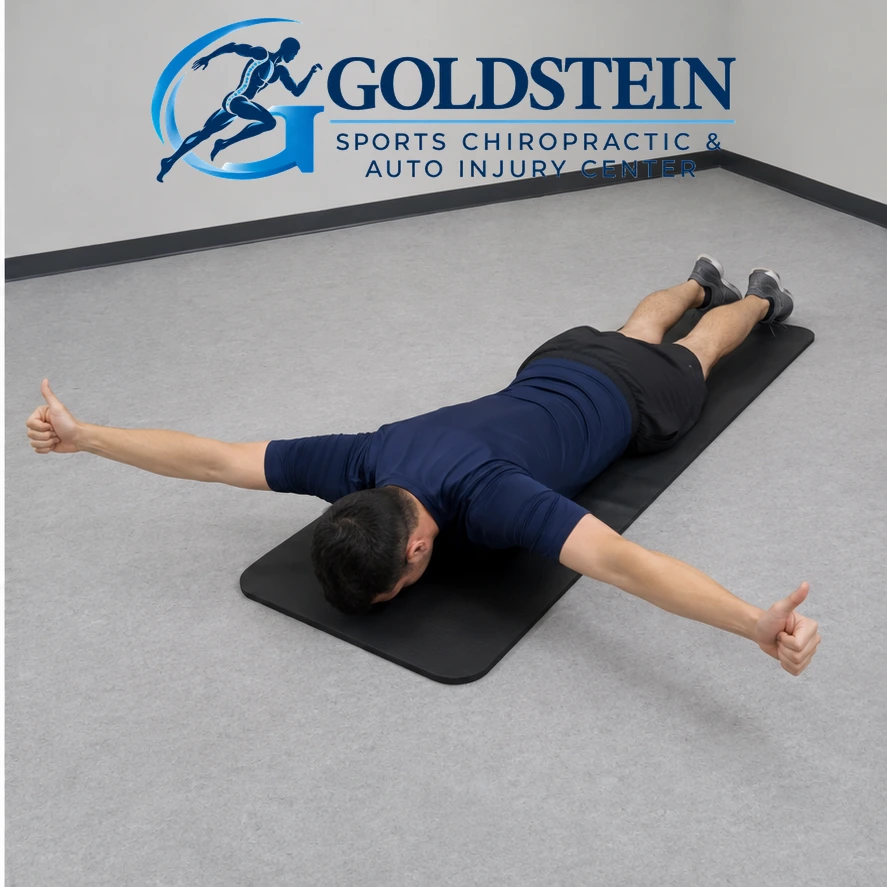
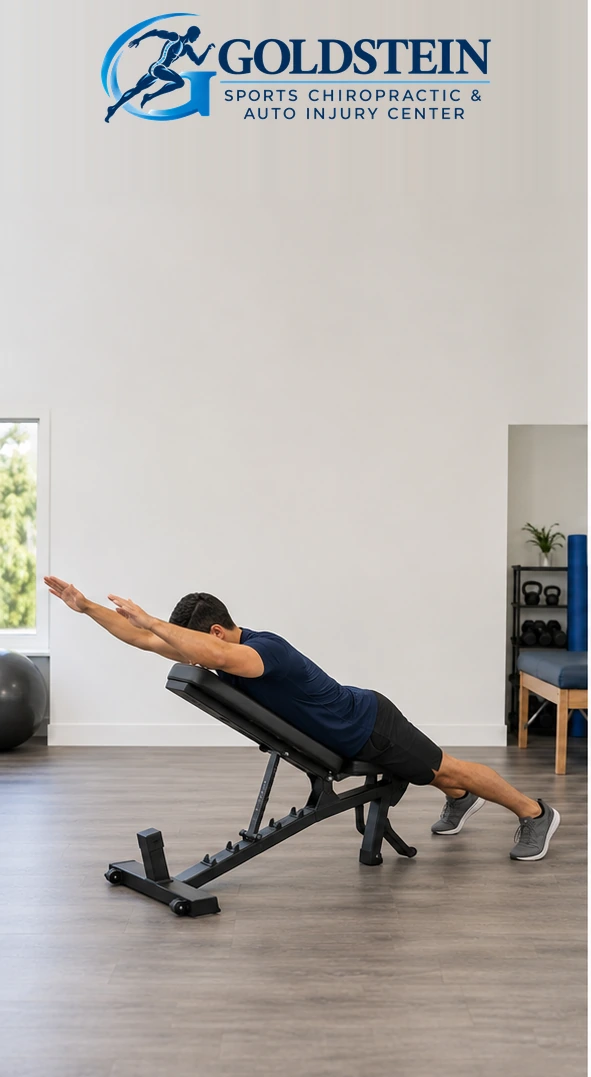
Prone Y. Temporary AI model demonstrating Prone Ys and Ts, not Dr. Goldstein. Start and movement positions are described in the instructions.

Prone Y

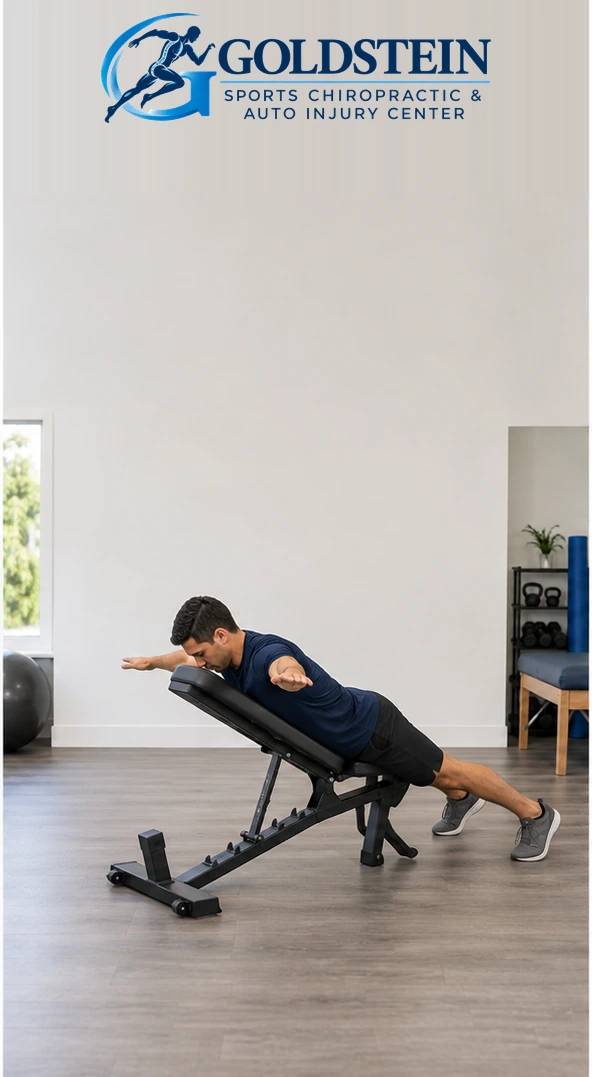
Prone T. Temporary AI model demonstrating Prone Ys and Ts, not Dr. Goldstein. Start and movement positions are described in the instructions.

Prone T

Exercise videoComing soon

Starting Position

Lie face down on a mat or bench with your neck relaxed.

How to Do It

  1. For the Y, reach the arms overhead at an outward angle and lift them slightly.
  2. Lower with control.
  3. For the T, reach the arms directly out to the sides and lift slightly, bringing the shoulder blades together.
  4. Lower slowly. Complete the stated repetitions for each movement.

What You Should Feel

Muscle effort around the shoulder blades.

Common Mistake

Avoid lifting your head to raise the arms higher.

Stop or Modify If

Stop for neck or shoulder pain or arm symptoms.

Back to Exercise Menu

Posture

Thoracic Extensions on Foam Roller

Explore upper-back extension.

Sets
2–3
Reps
10–15
Hold
2–3 sec
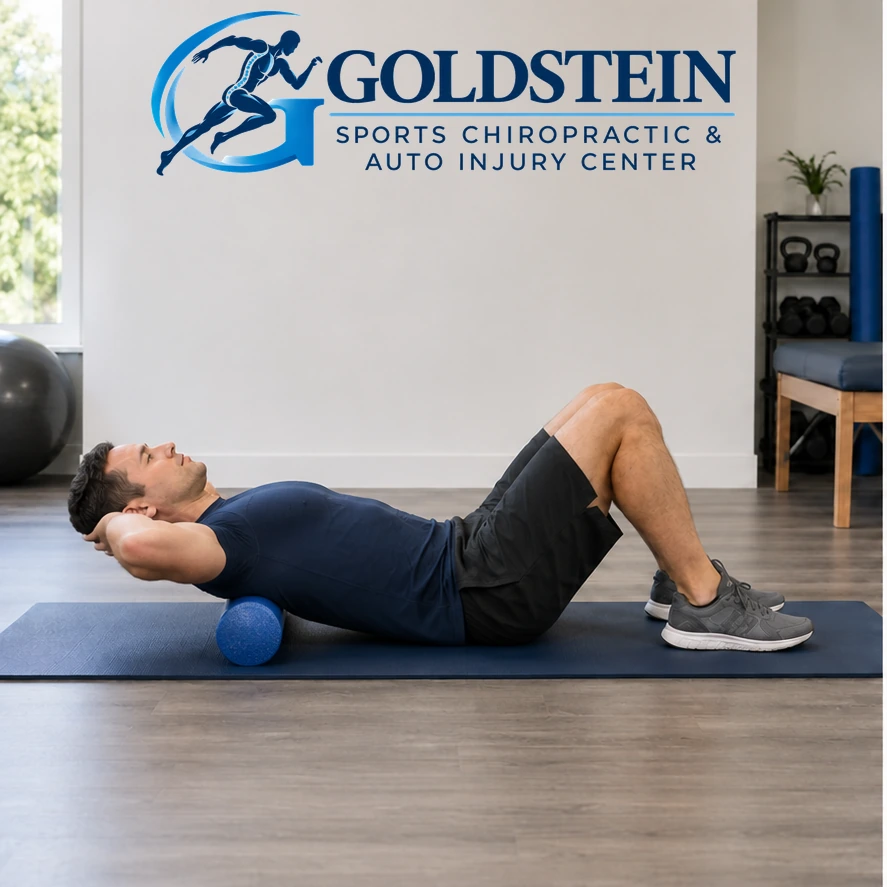
Start position. Temporary AI model demonstrating Thoracic Extensions on Foam Roller, not Dr. Goldstein. Start and movement positions are described in the instructions.

Start position

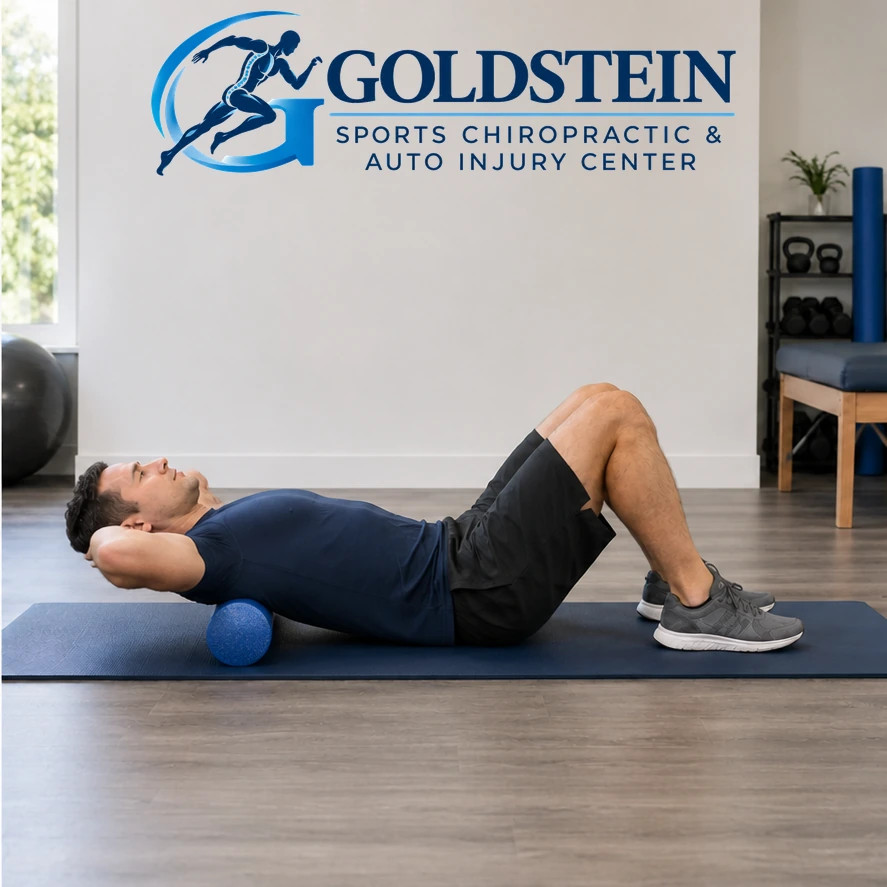
Movement position. Temporary AI model demonstrating Thoracic Extensions on Foam Roller, not Dr. Goldstein. Start and movement positions are described in the instructions.

Movement position

Exercise videoComing soon

Starting Position

Lie on your back with the roller horizontal under your upper back. Support your head with your hands.

How to Do It

  1. Gently extend the upper back over the roller.
  2. Hold each extension for the time shown.
  3. Return with control. Move the roller along the upper back as demonstrated, pausing without seeking painful pressure.

What You Should Feel

A gentle upper-back stretch.

Common Mistake

Do not pull your head forward with your hands.

Stop or Modify If

Stop for pain, tingling, dizziness or difficulty controlling the roller.

Back to Exercise Menu

Posture

Foam Roller Bridge

Practice controlled movement within your selected range.

Sets
3
Holds per set
3
Hold
10 sec
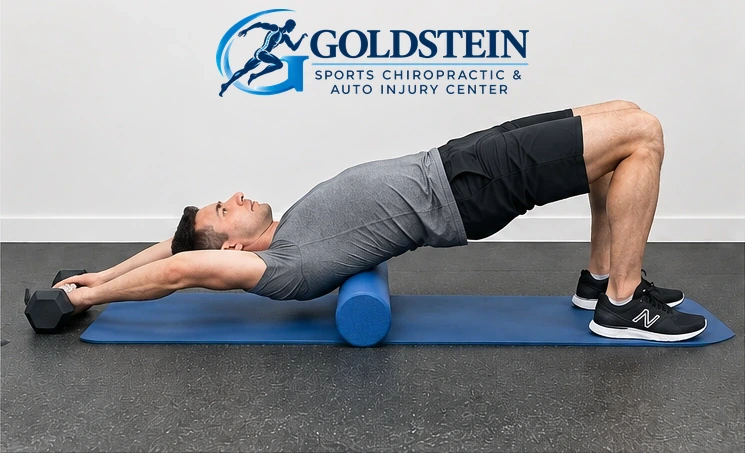
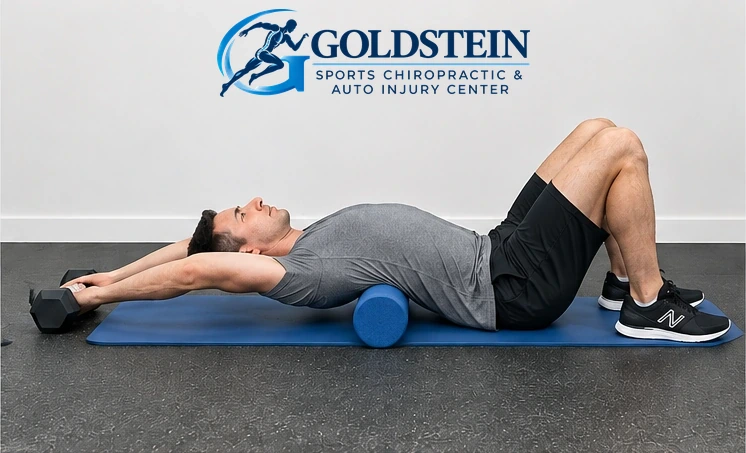
Start — hips in bridge. Temporary AI demonstration of Foam Roller Bridge; anonymous model, not Dr. Goldstein or a patient.

Start — hips in bridge

Lower hips — thoracic stretch. Temporary AI demonstration of Foam Roller Bridge; anonymous model, not Dr. Goldstein or a patient.

Lower hips — thoracic stretch

Exercise videoComing soon

Starting Position

Place the foam roller across the mid-thoracic region, perpendicular to your spine. Hold the fixed, stable support shown during care and begin with your hips elevated in a bridge.

How to Do It

  1. Maintain the fixed handhold while slowly lowering your hips toward the floor, stretching over the mid-thoracic roller.
  2. Hold for 10 seconds, then return to the bridge with control.

What You Should Feel

Controlled muscle effort or a gentle stretch, without pain.

Stop or Modify If

Stop for sharp or increasing pain, new numbness, tingling or weakness.

Back to Exercise Menu

Posture

Broomstick Shoulder Movement

Practice controlled movement within your selected range.

Sets
3
Reps
10
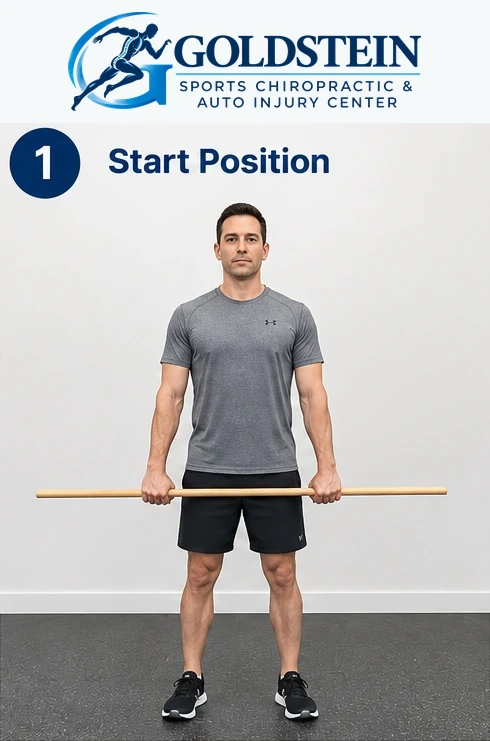
Start position. Temporary AI demonstration of Broomstick Shoulder Movement; anonymous model, not Dr. Goldstein or a patient.

Start position

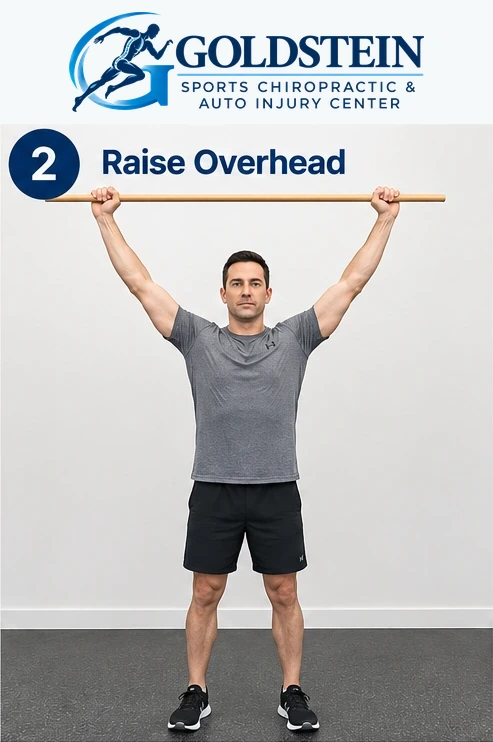
Overhead position. Temporary AI demonstration of Broomstick Shoulder Movement; anonymous model, not Dr. Goldstein or a patient.

Overhead position

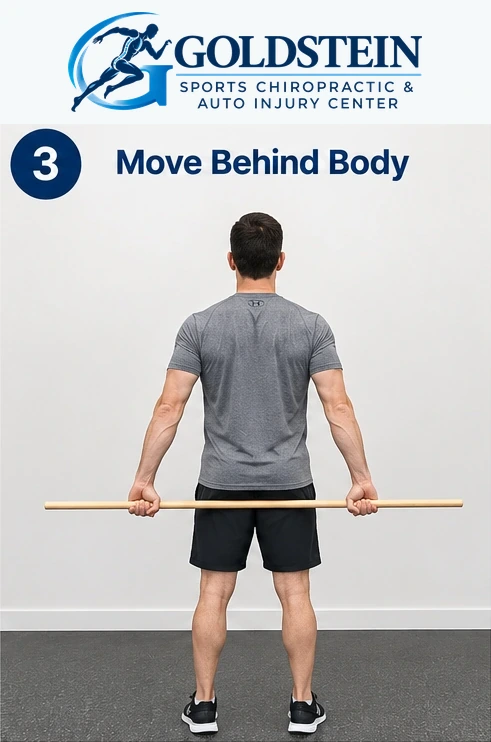
Behind-body position. Temporary AI demonstration of Broomstick Shoulder Movement; anonymous model, not Dr. Goldstein or a patient.

Behind-body position

Exercise videoComing soon

Starting Position

Hold the broomstick with an overhand grip selected during care.

How to Do It

  1. Move the stick overhead and behind your body within the demonstrated comfortable range.
  2. Return with control; do not force the range.

What You Should Feel

Controlled muscle effort or a gentle stretch, without pain.

Stop or Modify If

Stop for sharp or increasing pain, new numbness, tingling or weakness.

Back to Exercise Menu

Posture

Back-to-Wall Slides

Practice controlled movement within your selected range.

Sets
3
Reps
10
Start position. Temporary AI demonstration of Back-to-Wall Slides; anonymous model, not Dr. Goldstein or a patient.

Start position

Movement position. Temporary AI demonstration of Back-to-Wall Slides; anonymous model, not Dr. Goldstein or a patient.

Movement position

Exercise videoComing soon

Starting Position

Stand with your back against the wall and both arms in contact.

How to Do It

  1. Slide both arms upward along the wall.
  2. Slide down with control, keeping the range comfortable.

What You Should Feel

Controlled muscle effort or a gentle stretch, without pain.

Stop or Modify If

Stop for sharp or increasing pain, new numbness, tingling or weakness.

Back to Exercise Menu

Posture

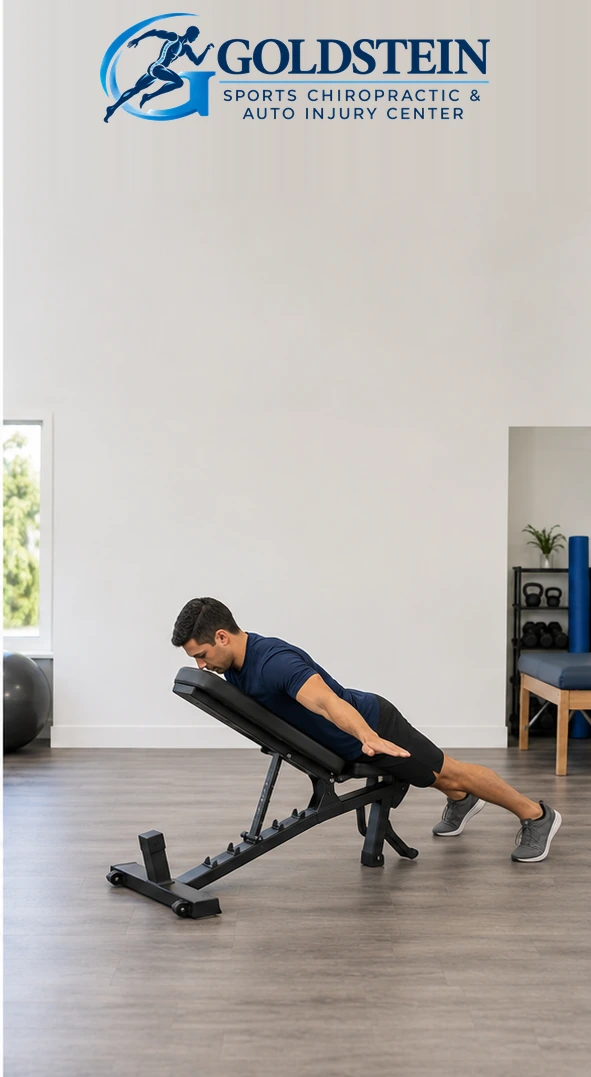
Prone Y, T and I

Practice controlled movement within your selected range.

Sets
3
Reps
10 each position
Y position. Temporary AI demonstration of Prone Y, T and I; anonymous model, not Dr. Goldstein or a patient.

Y position

T position. Temporary AI demonstration of Prone Y, T and I; anonymous model, not Dr. Goldstein or a patient.

T position

I position. Temporary AI demonstration of Prone Y, T and I; anonymous model, not Dr. Goldstein or a patient.

I position

Exercise videoComing soon

Starting Position

Lie face down on the incline bench, stability ball or flat bench selected during care.

How to Do It

  1. Lift and lower the arms in a Y position.
  2. Repeat in a T position, then in an I position.
  3. Keep the neck relaxed and movement controlled.

What You Should Feel

Controlled muscle effort or a gentle stretch, without pain.

Stop or Modify If

Stop for sharp or increasing pain, new numbness, tingling or weakness.

Back to Exercise Menu

Posture

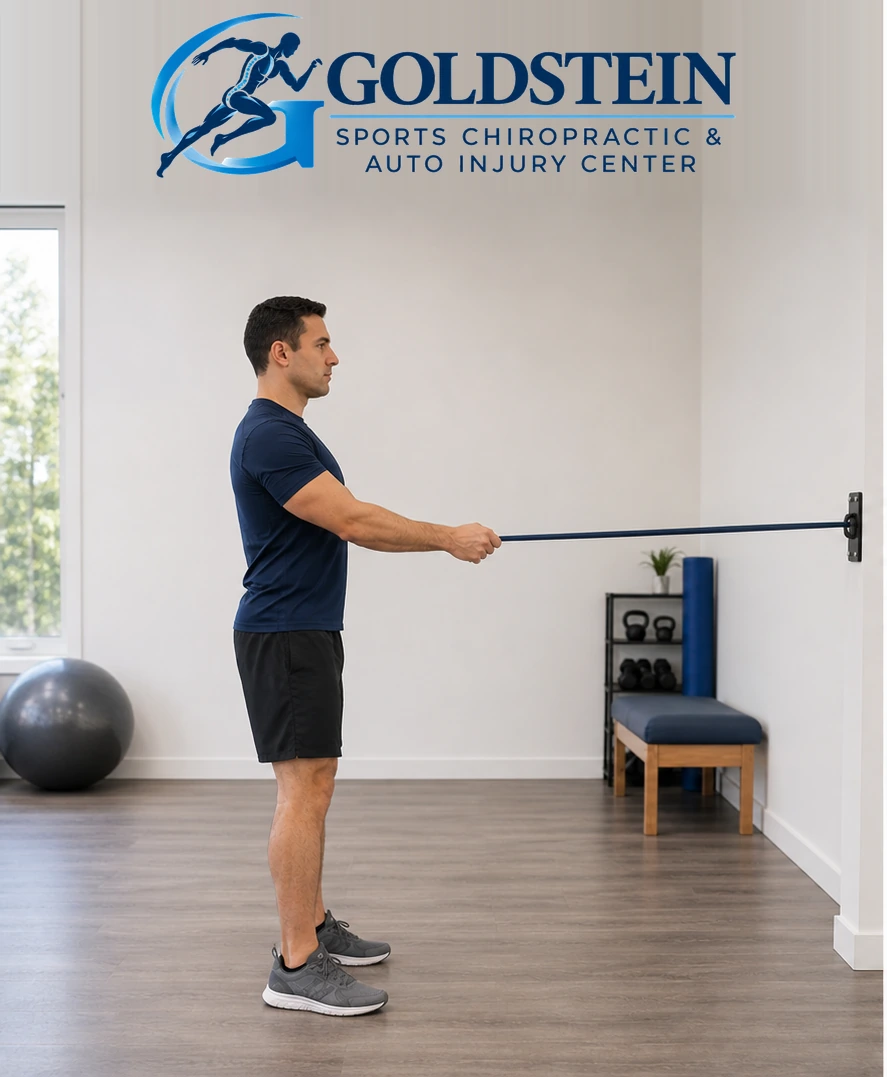
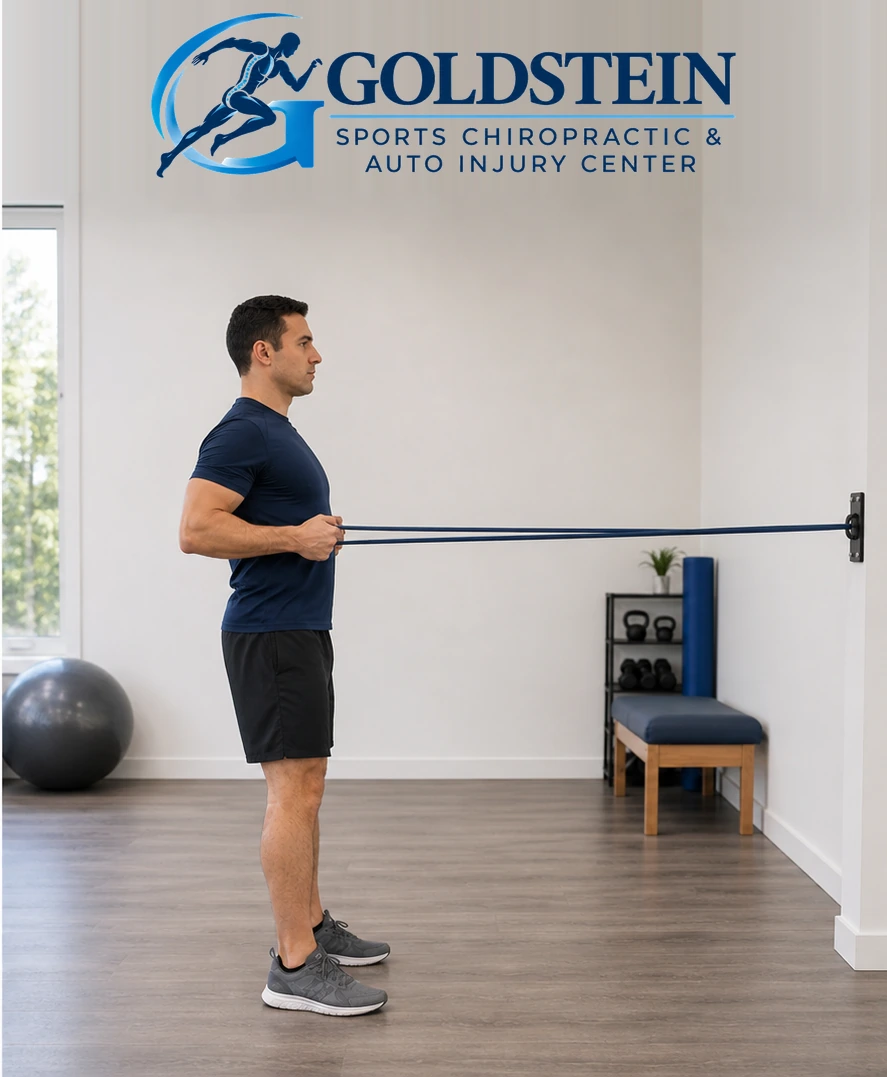
Standing Band Row

Practice controlled movement within your selected range.

Sets
3
Reps
10
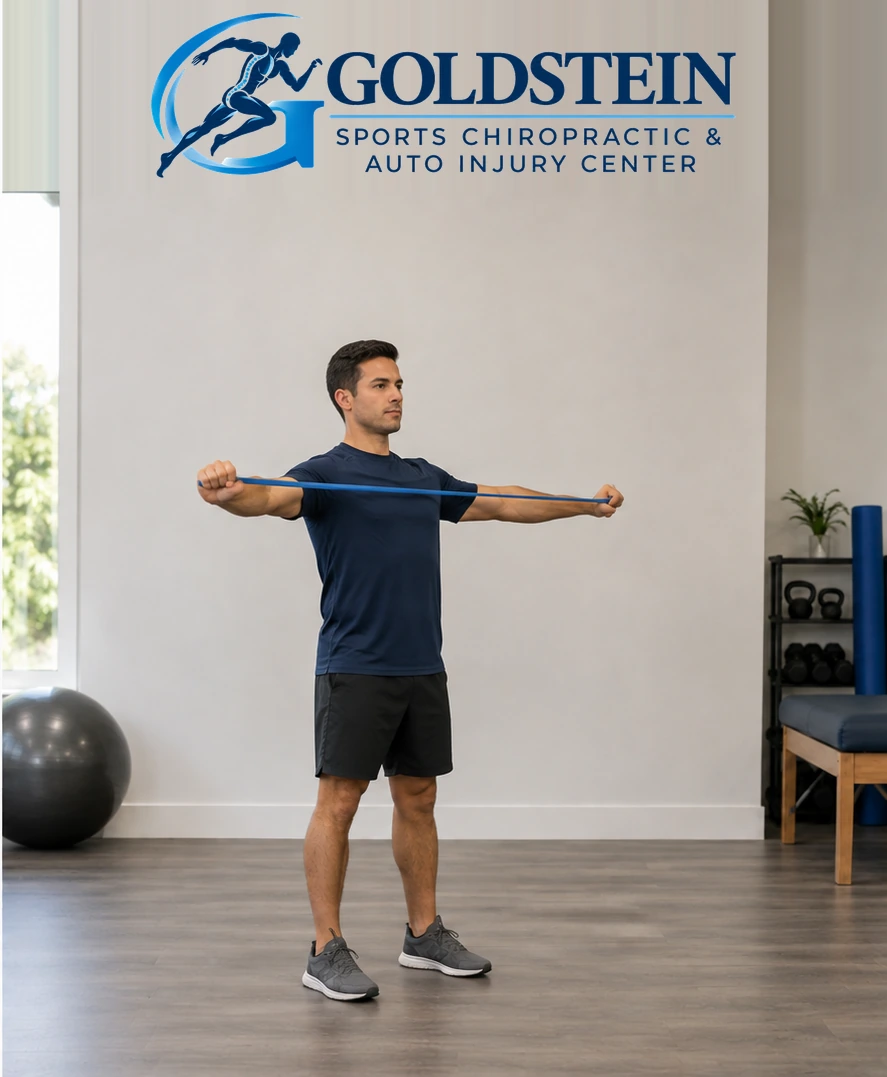
Start position. Temporary AI demonstration of Standing Band Row; anonymous model, not Dr. Goldstein or a patient.

Start position

Movement position. Temporary AI demonstration of Standing Band Row; anonymous model, not Dr. Goldstein or a patient.

Movement position

Exercise videoComing soon

Starting Position

Stand facing a securely anchored band at chest height, holding one end in each hand.

How to Do It

  1. Pull toward your torso with elbows close to your sides.
  2. Return slowly without leaning or shrugging.

What You Should Feel

Controlled muscle effort or a gentle stretch, without pain.

Stop or Modify If

Stop for sharp or increasing pain, new numbness, tingling or weakness.

Back to Exercise Menu

Posture

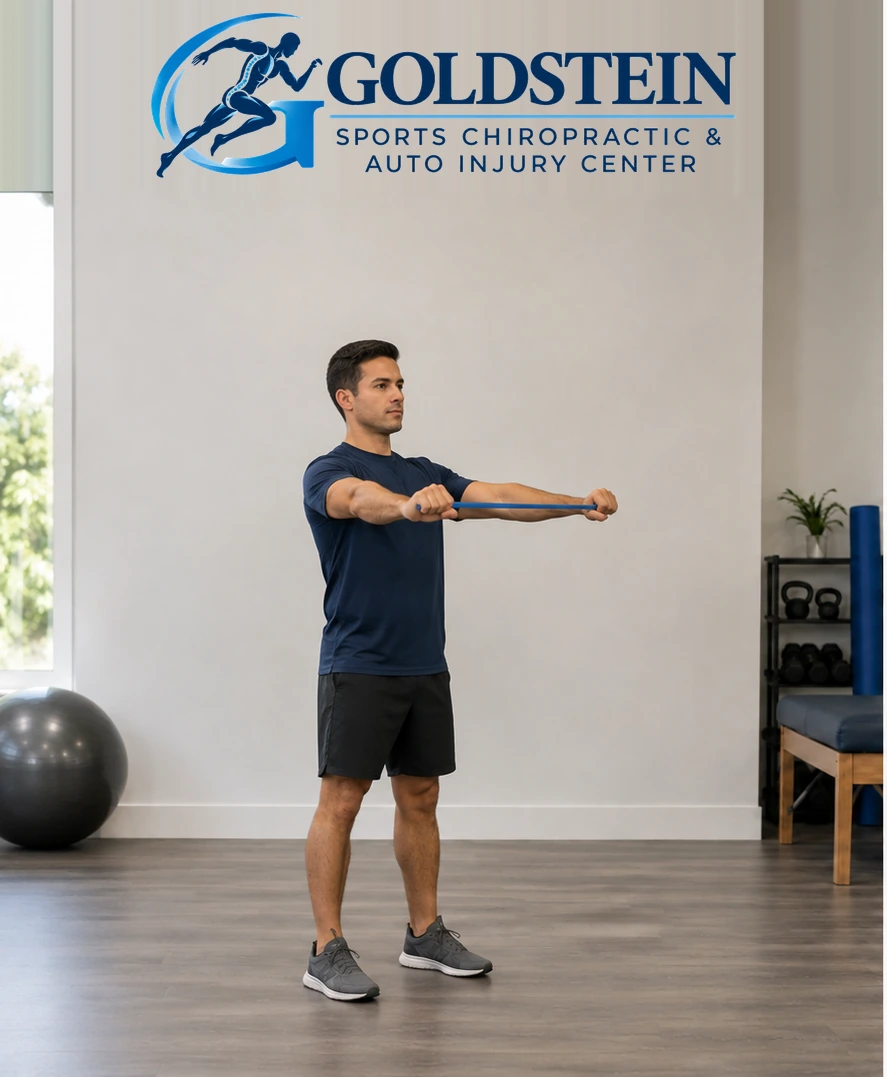
Scapular Retraction Band Pull-Apart

Practice controlled movement within your selected range.

Sets
3
Reps
10
Start position. Temporary AI demonstration of Scapular Retraction Band Pull-Apart; anonymous model, not Dr. Goldstein or a patient.

Start position

Movement position. Temporary AI demonstration of Scapular Retraction Band Pull-Apart; anonymous model, not Dr. Goldstein or a patient.

Movement position

Exercise videoComing soon

Starting Position

Hold a band approximately shoulder-width apart with straight arms in front at shoulder height.

How to Do It

  1. Pull the band apart while drawing the shoulder blades together.
  2. Return with control, keeping the arms at shoulder height.

What You Should Feel

Controlled muscle effort or a gentle stretch, without pain.

Stop or Modify If

Stop for sharp or increasing pain, new numbness, tingling or weakness.

Back to Exercise Menu

Posture

Supine Posture Press

Practice controlled movement within your selected range.

Sets
3
Reps
10
Hold
5 sec open
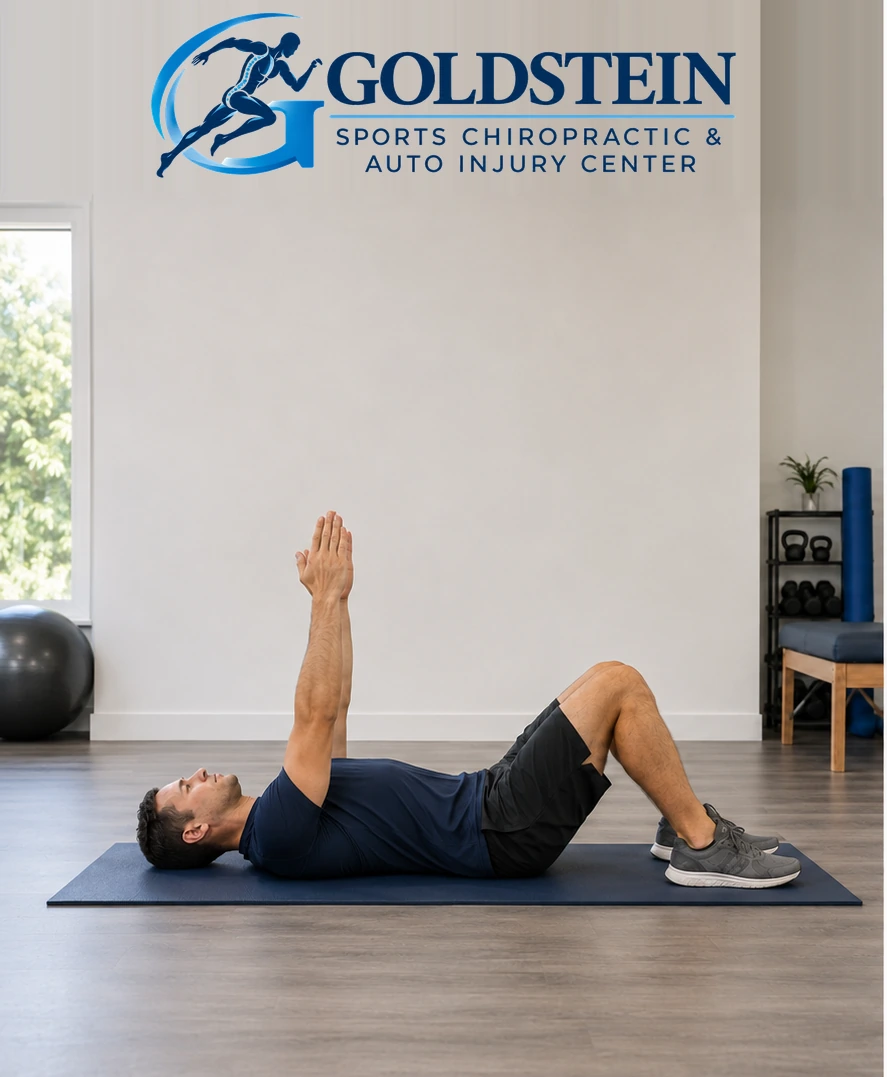
Start position. Temporary AI demonstration of Supine Posture Press; anonymous model, not Dr. Goldstein or a patient.

Start position

Movement position. Temporary AI demonstration of Supine Posture Press; anonymous model, not Dr. Goldstein or a patient.

Movement position

Exercise videoComing soon

Starting Position

Lie on your back. Gently press the lower back and back of the skull into the mat. Point both arms toward the ceiling, palms facing each other.

How to Do It

  1. Open both arms slowly into a T, working toward the mat.
  2. Maintain gentle low-back and head pressure through the hold.
  3. Bring the arms back up.

What You Should Feel

Controlled muscle effort or a gentle stretch, without pain.

Stop or Modify If

Stop for sharp or increasing pain, new numbness, tingling or weakness.

Back to Exercise Menu

Medical Information & Sources

These movement reminders do not diagnose a condition or replace an evaluation, personalized rehabilitation plan or emergency care. Dosage reflects the office’s legacy exercise materials and Dr. Goldstein’s clarifications; it is not a recommendation to complete every movement.

Questions about your exercises?

Questions About an Exercise?

Ask which movements, range and repetitions are right for you. Follow the guidance provided during your care.