Patient Exercise Library

Hip Exercises

Review the movements selected during your visit.

A reminder of movements you may have been shown in the office—not an individual exercise prescription for every visitor. Your personal care instructions come first.

Exercise pictures use AI demonstration models—not Dr. Goldstein or real patients. Follow your individual care instructions.

Before You Begin · Safety & Setup

Use the setup, support and comfortable range shown during care. You do not need to perform every exercise.

Follow injury or surgical restrictions. Stop for sharp or increasing pain, new numbness, tingling, weakness or significant dizziness.

Hip

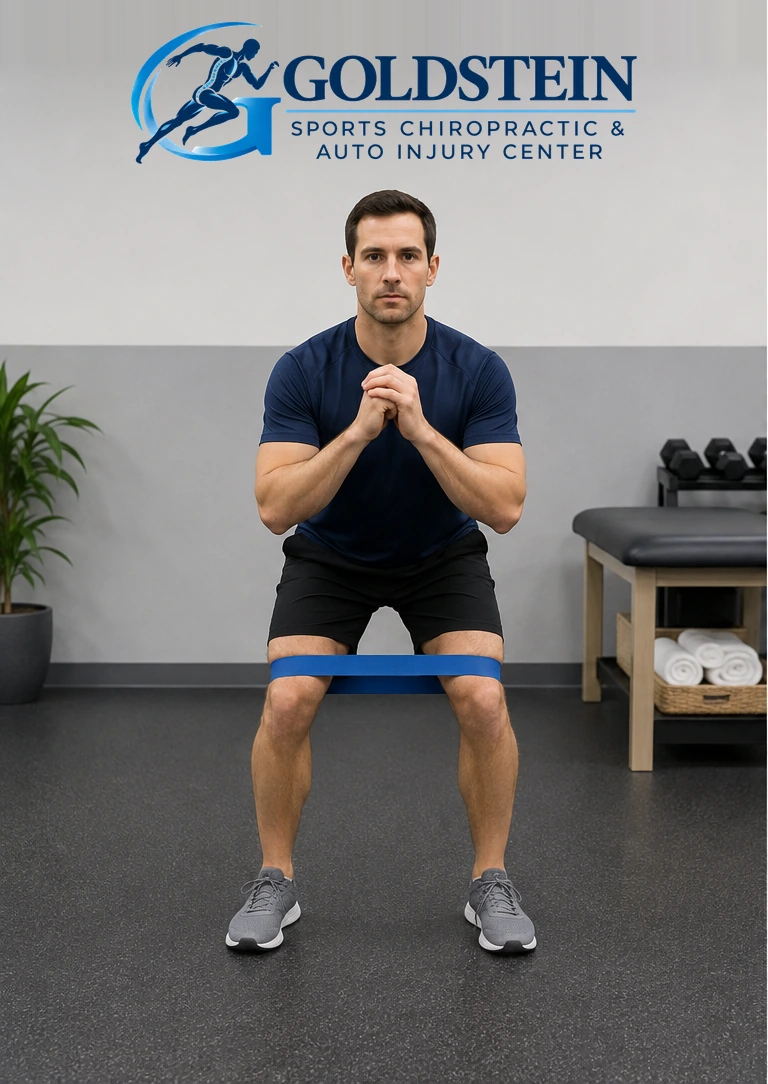
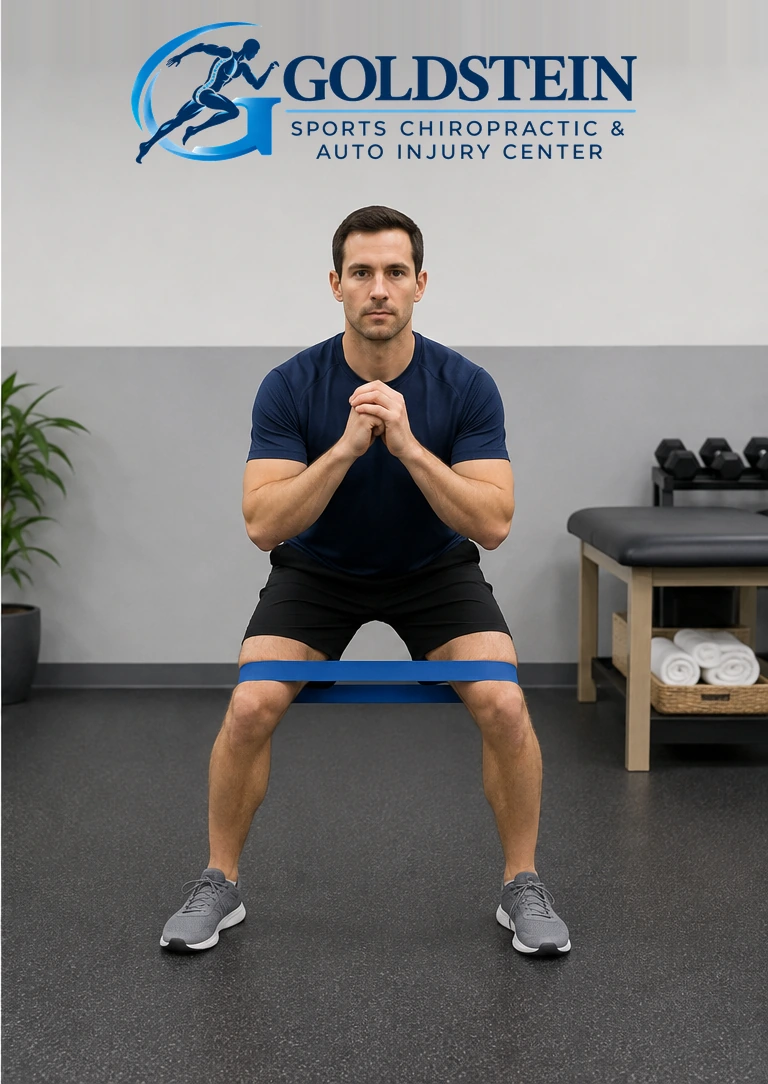
Monster Walks

Review the controlled movement selected during care.

Sets
3
Steps
8–15 each direction
Band under tension. Temporary AI demonstration of Monster Walks; not Dr. Goldstein or an actual patient.

Band under tension

Small lateral step. Temporary AI demonstration of Monster Walks; not Dr. Goldstein or an actual patient.

Small lateral step

Exercise videoComing soon

Starting Position

Stand in a half squat with the selected resistance band around the lower thighs.

How to Do It

  1. Take small controlled steps sideways.
  2. Then move in the opposite direction.

What You Should Feel

Comfortable movement or muscle effort, without sharp pain.

Stop or Modify If

Stop for sharp or increasing pain, new numbness, tingling or weakness.
Back to Exercise Menu

Hip

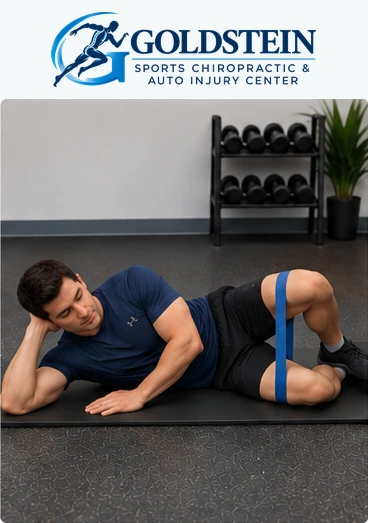
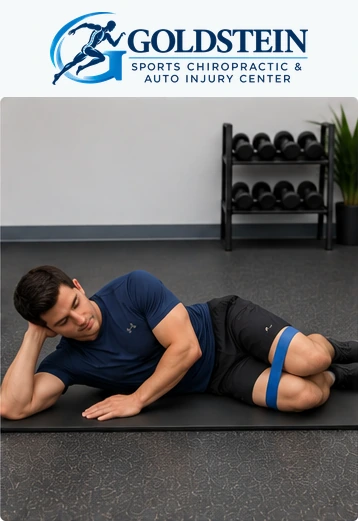
Clamshells

Review the controlled movement selected during care.

Sets
1–3
Reps
8–15 each side
Demonstration 1. Temporary AI demonstration of Clamshells; not Dr. Goldstein or an actual patient.

Demonstration 1

Demonstration 2. Temporary AI demonstration of Clamshells; not Dr. Goldstein or an actual patient.

Demonstration 2

Demonstration 3. Temporary AI demonstration of Clamshells; not Dr. Goldstein or an actual patient.

Demonstration 3

Demonstration 4. Temporary AI demonstration of Clamshells; not Dr. Goldstein or an actual patient.

Demonstration 4

Exercise videoComing soon

Starting Position

Lie on your side with bent knees and a band around the lower thighs.

How to Do It

  1. Keep the feet together and lift the top knee within a comfortable range.
  2. Pause, then lower without rolling the pelvis.
  3. Repeat on the opposite side.

What You Should Feel

Comfortable movement or muscle effort, without sharp pain.

Stop or Modify If

Stop for sharp or increasing pain, new numbness, tingling or weakness.
Back to Exercise Menu

Hip

Cat-Cow Stretch

Explore controlled spinal movement.

Sets
2–3
Reps
10–15
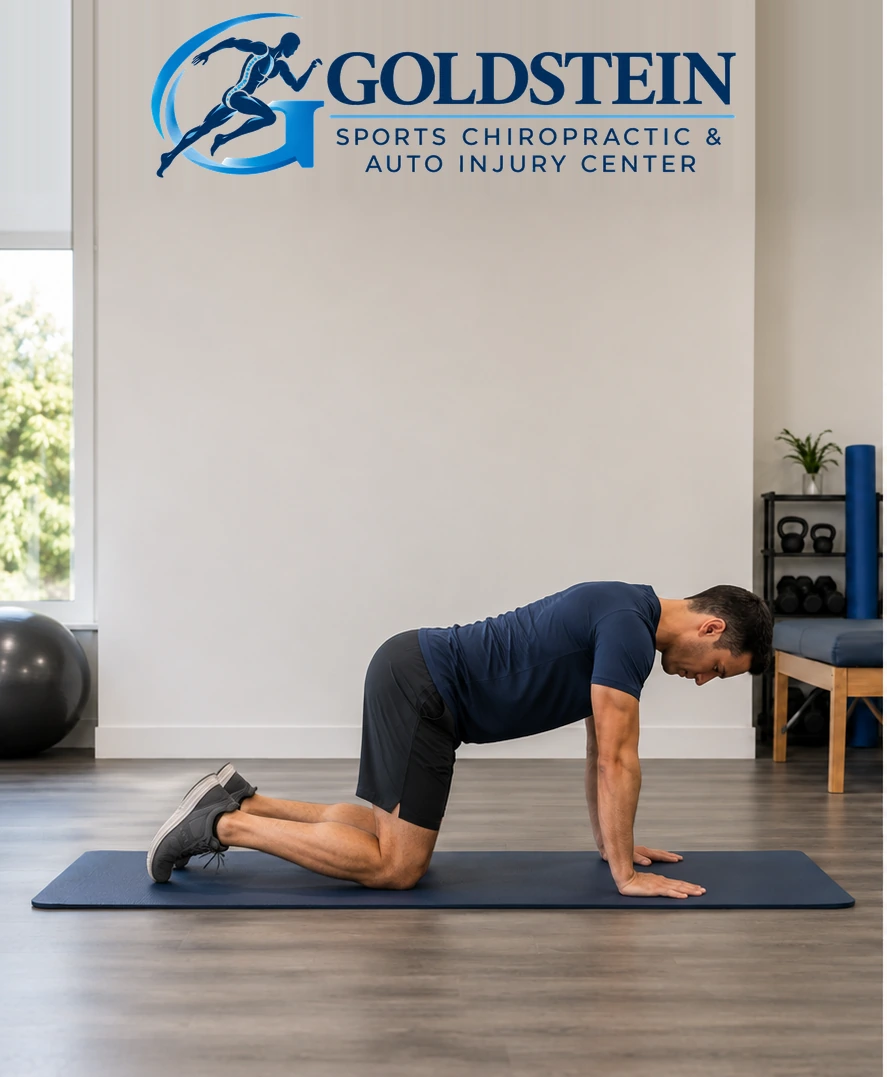
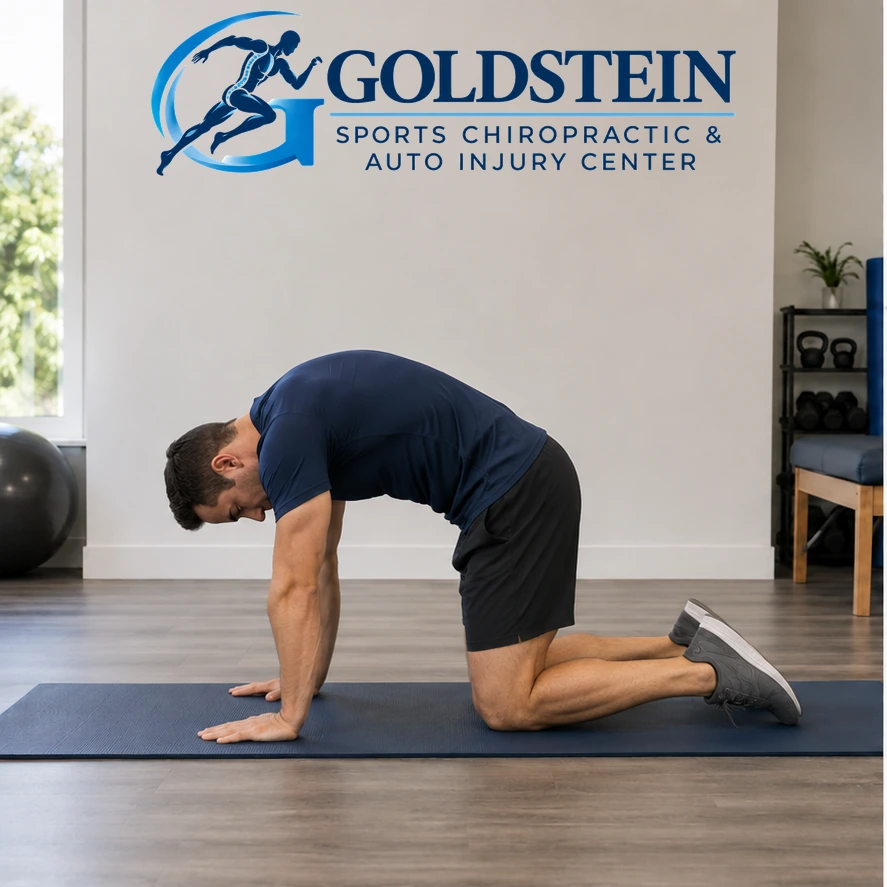
Rounded position. Temporary AI model demonstrating Cat-Cow Stretch, not Dr. Goldstein. Start and movement positions are described in the instructions.

Rounded position

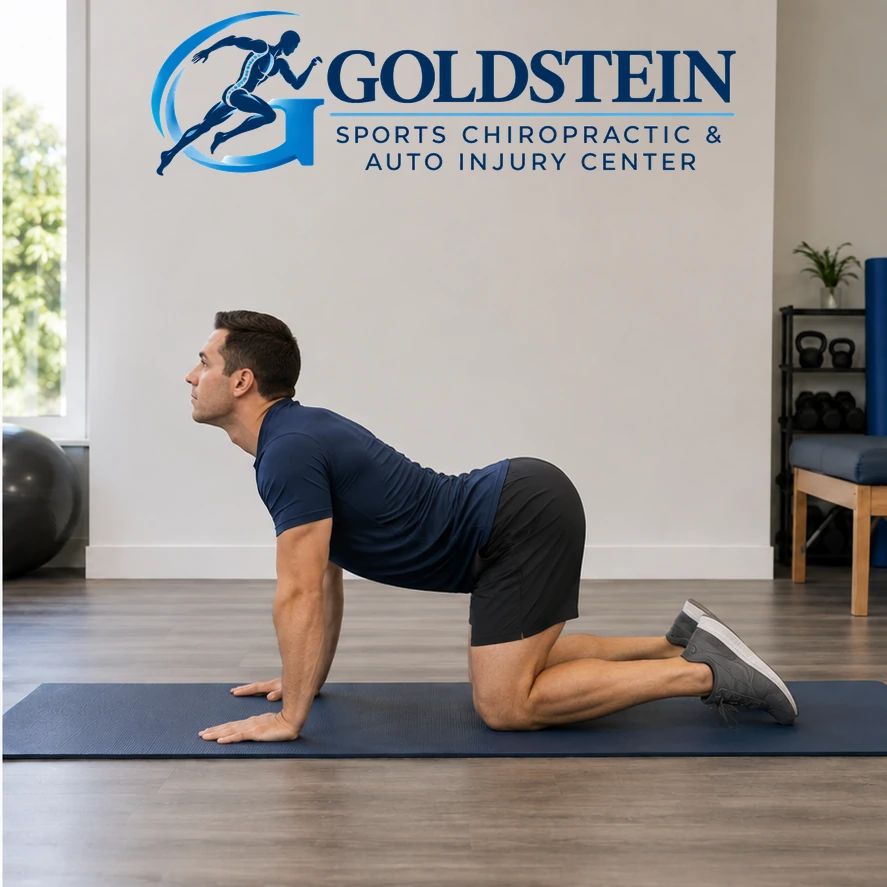
Extended position. Temporary AI model demonstrating Cat-Cow Stretch, not Dr. Goldstein. Start and movement positions are described in the instructions.

Extended position

Exercise videoComing soon

Starting Position

Begin on hands and knees, hands under shoulders and knees under hips.

How to Do It

  1. Round your back toward the ceiling and ease your chin toward your chest.
  2. Then gently lower your belly and lift your head and tailbone.
  3. Alternate slowly within a comfortable range.

What You Should Feel

Gentle movement through the back.

Common Mistake

Avoid forcing either end of the movement.

Stop or Modify If

Stop for increasing back pain or symptoms into a leg.

Back to Exercise Menu

Hip

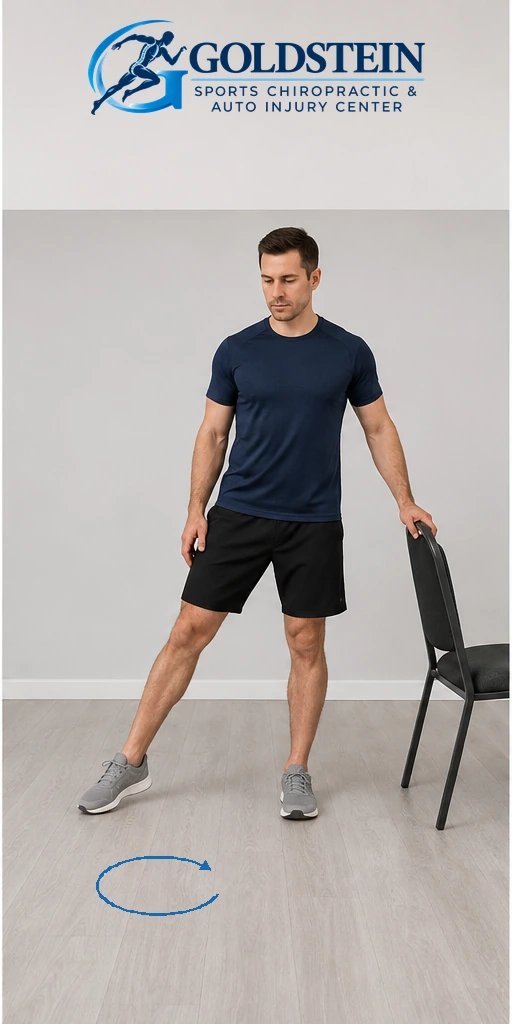
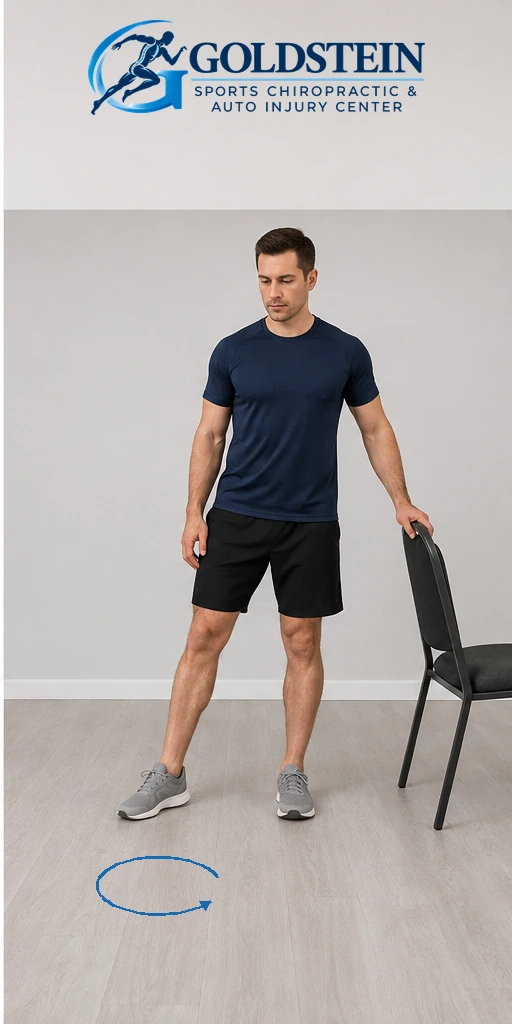
Hip Circles

Practice controlled hip mobility.

Sets
1
Circles
10 each direction, each leg
Start — small lift. Temporary AI demonstration of Hip Circles; not Dr. Goldstein or a patient.

Start — small lift

Small circles. Temporary AI demonstration of Hip Circles; not Dr. Goldstein or a patient.

Small circles

Reverse direction. Temporary AI demonstration of Hip Circles; not Dr. Goldstein or a patient.

Reverse direction

Exercise videoComing soon

Starting Position

Stand beside a stable support and hold it. Lift one knee slightly.

How to Do It

  1. Make small, slow circles in one direction, then reverse.
  2. Repeat with the opposite leg without swinging the trunk.

What You Should Feel

A gentle stretch or controlled movement, without joint pain.

Stop or Modify If

Stop for pinching, sharp pain or loss of comfortable control.

Back to Exercise Menu

Hip

Bridge

Practice a controlled hip lift.

Sets
2–3
Reps
10–12
Hold
A few seconds
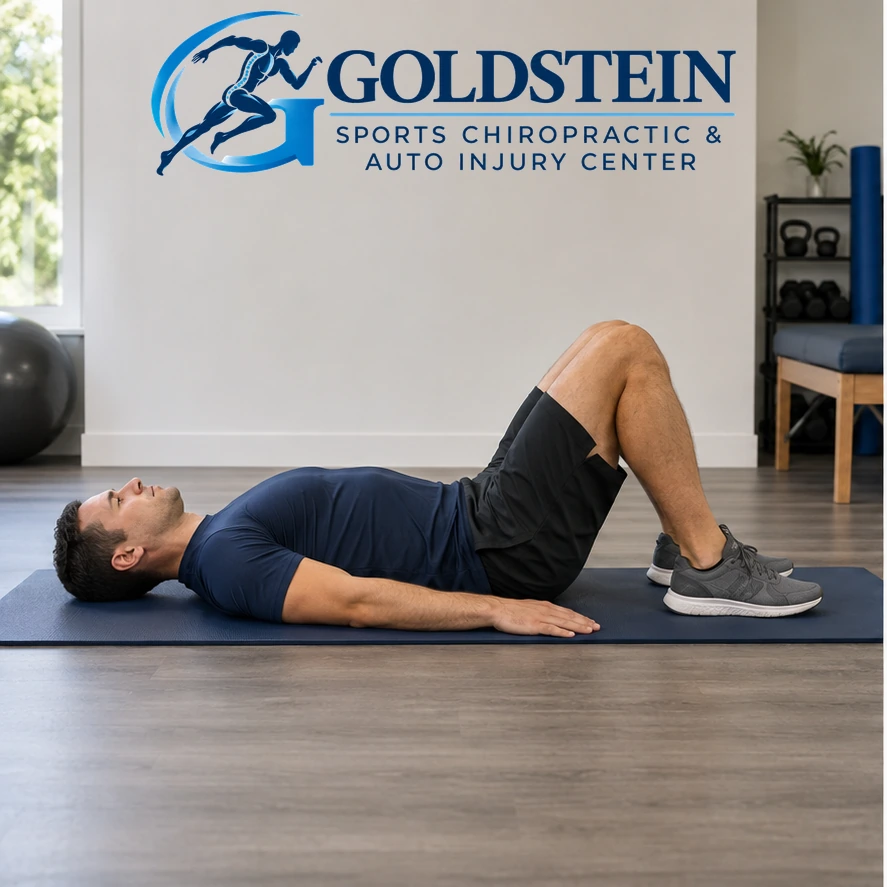
Start position. Temporary AI model demonstrating Bridge, not Dr. Goldstein. Start and movement positions are described in the instructions.

Start position

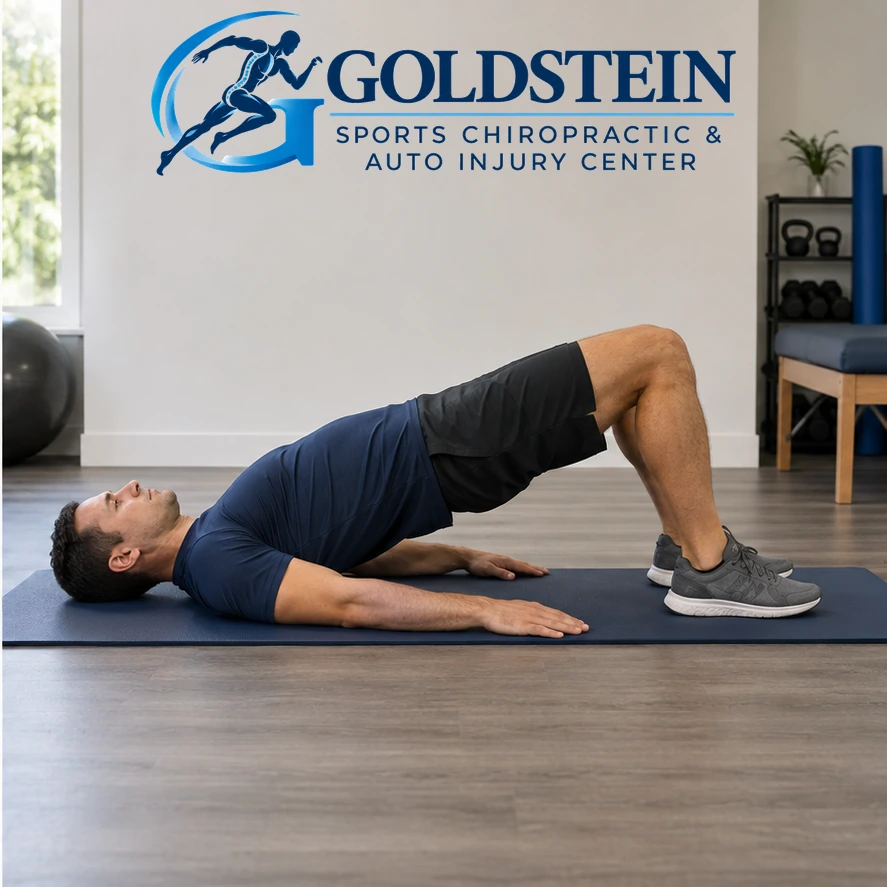
Movement position. Temporary AI model demonstrating Bridge, not Dr. Goldstein. Start and movement positions are described in the instructions.

Movement position

Exercise videoComing soon

Starting Position

Lie on your back with knees bent and feet flat, hip-width apart.

How to Do It

  1. Engage your buttock muscles and lift the hips without arching the lower back.
  2. Hold for a few seconds.
  3. Lower slowly to the surface.

What You Should Feel

Muscle work through the buttocks and trunk.

Common Mistake

Do not force the lower back into an arch.

Stop or Modify If

Stop for cramping, increasing back pain or symptoms into a leg.

Back to Exercise Menu

Hip

Lateral Step-Up

Review the controlled movement selected during care.

Sets
2–3
Reps
8–15 each side
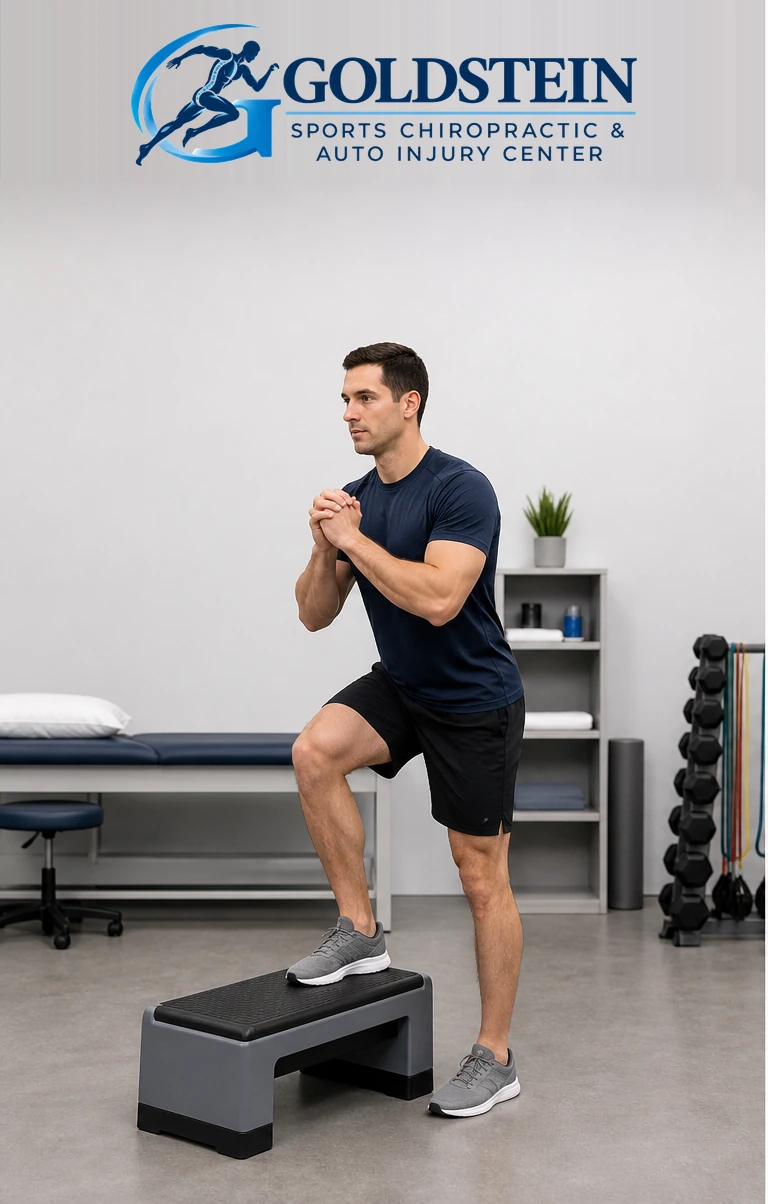
Bent knee — foot on step. Temporary AI demonstration of Lateral Step-Up; not Dr. Goldstein or an actual patient.

Bent knee — foot on step

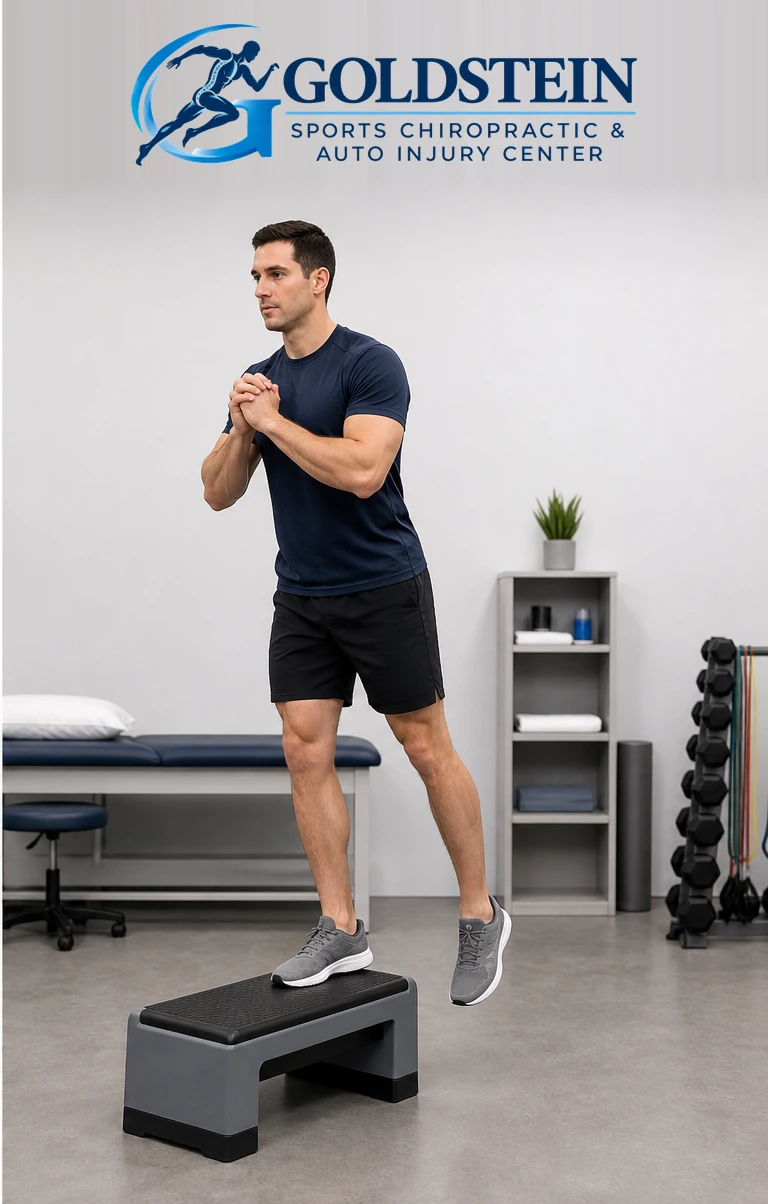
Rise — free foot floats. Temporary AI demonstration of Lateral Step-Up; not Dr. Goldstein or an actual patient.

Rise — free foot floats

Exercise videoComing soon

Starting Position

Stand sideways beside a stable step with the nearer foot on top and that knee bent. Keep the other foot on the floor, hinge slightly forward at the hips, and clasp your hands in front with elbows bent. Do not hold a weight.

How to Do It

  1. Push through the foot on the step and straighten the standing knee, lifting the other foot clear of the floor.
  2. Let the free foot float beside the platform while you briefly balance; do not place it on the step.
  3. Lower the free foot back to the floor with control. Repeat, then perform the opposite side.

What You Should Feel

Comfortable movement or muscle effort, without sharp pain.

Stop or Modify If

Stop for sharp or increasing pain, new numbness, tingling or weakness.
Back to Exercise Menu

Hip

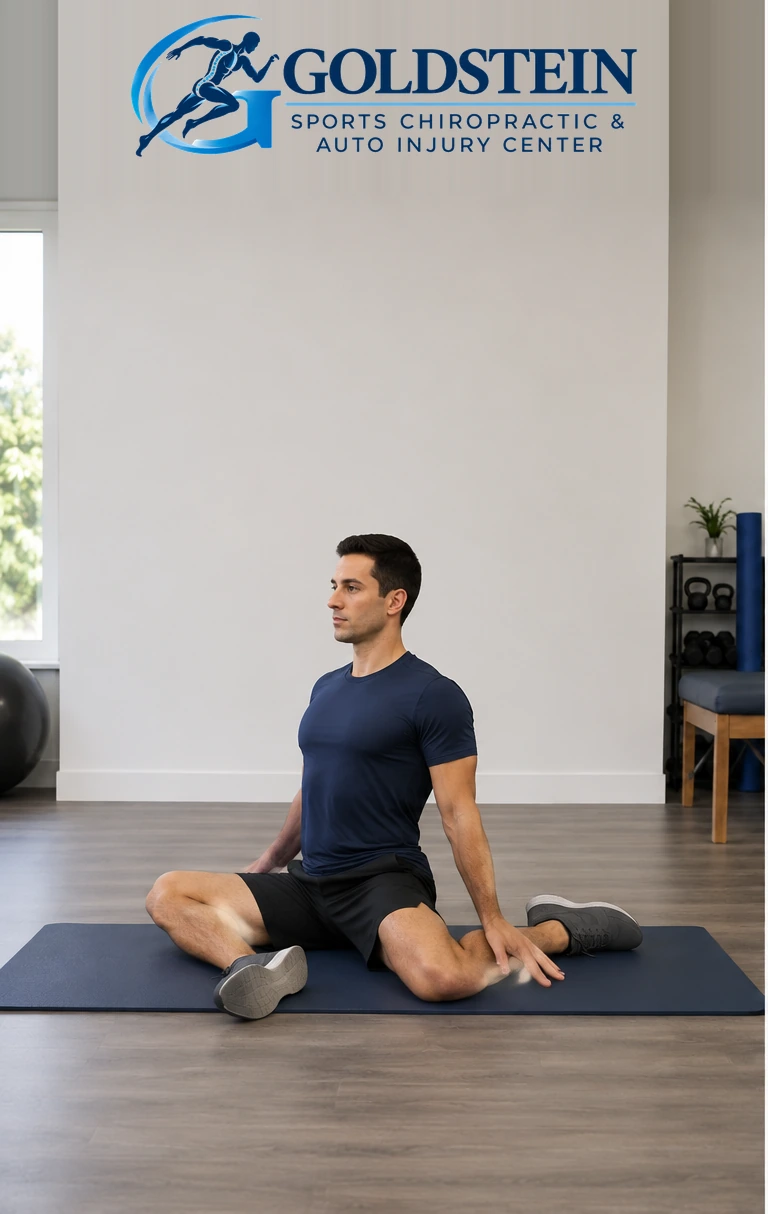
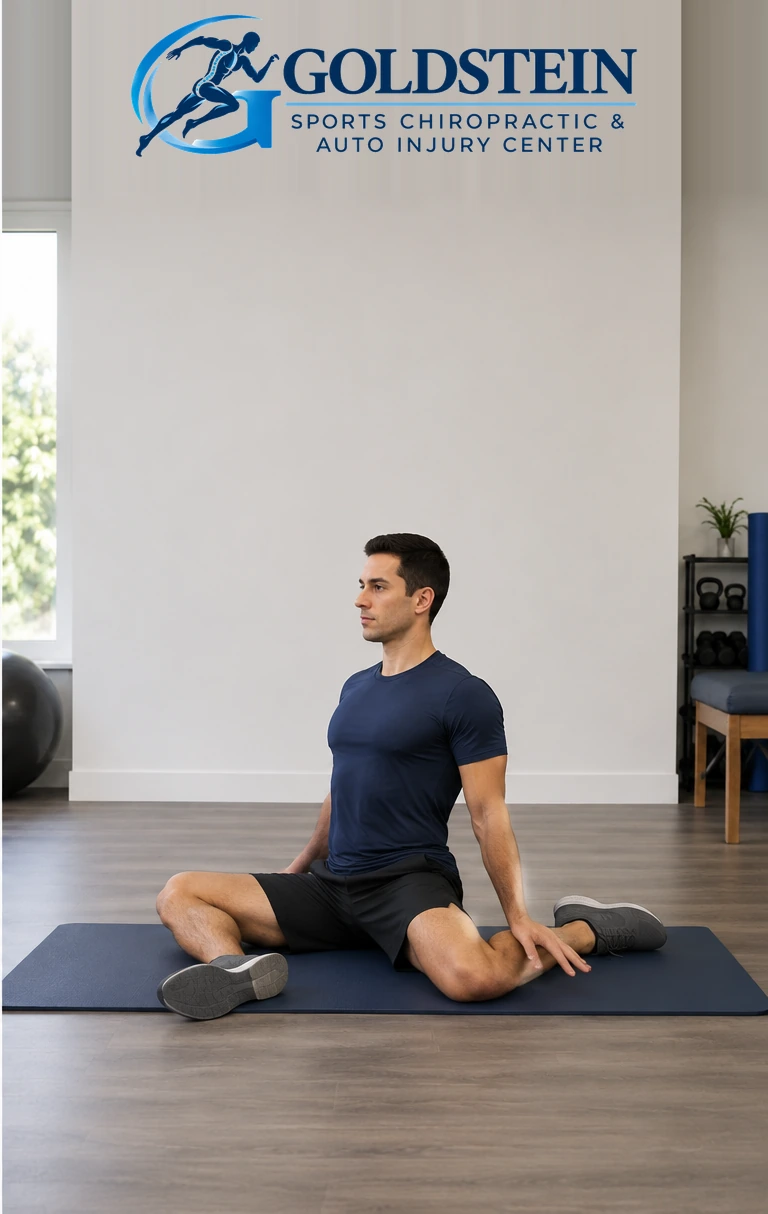
Seated 90/90 Hip Stretch

Practice controlled hip mobility.

Hold
30–60 sec each side
Setup position. Temporary AI demonstration of Seated 90/90 Hip Stretch; not Dr. Goldstein or a patient.

Setup position

Hold position. Temporary AI demonstration of Seated 90/90 Hip Stretch; not Dr. Goldstein or a patient.

Hold position

Exercise videoComing soon

Starting Position

Sit on the floor with the front and rear knees bent around 90 degrees. Rest the front outer leg and rear inner leg comfortably on the floor.

How to Do It

  1. Sit tall without leaning heavily to one side; do not force either knee down.
  2. Hold within a comfortable range.
  3. Lift the knees and change sides with control, then repeat the hold.

What You Should Feel

A gentle stretch or controlled movement, without joint pain.

Stop or Modify If

Stop for pinching, sharp pain or loss of comfortable control.

Back to Exercise Menu

Hip

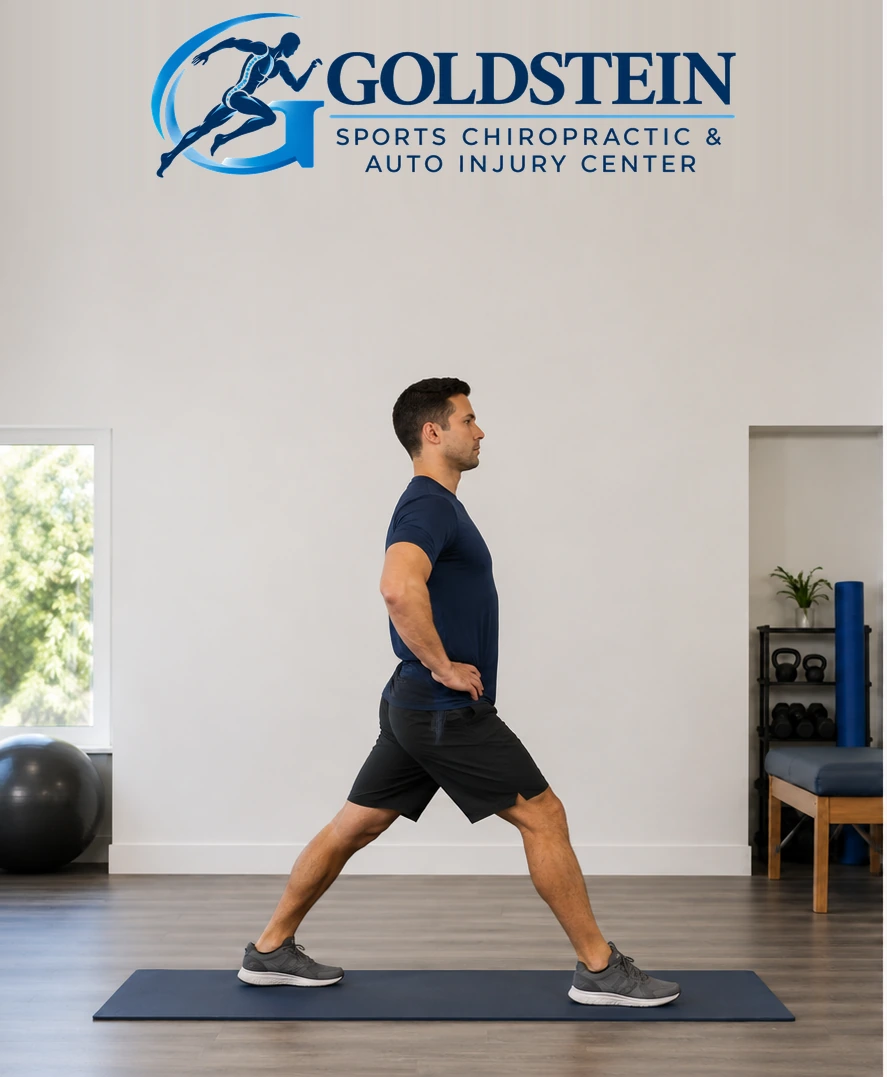
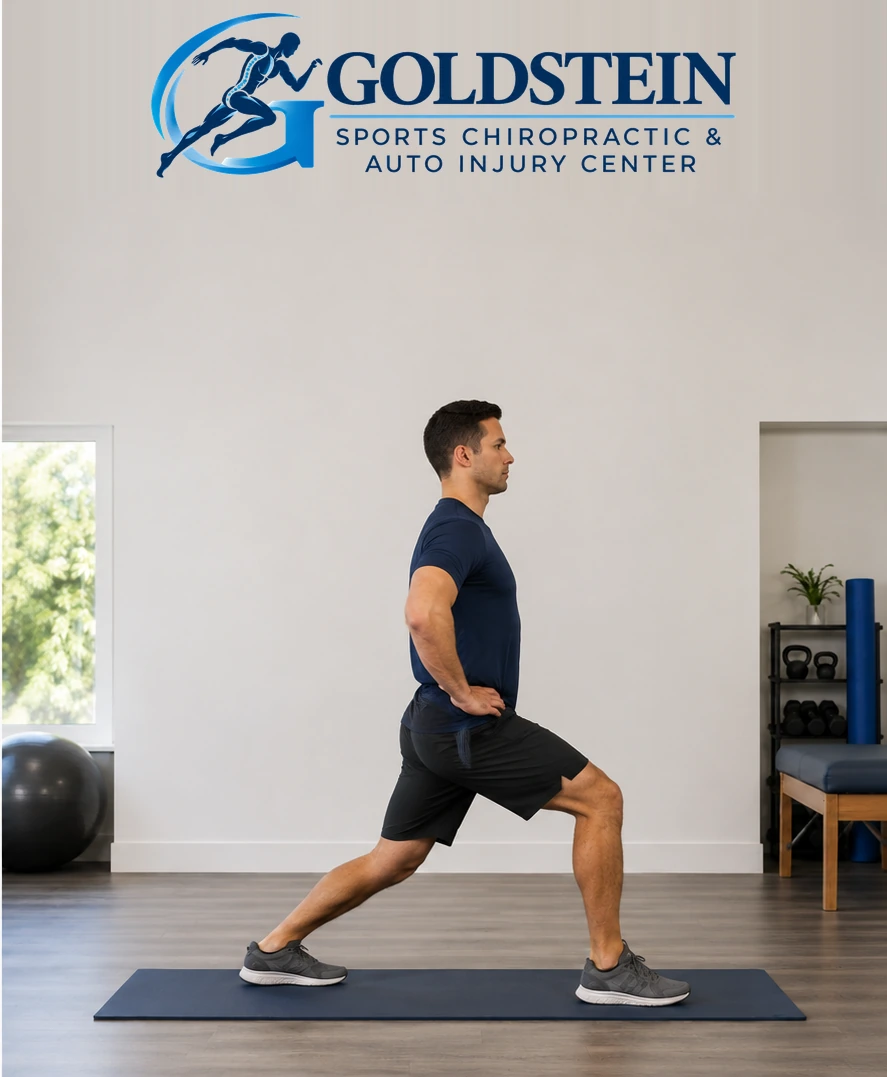
Standing Hip Flexor Stretch

Review the controlled movement selected during care.

Sets
1–2
Hold
20–30 sec each side
Start position. Temporary AI demonstration of Standing Hip Flexor Stretch; not Dr. Goldstein or an actual patient.

Start position

Movement position. Temporary AI demonstration of Standing Hip Flexor Stretch; not Dr. Goldstein or an actual patient.

Movement position

Exercise videoComing soon

Starting Position

Stand in a staggered stance with one leg behind you.

How to Do It

  1. Gently tuck the pelvis and shift forward without arching the low back.
  2. Hold, then repeat on the opposite side.

What You Should Feel

Comfortable movement or muscle effort, without sharp pain.

Stop or Modify If

Stop for sharp or increasing pain, new numbness, tingling or weakness.
Back to Exercise Menu

Hip

Donkey Kicks

Review the controlled movement selected during care.

Sets
2–3
Reps
12–20 each side
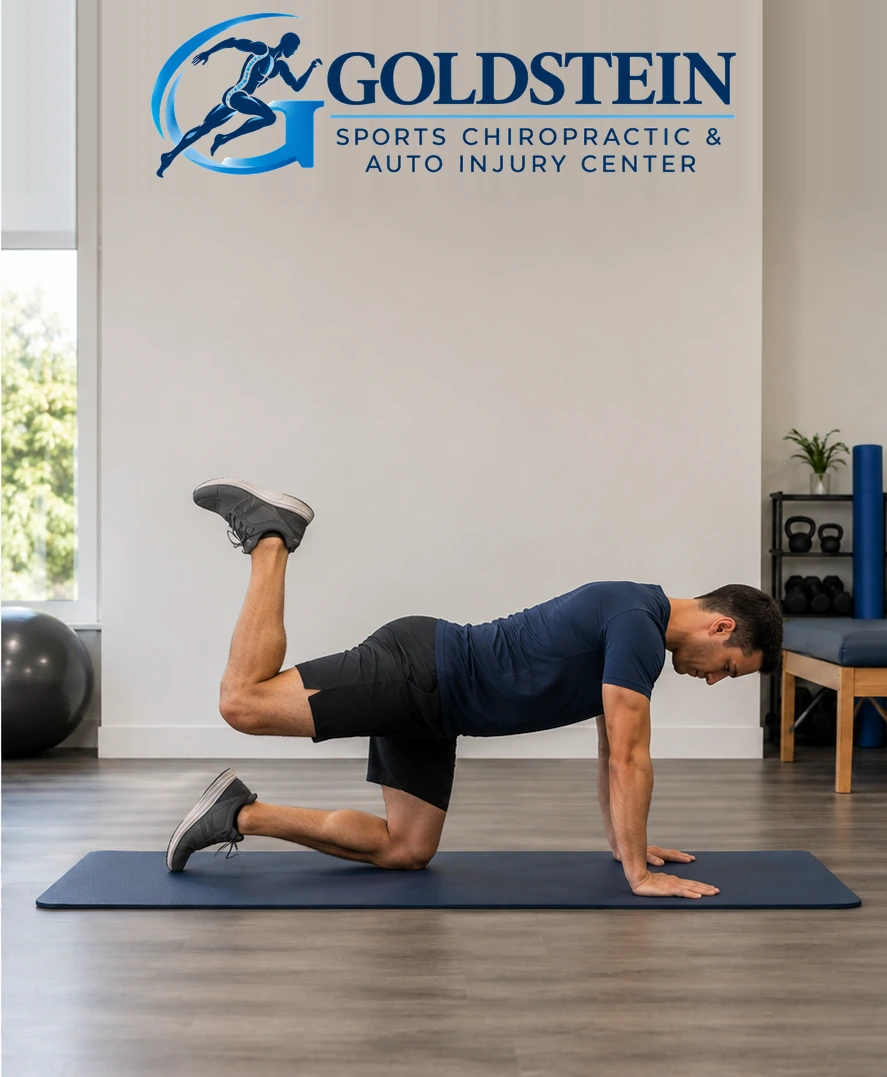
Start position. Temporary AI demonstration of Donkey Kicks; not Dr. Goldstein or an actual patient.

Start position

Movement position. Temporary AI demonstration of Donkey Kicks; not Dr. Goldstein or an actual patient.

Movement position

Exercise videoComing soon

Starting Position

Begin on hands and knees.

How to Do It

  1. Keep one knee bent as you lift that leg, bringing the sole toward the ceiling without forcing the back.
  2. Return and repeat on the opposite side.

What You Should Feel

Comfortable movement or muscle effort, without sharp pain.

Stop or Modify If

Stop for sharp or increasing pain, new numbness, tingling or weakness.
Back to Exercise Menu

Hip

Side Leg Raises

Review the controlled movement selected during care.

Sets
2–3
Reps
12–15 each side
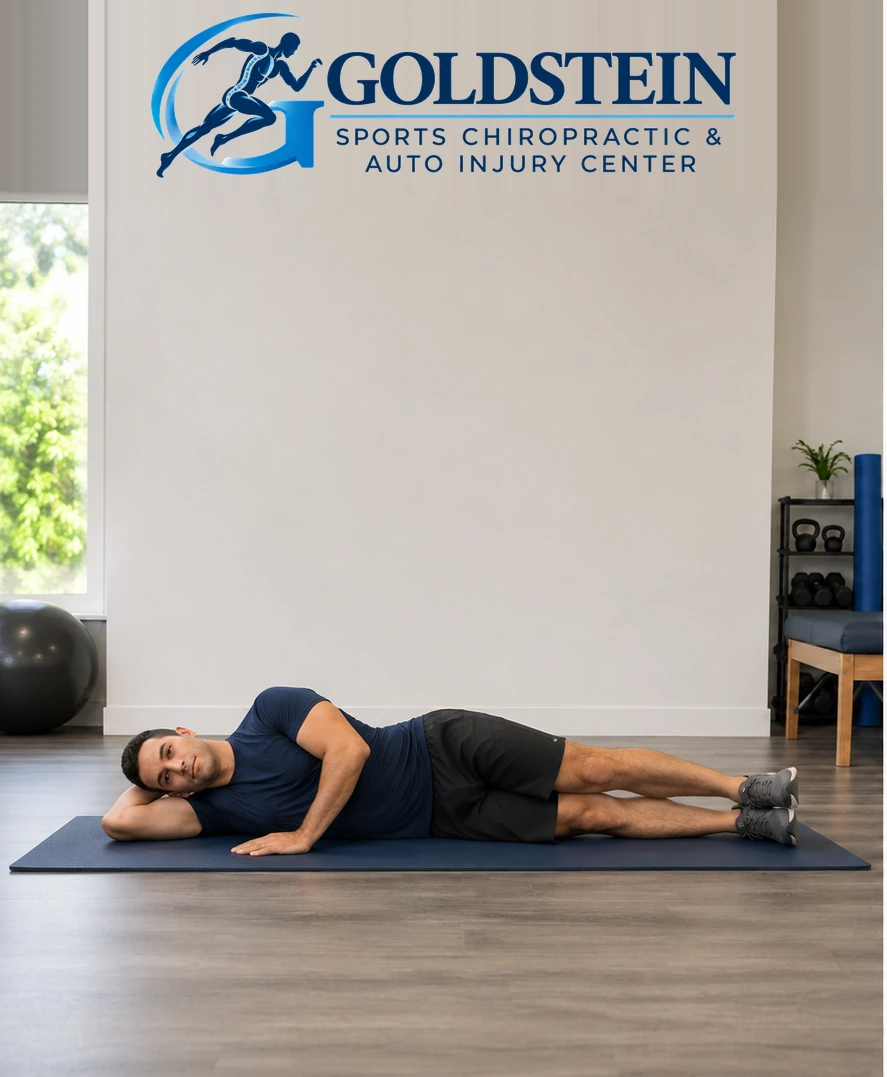
Start position. Temporary AI demonstration of Side Leg Raises; not Dr. Goldstein or an actual patient.

Start position

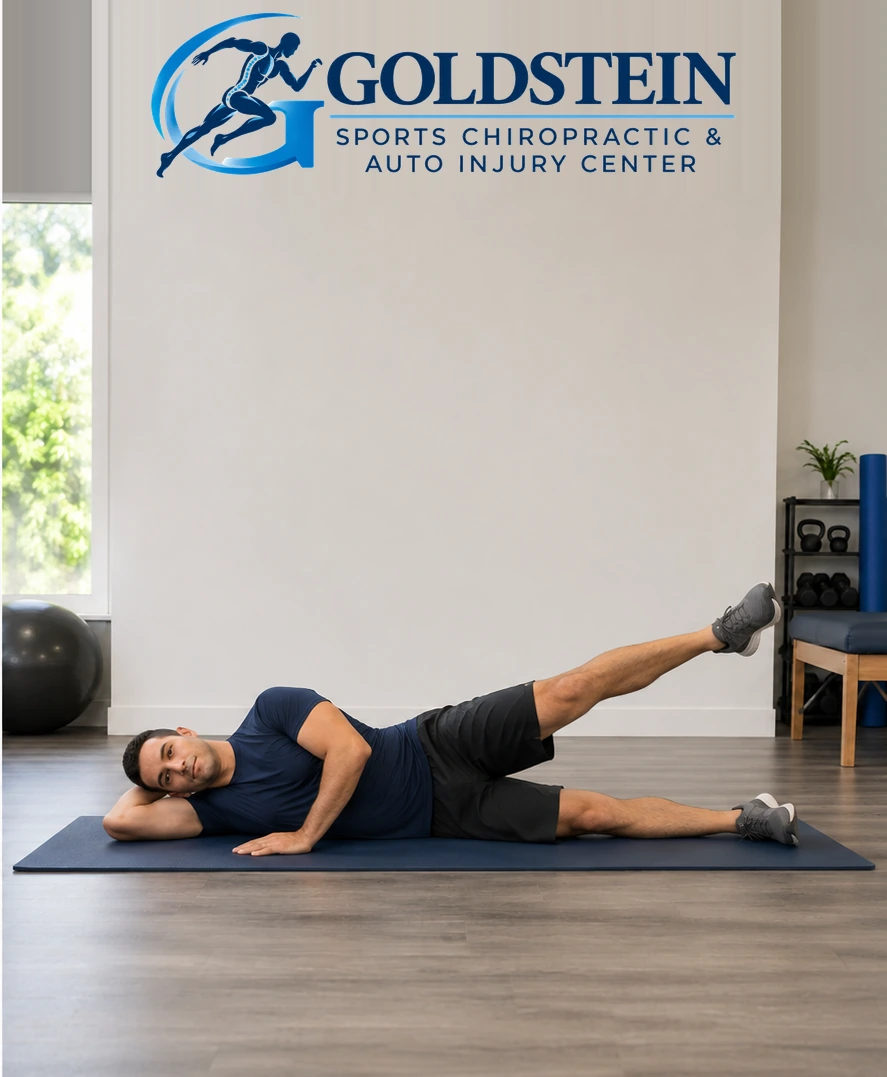
Movement position. Temporary AI demonstration of Side Leg Raises; not Dr. Goldstein or an actual patient.

Movement position

Exercise videoComing soon

Starting Position

Lie on your side with legs stacked.

How to Do It

  1. Lift the top leg within the comfortable range shown during care.
  2. Pause, lower and repeat on the opposite side.

What You Should Feel

Comfortable movement or muscle effort, without sharp pain.

Stop or Modify If

Stop for sharp or increasing pain, new numbness, tingling or weakness.
Back to Exercise Menu

Hip

Single-Leg Bridge

Review the controlled movement selected during care.

Repeats
2–3 each side
Hold
30 sec
Start position. Temporary AI demonstration of Single-Leg Bridge; not Dr. Goldstein or an actual patient.

Start position

Movement position. Temporary AI demonstration of Single-Leg Bridge; not Dr. Goldstein or an actual patient.

Movement position

Exercise videoComing soon

Starting Position

Lie on your back with knees bent, hands by your sides. Straighten one leg.

How to Do It

  1. Lift the hips with control.
  2. Hold, lower and repeat on the opposite side.

What You Should Feel

Comfortable movement or muscle effort, without sharp pain.

Stop or Modify If

Stop for sharp or increasing pain, new numbness, tingling or weakness.
Back to Exercise Menu

Medical Information & Sources

These movement reminders do not diagnose a condition or replace an evaluation, personalized rehabilitation plan or emergency care. Dosage reflects the office’s legacy exercise materials and Dr. Goldstein’s clarifications; it is not a recommendation to complete every movement.

Questions about your exercises?

Questions About an Exercise?

Ask which movements, range and repetitions are right for you. Follow the guidance provided during your care.