Decompression & traction
Decompression & Traction Therapy
Controlled Stretching for Selected Neck & Back Problems
Traction uses a controlled pulling or stretching force applied to a selected spinal region. Appropriateness depends on your symptoms, examination findings and individual circumstances.
Understanding the approach
What Is Spinal Traction?
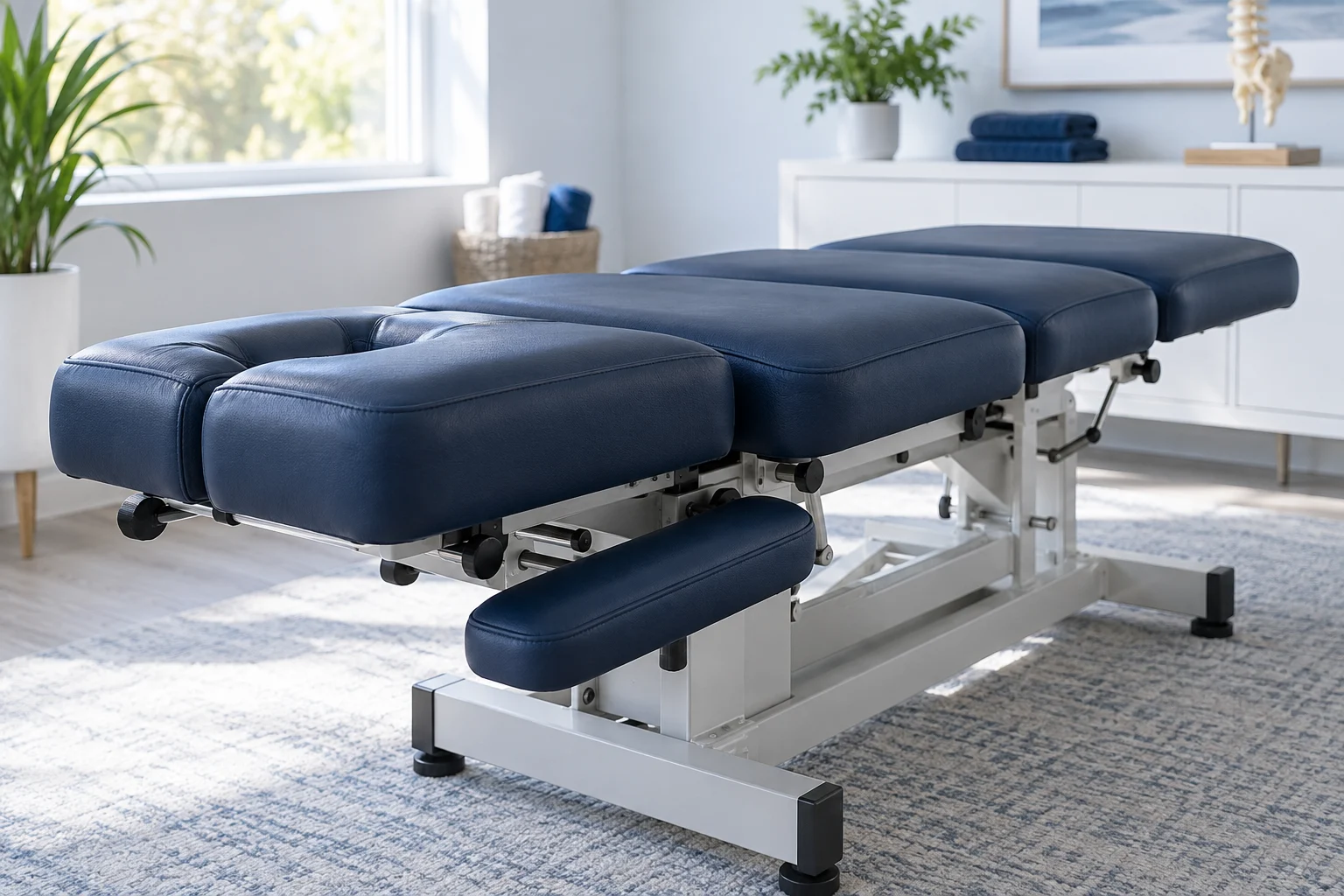
Traction applies a controlled force intended to distract or stretch a spinal region. Mechanical approaches use equipment to deliver that force while the body is supported. Technique and positioning depend on the clinical findings.
Understanding the terminology
What Does “Spinal Decompression” Mean?
The term is often used for nonsurgical traction-based approaches that apply distraction forces. This is different from surgical decompression, which involves an operation.
The name does not establish that discs are repaired, permanently rehydrated or restored to a different position.
During treatment
What Happens During a Traction Session?
The area being treated is supported while a controlled pulling force is applied. Dr. Goldstein monitors your response and may adjust the position or settings. The approach and schedule depend on your needs.
Your experience
What Does Traction Feel Like?
You may feel pulling, stretching or mild tension. Changing position may also change your symptoms. Treatment may not feel comfortable or provide immediate relief. Tell Dr. Goldstein about discomfort so treatment can be adjusted or stopped.
Selected presentations
When Might Traction Be Part of Care?
Traction has been studied for selected neck and back presentations, including some patients with radiating symptoms. The location, cause of symptoms and available evidence matter; symptoms alone do not establish suitability.
Realistic expectations
What Can Traction Realistically Do?
Some studies report short-term symptom or function changes in selected situations. Findings vary by condition, traction type, protocol and patient selection; they do not establish a lasting benefit for everyone.
Dr. Goldstein will discuss what the evidence does—and does not—show and how your response to treatment will be monitored.
Understanding disc claims
Does Traction Pull a Herniated Disc Back Into Place?
Descriptions of a disc being “pulled” or “sucked” back into place should not be treated as an established guaranteed clinical mechanism.
Decisions should focus on symptoms, function, examination and response rather than assuming an imaging finding is being physically reversed.
Neck and arm symptoms
Cervical Traction for Neck & Arm Symptoms
Cervical traction has been studied for selected neck conditions with radiating arm symptoms, sometimes alongside exercise and other care. Benefits vary and may be modest; arm symptoms require assessment.
Explore Conditions & Concerns →Back and leg symptoms
Lumbar Traction for Back & Leg Symptoms
Lumbar traction has been studied for low-back pain and radiating leg symptoms. Research has not consistently shown added benefit, and major guidance does not recommend its routine use for low-back pain with or without sciatica.
Radiating pain or a disc finding alone does not determine whether traction is appropriate.
Part of a broader plan
Combining Traction with Rehabilitation
Mobility work, exercise, strengthening, activity progression and home recommendations may be part of care. If traction is considered, it should fit that plan; it is not required before exercise.
Explore Rehabilitation →Evaluation after a collision
Traction After a Car Accident
Neck or back symptoms after a collision require evaluation first. Traction is not automatically appropriate after trauma; medical assessment, imaging, modified care or referral may take priority.
Explore Auto Accident Care →Activity and individual needs
Traction for Sports & Active Patients
Selected active patients with an appropriate presentation may discuss traction as one option. Care decisions consider examination findings and activity demands rather than athletic participation alone.
Explore Sports Injury Care →Understanding the difference
Traction vs. Chiropractic Adjustments
Traction applies distraction or stretching force. An adjustment uses controlled force at selected joints. Depending on the evaluation, options may include either approach, rehabilitation, manual care or something else; one is not automatically better.
Learn About Chiropractic Adjustments →Safety first
When Traction May Need to Be Modified or Avoided
Suspected fracture, serious trauma, spinal instability, progressive neurological symptoms, significant bone fragility, or infection or malignancy involving the spine may make traction inappropriate.
Vascular concerns and pregnancy may also affect the approach or positioning. This is not a self-clearance checklist; medical history and examination guide whether medical evaluation or referral is needed.
Your comfort matters
Treatment Should Be Adjusted to the Patient
Position, force and duration can be adjusted to clinical findings, history and response. Traction can increase pain or aggravate neurological symptoms. Report worsening pain, numbness, tingling or unusual discomfort promptly so treatment can stop and be reassessed.
Considering your options
How Traction Fits with Other Treatment Options
Depending on your evaluation, Dr. Goldstein may discuss rehabilitation, adjustments, manual therapy, laser or shockwave. Your plan includes the options that fit your needs, rather than every treatment available.
Evaluation first
Traction & Decompression with Dr. Brett Goldstein
Dr. Brett Goldstein, D.C. uses your examination to recommend treatment. Positioning and technique are tailored to you, and rehabilitation may be included when appropriate.
Response is monitored, and referral or co-management is considered when indicated.
Meet Dr. Goldstein →A considered approach
What to Expect at Your Visit
Discuss Your Symptoms
Share concerns, goals and relevant history.
Evaluation
Review movement and examination findings.
Review Treatment Options
Discuss expectations, precautions and alternatives.
Traction If Appropriate
Treatment proceeds only when appropriate. It may not begin at the first visit.
Common questions
Decompression & Traction FAQs
What is spinal traction?
A controlled pulling or stretching force applied to a selected spinal region. The approach depends on examination findings and individual circumstances.
What does “spinal decompression” mean?
In this context, it describes nonsurgical traction-based approaches. It is different from decompression surgery and does not establish permanent structural change.
What does traction feel like?
You may feel pulling, stretching or tension. Symptoms can change with positioning; tell Dr. Goldstein about discomfort.
Does traction pull a herniated disc back into place?
That should not be assumed. A disc being sucked or pulled back into place is not an established guaranteed clinical mechanism. Care should focus on symptoms, function and clinical response.
Can traction help with radiating arm or leg symptoms?
It has been studied in selected presentations. Cervical and lumbar findings differ, and radiating symptoms require assessment rather than automatically indicating traction.
Is traction the same as an adjustment?
No. Traction applies distraction or stretching force; an adjustment is a more specific technique applying controlled force at selected joints.
Can traction be used after a car accident?
Only when appropriate after evaluation. Serious trauma, instability or suspected fracture may require medical assessment, imaging or referral instead.
Can traction be combined with rehabilitation?
Yes, when appropriate. Exercise and activity progression remain important; traction is not required before exercise.
Is traction painful?
It may cause discomfort or increased symptoms. Report worsening pain, numbness, tingling or unusual sensations promptly so treatment can be stopped and reassessed.
How many sessions will I need?
There is no fixed number for everyone. Recommendations depend on findings, goals and response. Treatment at the first visit is not guaranteed.
Are there risks or precautions?
Yes. Bone fragility, instability, serious injury, spinal infection or malignancy, and neurological or vascular concerns can affect suitability. History and examination come first.
Is everyone a candidate?
No. The condition, examination, health history and proposed approach determine whether traction is appropriate, should be modified or should be avoided.
Medical Information
This page provides general educational information and does not replace individual medical evaluation or emergency care.
Sources: NICE: low-back pain and sciatica; Cochrane: lumbar traction; cervical traction review; lumbar radiculopathy review; clinical overview and precautions. Reviewed September 2026.
Decompression & traction
Wondering Whether Traction Is Appropriate for You?
Start with an evaluation and a conversation about your symptoms, examination findings, treatment options and realistic expectations.