Patient Exercise Library

Neck & Cervical Exercise Resources

Review the neck and shoulder movements selected for you during care.

A reminder of movements you may have been shown in the office—not an individual exercise prescription for every visitor. Your personal care instructions come first.

Exercise pictures use AI demonstration models—not Dr. Goldstein or real patients. Follow your individual care instructions.

Before You Begin · Safety & Setup

Use the comfortable range and level of effort shown during your visit. These are separate movement reminders, not a routine to complete in full.

Do not begin exercises for suspected serious trauma. Stop for significant dizziness, new or worsening arm symptoms, weakness or severe pain. Sudden trouble speaking, facial drooping or one-sided weakness requires emergency care—call 911.

Neck

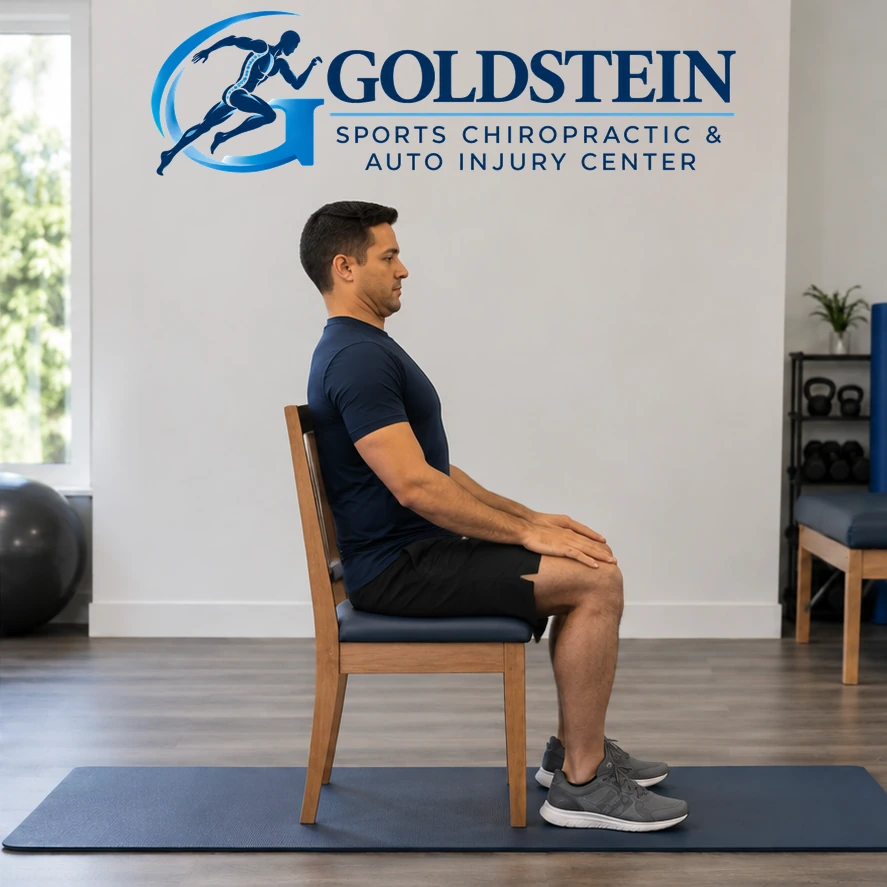
Chin Tucks

Practice a small backward glide of the head.

Sets
2
Reps
10
Hold
5 sec

Legacy frequency: daily or at least 3–5 times per week. Follow the option selected in your care plan.
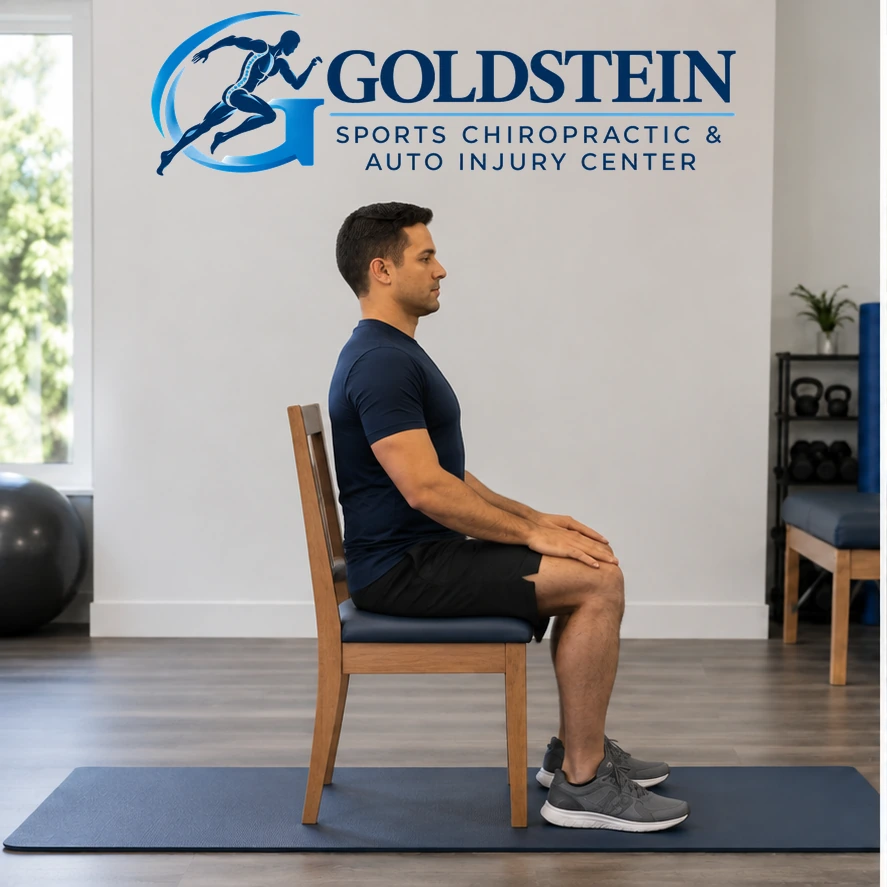
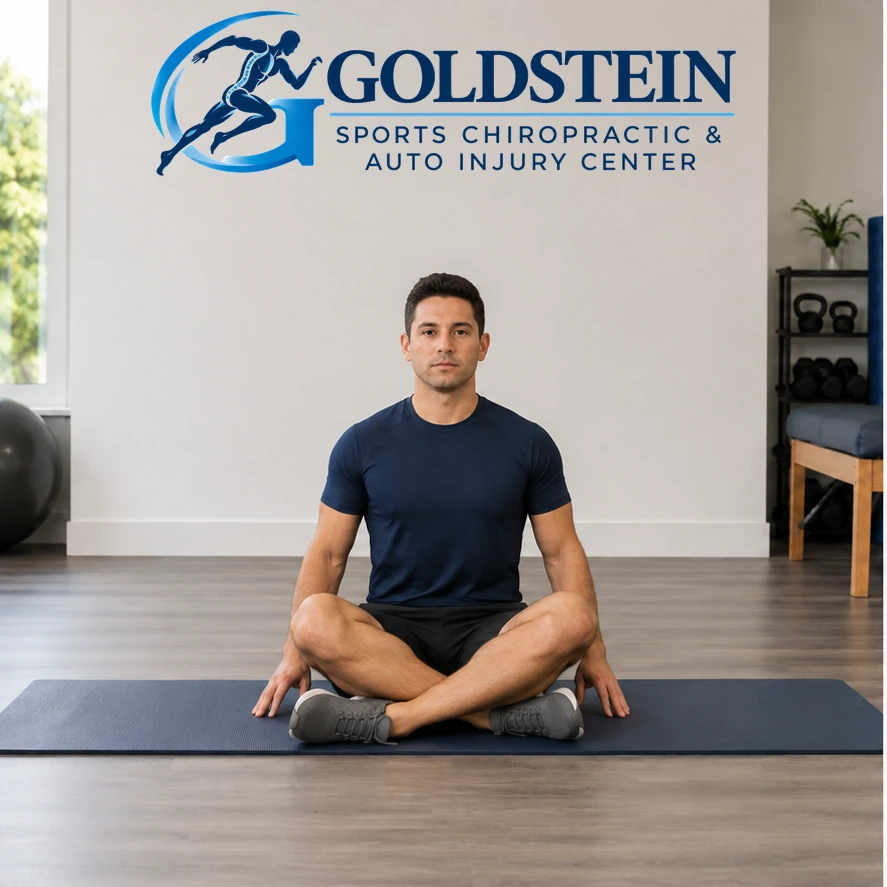
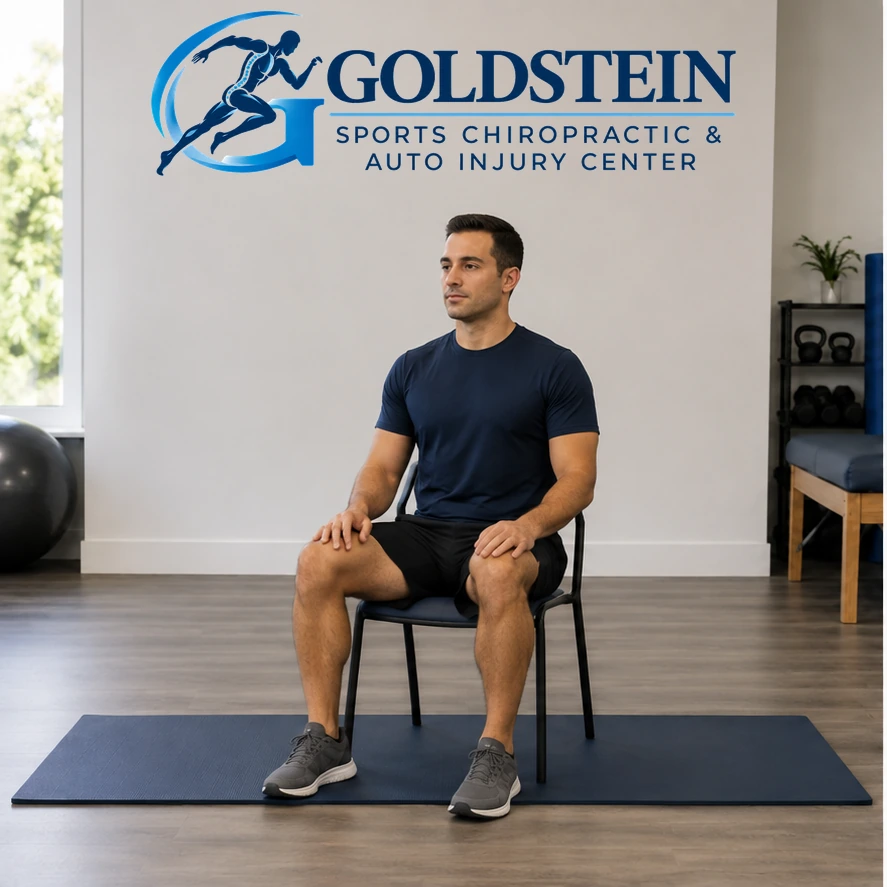
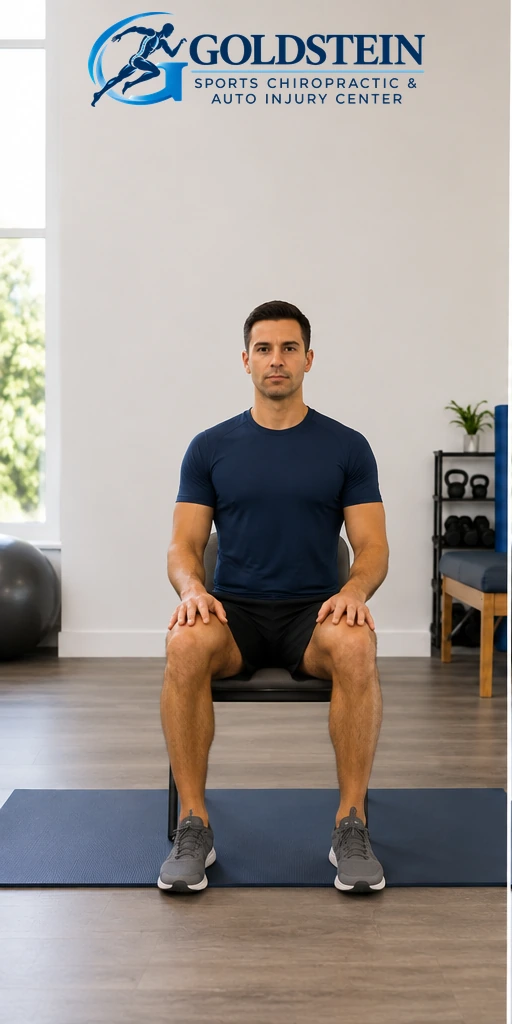
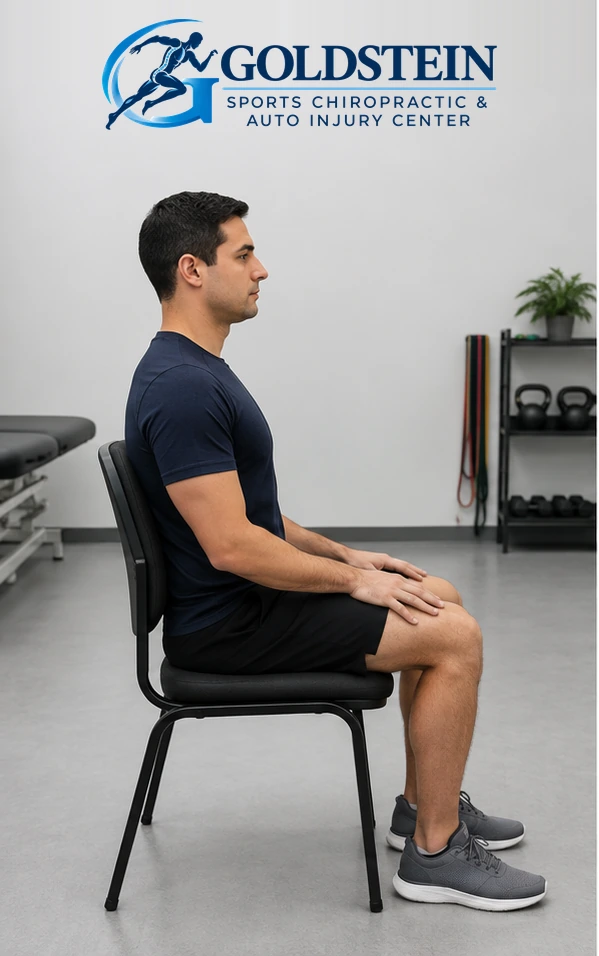
Start position. Temporary AI model demonstrating Chin Tucks, not Dr. Goldstein. Start and movement positions are described in the instructions.

Start position

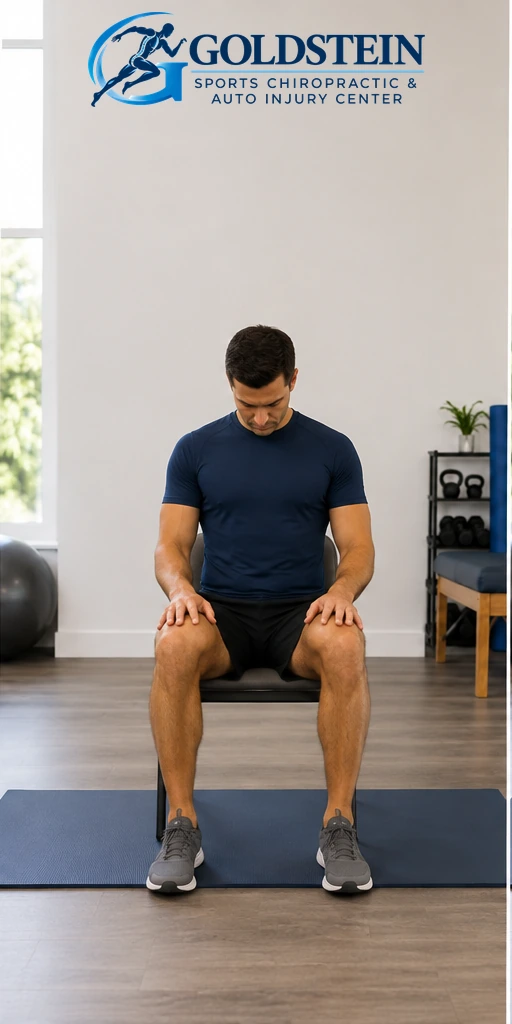
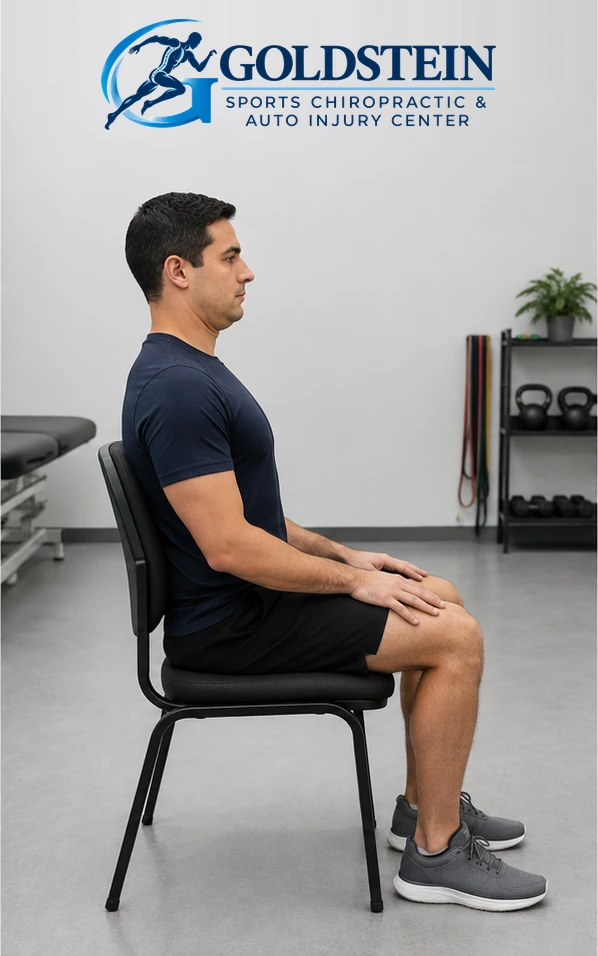
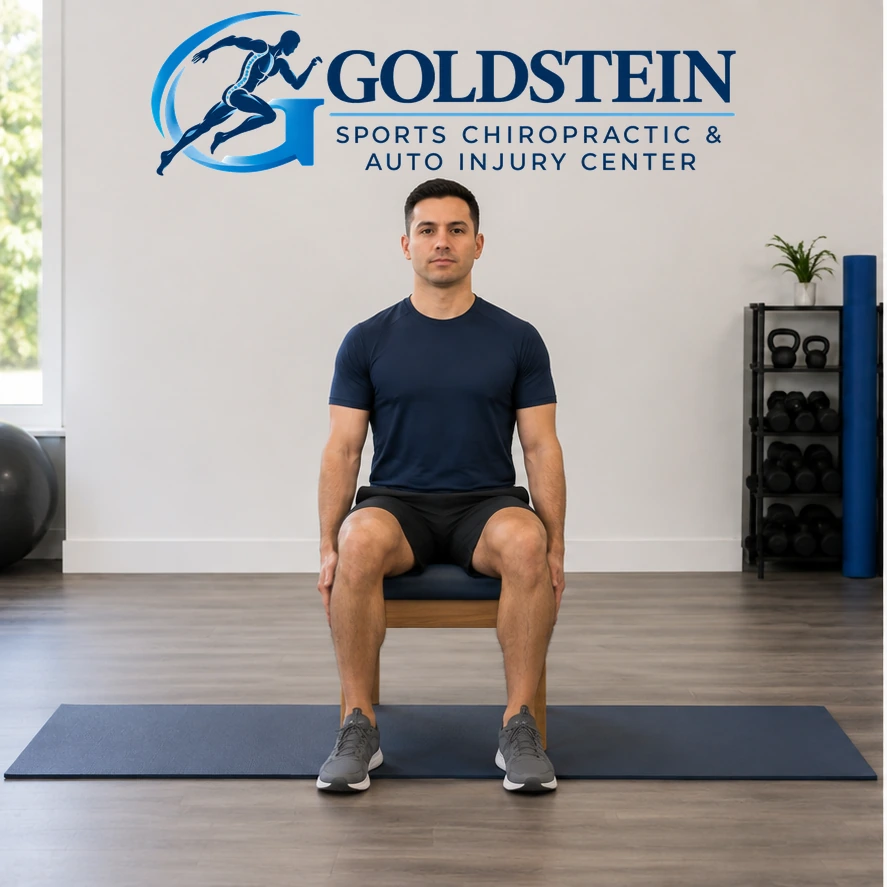
Movement position. Temporary AI model demonstrating Chin Tucks, not Dr. Goldstein. Start and movement positions are described in the instructions.

Movement position

Exercise videoComing soon

Starting Position

Sit comfortably with eyes looking straight ahead.

How to Do It

  1. Gently draw your chin back to make a small double chin.
  2. Keep your gaze level during the hold.
  3. Release without tipping your head upward or downward.

What You Should Feel

A light stretch or gentle effort around the back of the neck.

Stop or Modify If

Do not perform with jaw pain. Stop for dizziness, arm symptoms or increasing pain.
Back to Exercise Menu

Neck

Shoulder Shrugs

Practice controlled shoulder elevation and release.

Reps
10
Hold
1 sec

Legacy frequency: daily or at least 3–5 times per week. Follow the option selected in your care plan.

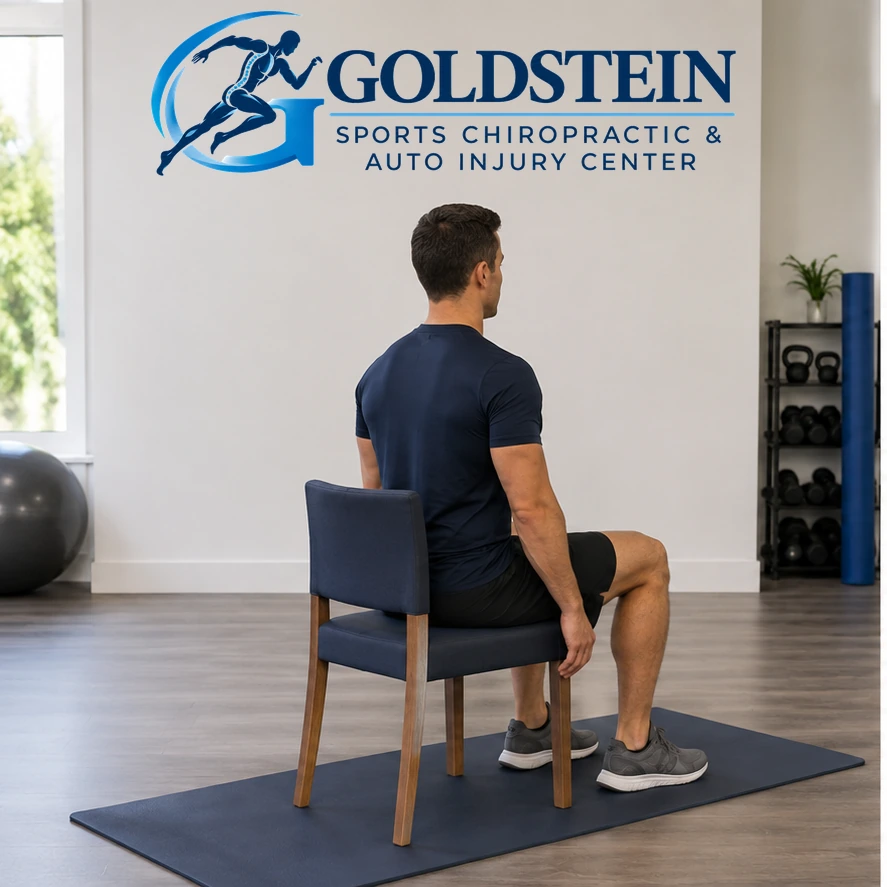
Start position. Temporary AI model demonstrating Shoulder Shrugs, not Dr. Goldstein. Start and movement positions are described in the instructions.

Start position

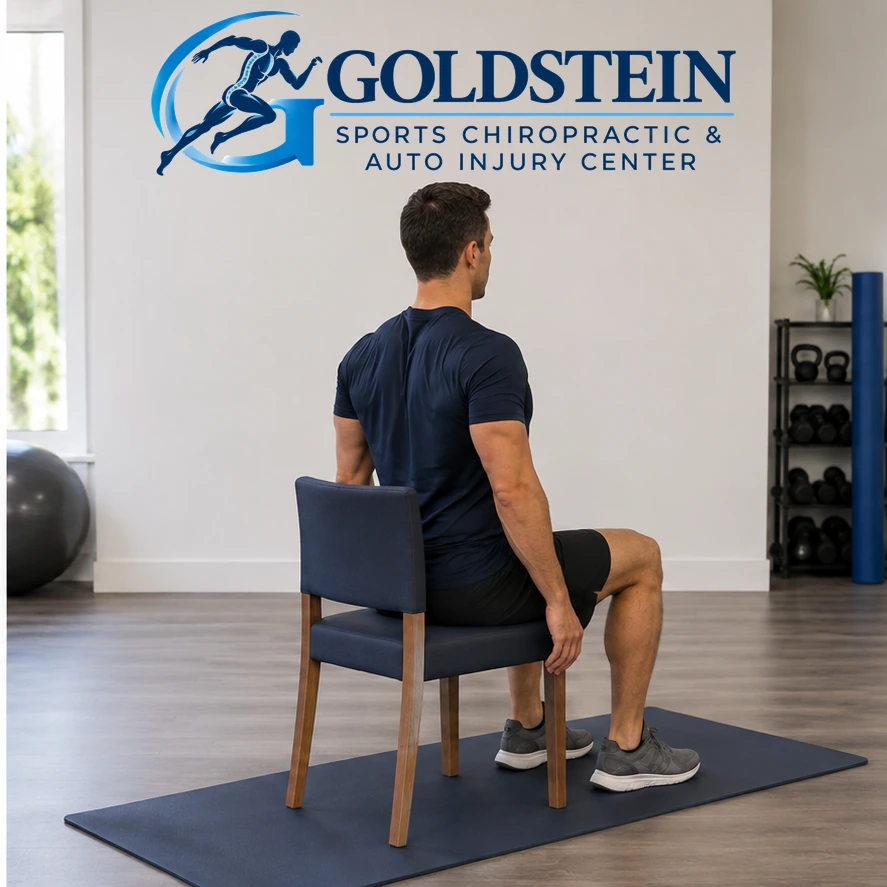
Movement position. Temporary AI model demonstrating Shoulder Shrugs, not Dr. Goldstein. Start and movement positions are described in the instructions.

Movement position

Exercise videoComing soon

Starting Position

Sit or stand securely with your arms relaxed.

How to Do It

  1. Lift your shoulders toward your ears without forcing.
  2. Hold for one second.
  3. Release back down.

What You Should Feel

Gentle effort around the upper shoulders followed by relaxation.

Stop or Modify If

Reduce the range if the shoulder is uncomfortable; stop if pain persists.

Back to Exercise Menu

Neck

Scapular Retraction

Practice controlled shoulder-blade movement.

Sets
2
Reps
15
Hold
5 sec

Legacy frequency: daily or at least 3–5 times per week. Follow the option selected in your care plan.

Start position. Temporary AI model demonstrating Scapular Retraction, not Dr. Goldstein. Start and movement positions are described in the instructions.

Start position

Movement position. Temporary AI model demonstrating Scapular Retraction, not Dr. Goldstein. Start and movement positions are described in the instructions.

Movement position

Exercise videoComing soon

Starting Position

Sit or stand comfortably with arms relaxed.

How to Do It

  1. Bring the shoulder blades toward each other without raising the shoulders.
  2. Hold, keeping the shoulders down.
  3. Release fully.

What You Should Feel

Gentle effort between the shoulder blades.

Common Mistake

Avoid hunching forward or shrugging.

Stop or Modify If

Stop if neck, shoulder or arm symptoms increase.

Back to Exercise Menu

Neck

Isometric Neck Strengthening

Practice neck muscle engagement without moving the head.

Sets
2
Reps
10 each direction
Hold
5 sec

Legacy frequency: daily or at least 3–5 times per week. Follow the option selected in your care plan.

Front resistance. Temporary AI model demonstrating Isometric Neck Strengthening, not Dr. Goldstein. Start and movement positions are described in the instructions.

Front resistance

Back resistance. Temporary AI model demonstrating Isometric Neck Strengthening, not Dr. Goldstein. Start and movement positions are described in the instructions.

Back resistance

Right resistance. Temporary AI model demonstrating Isometric Neck Strengthening, not Dr. Goldstein. Start and movement positions are described in the instructions.

Right resistance

Left resistance. Temporary AI model demonstrating Isometric Neck Strengthening, not Dr. Goldstein. Start and movement positions are described in the instructions.

Left resistance

Exercise videoComing soon

Starting Position

Sit upright with your head in a neutral position.

How to Do It

  1. Place your hand against your forehead and gently press the head against the hand without moving.
  2. Hold, then release.
  3. Repeat with the hand against each side and then the back of the head, resisting in that direction.

What You Should Feel

Controlled neck muscle effort.

Common Mistake

Use moderate pressure; do not hold your breath.

Stop or Modify If

Do not perform with acute neck pain. Stop for pain, dizziness or new arm symptoms.

Back to Exercise Menu

Neck

Side-Lying Arm Raises

Practice controlled shoulder movement and muscle work.

Sets
2
Reps
15 each arm

Legacy frequency: daily or at least 3–5 times per week. Follow the option selected in your care plan.

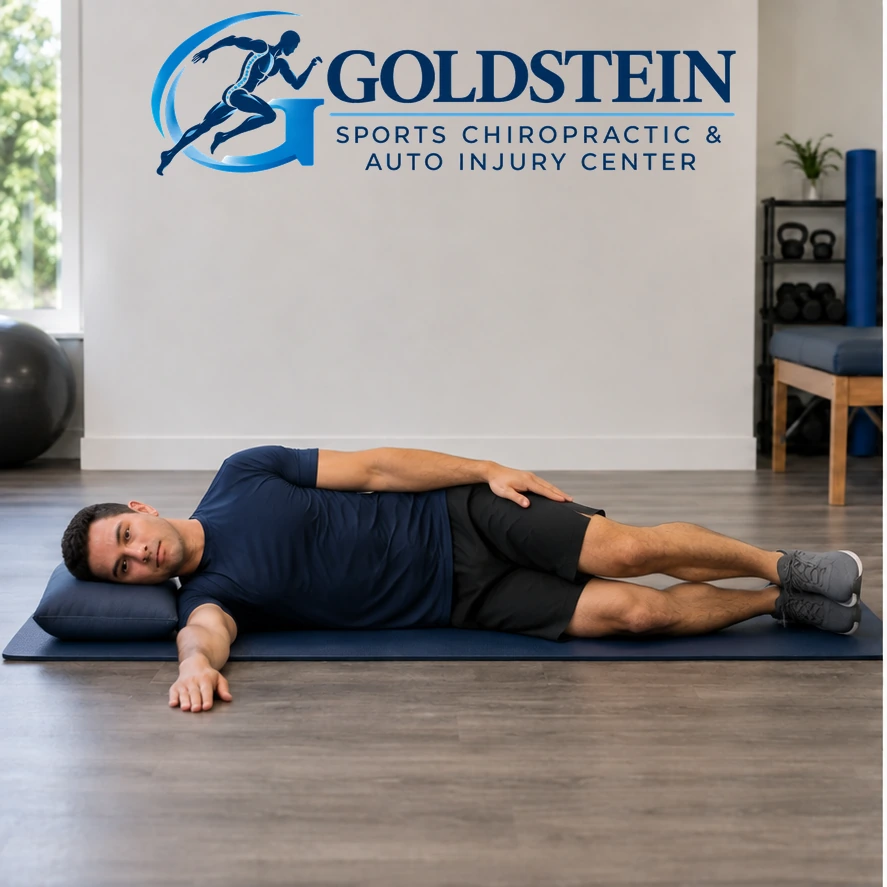
Start position. Temporary AI model demonstrating Side-Lying Arm Raises, not Dr. Goldstein. Start and movement positions are described in the instructions.

Start position

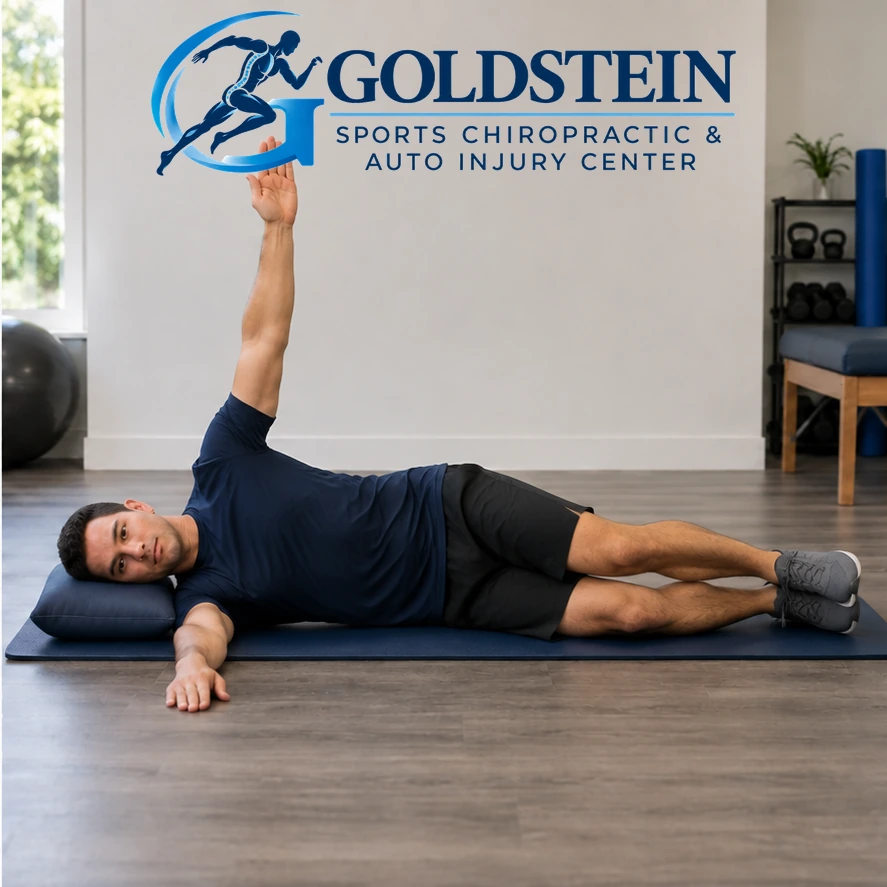
Movement position. Temporary AI model demonstrating Side-Lying Arm Raises, not Dr. Goldstein. Start and movement positions are described in the instructions.

Movement position

Exercise videoComing soon

Starting Position

Lie on your side with your head supported and the top arm resting by your side.

How to Do It

  1. Lift the top arm toward the ceiling with the elbow straight.
  2. Lower slowly.
  3. Repeat on the opposite side. The legacy option uses a light 1–2 lb weight only when that variation has been selected during care.

What You Should Feel

Shoulder muscle effort, not pinching.

Stop or Modify If

Do not perform with shoulder pain; stop for new arm symptoms.

Back to Exercise Menu

Neck · Progression

Side-Lying Arm Raise · Light-Weight Option

Practice controlled shoulder movement and muscle work.

Sets
2
Reps
15 each arm
Optional weight
1–2 lb

Legacy frequency: daily or at least 3–5 times per week. Follow the option selected in your care plan.

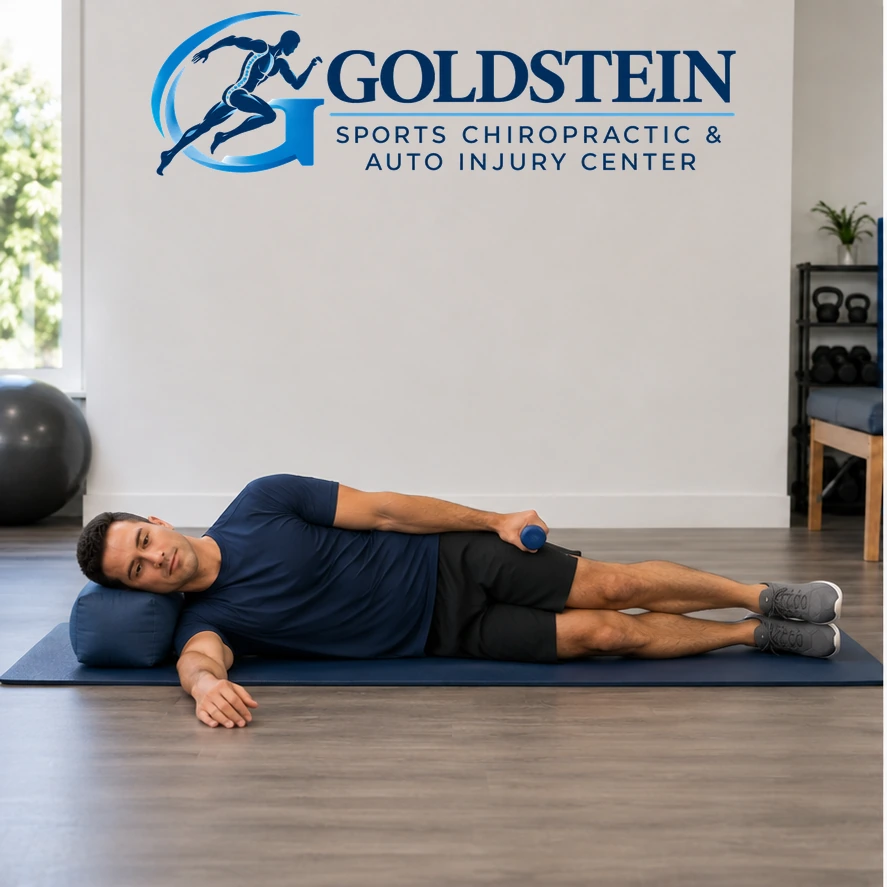
Start position. Temporary AI model showing the light-weight side-lying arm raise, not Dr. Goldstein.

Start position

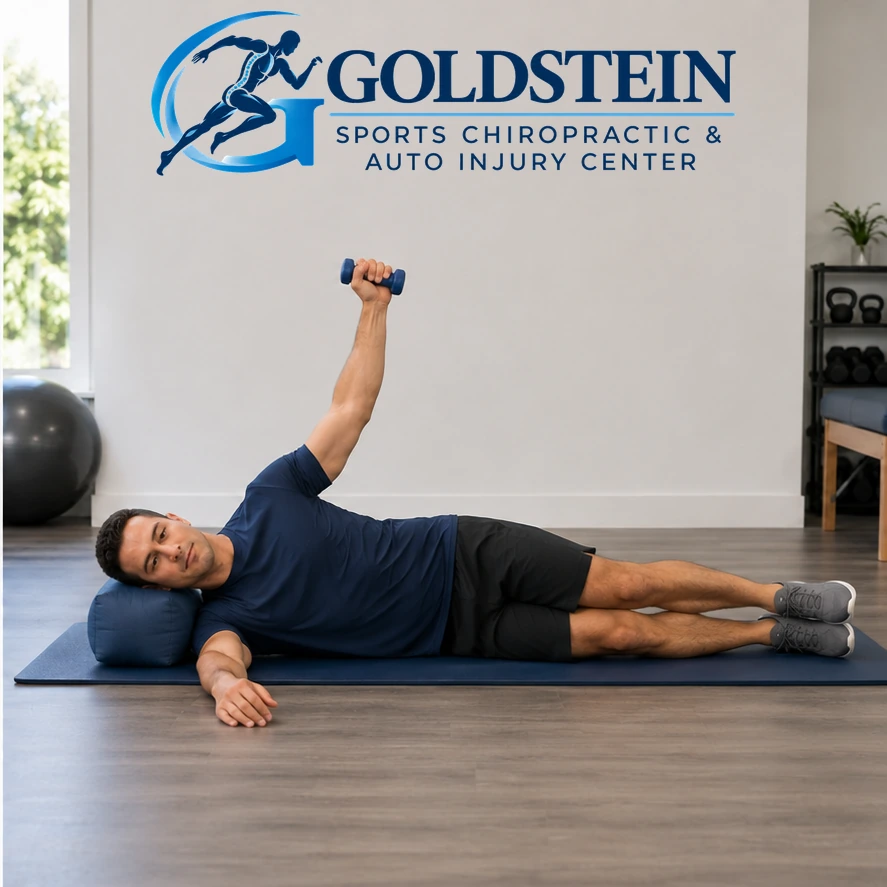
Movement position. Temporary AI model showing the light-weight side-lying arm raise, not Dr. Goldstein.

Movement position

Exercise videoComing soon

Starting Position

Lie on your side with your head supported. Hold the selected light weight in the top hand, with the arm resting by your side.

How to Do It

  1. Use the legacy 1–2 lb option only when it has been selected during care.
  2. Lift the top arm toward the ceiling with the elbow straight, then lower slowly.
  3. Repeat on the opposite side.

What You Should Feel

Shoulder muscle effort, not pinching.

Stop or Modify If

Do not perform with shoulder pain; stop for new arm symptoms.

Back to Exercise Menu

Neck

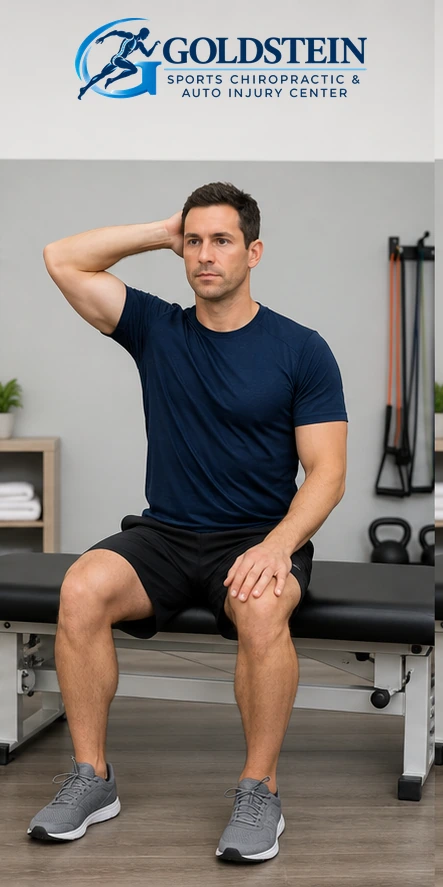
Upper Trapezius Stretch

Explore a gentle side-of-neck stretch.

Hold
20–30 sec
Repeats
2–3 each side

Legacy frequency: daily or at least 3–5 times per week. Follow the option selected in your care plan.

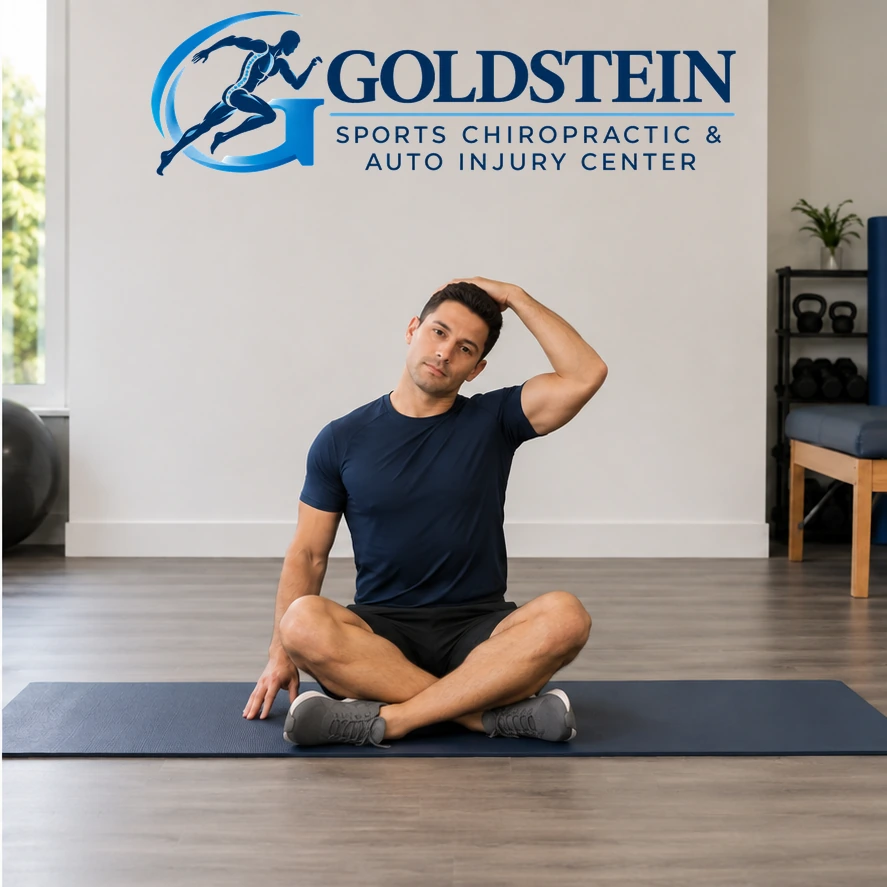
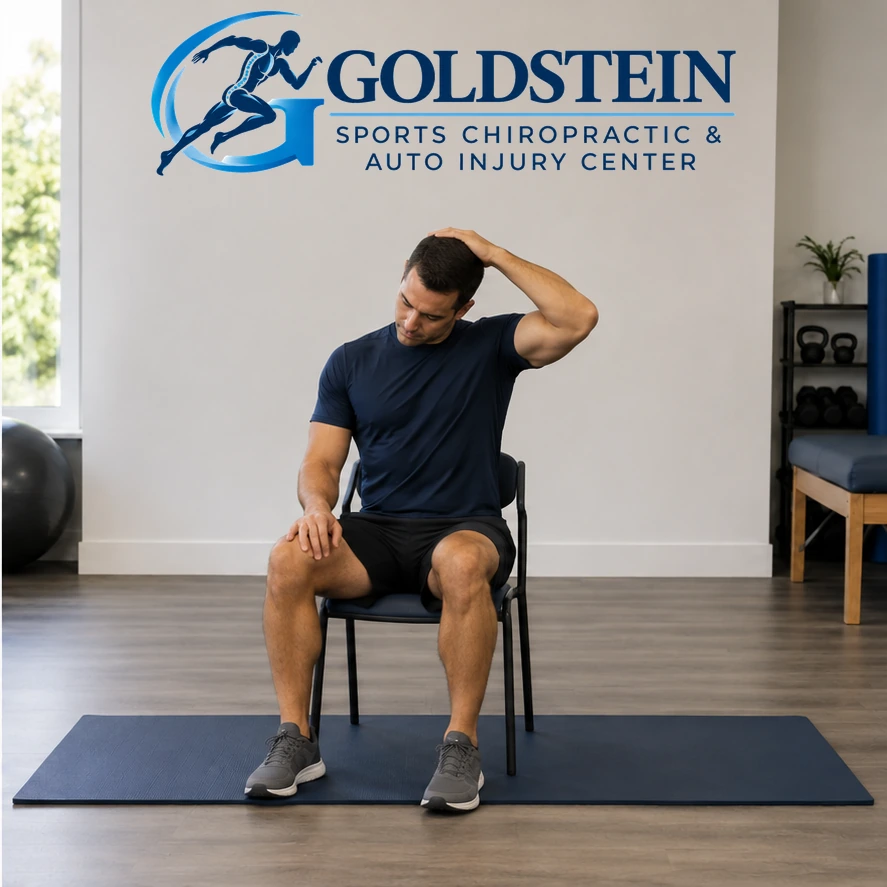
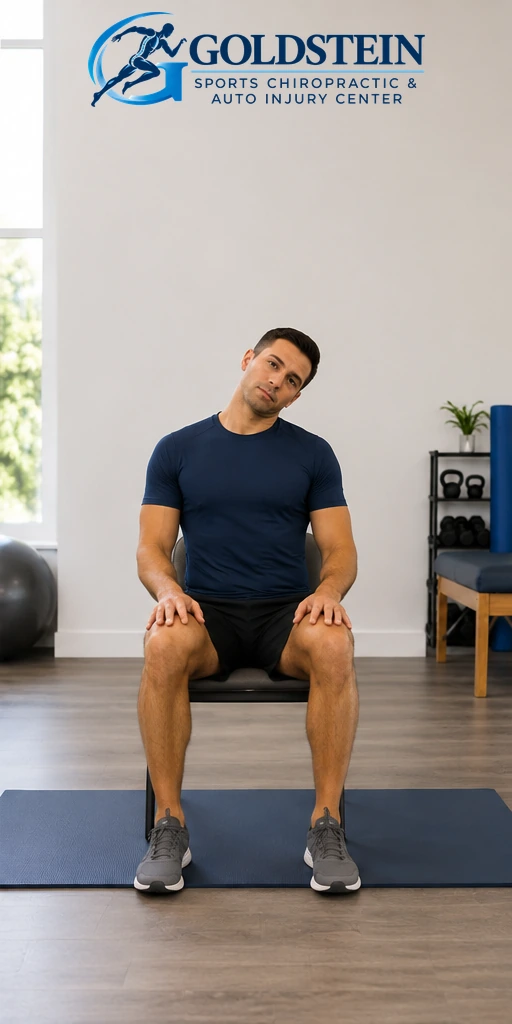
Start position. Temporary AI model demonstrating Upper Trapezius Stretch, not Dr. Goldstein. Start and movement positions are described in the instructions.

Start position

Movement position. Temporary AI model demonstrating Upper Trapezius Stretch, not Dr. Goldstein. Start and movement positions are described in the instructions.

Movement position

Exercise videoComing soon

Starting Position

Sit or stand comfortably with shoulders relaxed.

How to Do It

  1. Tilt your head so one ear approaches that shoulder.
  2. Use the same-side hand for gentle assistance, without forcing.
  3. Hold, then release. Repeat on the opposite side.

What You Should Feel

A gentle stretch along the opposite side of the neck.

Common Mistake

Keep the opposite shoulder down.

Stop or Modify If

Stop for increasing pain, dizziness, tingling or numbness.

Back to Exercise Menu

Neck

Chest Opener Stretch

Explore chest and shoulder movement.

Hold
20–30 sec
Repeats
2–3

Legacy frequency: daily or at least 3–5 times per week. Follow the option selected in your care plan.

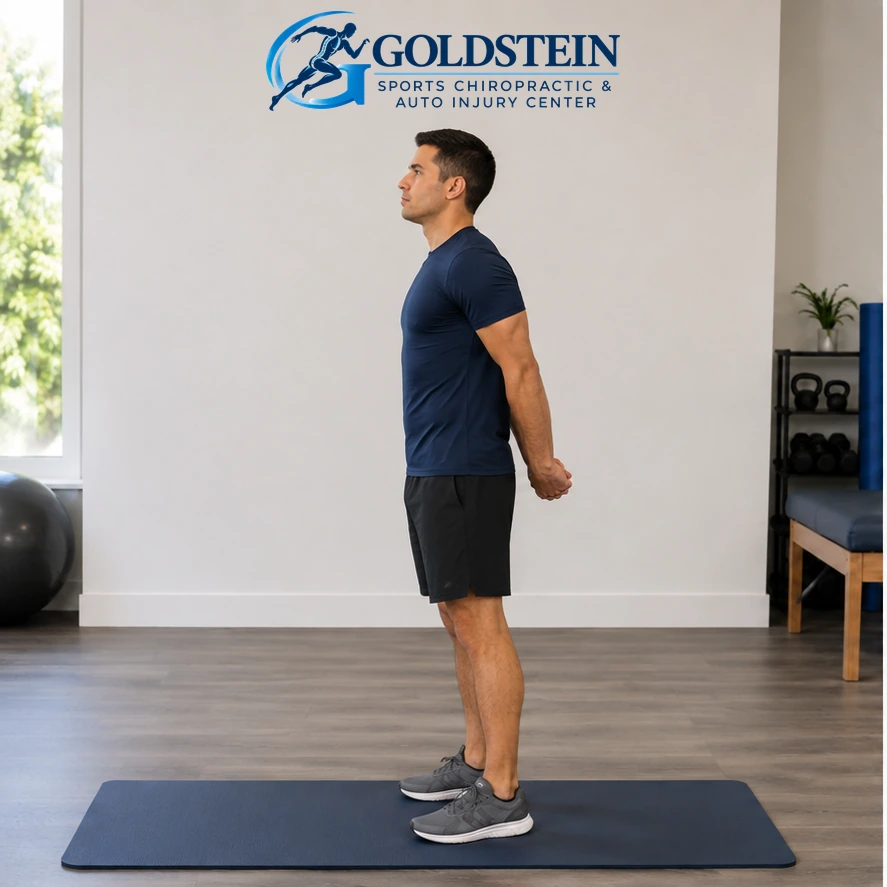
Start position. Temporary AI model demonstrating Chest Opener Stretch, not Dr. Goldstein. Start and movement positions are described in the instructions.

Start position

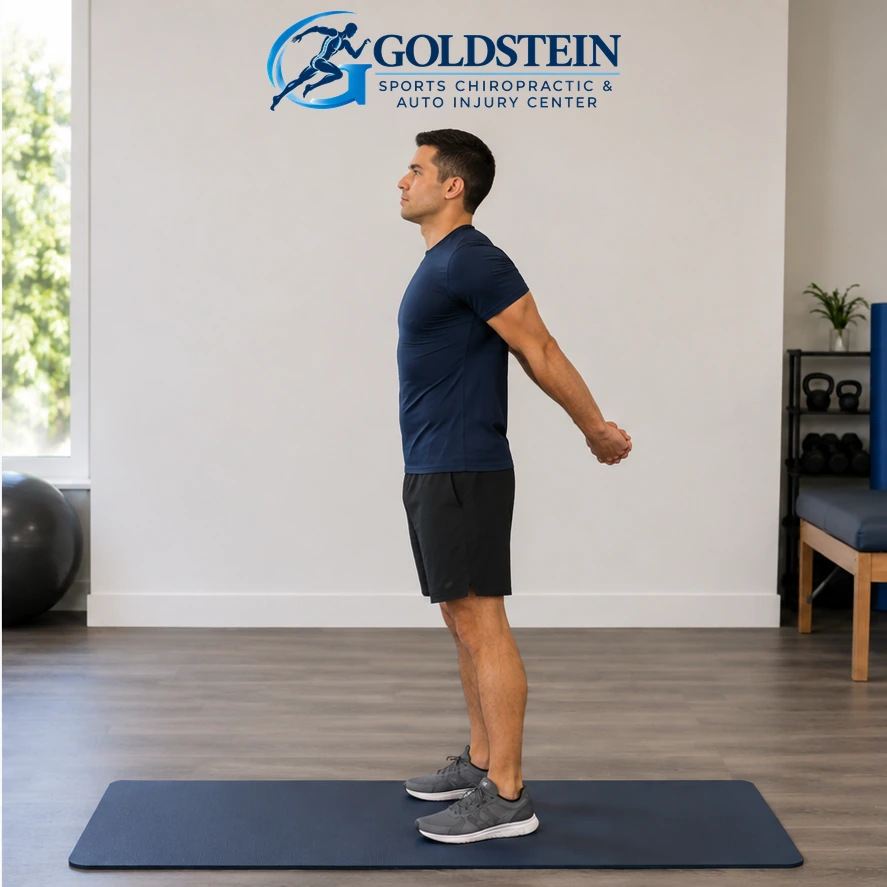
Movement position. Temporary AI model demonstrating Chest Opener Stretch, not Dr. Goldstein. Start and movement positions are described in the instructions.

Movement position

Exercise videoComing soon

Starting Position

Stand with feet shoulder-width apart and clasp your hands behind your back.

How to Do It

  1. Gently lift the arms behind you to open the chest.
  2. Keep shoulder blades comfortably together during the hold.
  3. Release slowly.

What You Should Feel

A gentle chest and front-of-shoulder stretch.

Common Mistake

Do not force the hands higher by arching the back.

Stop or Modify If

Do not perform with shoulder pain; stop for arm symptoms.

Back to Exercise Menu

Neck

Levator Scapulae Stretch

Explore a gentle side-and-back-of-neck stretch.

Hold
20–30 sec
Repeats
2–3 each side

Legacy frequency: daily or at least 3–5 times per week. Follow the option selected in your care plan.

Start position. Temporary AI model demonstrating Levator Scapulae Stretch, not Dr. Goldstein. Start and movement positions are described in the instructions.

Start position

Movement position. Temporary AI model demonstrating Levator Scapulae Stretch, not Dr. Goldstein. Start and movement positions are described in the instructions.

Movement position

Exercise videoComing soon

Starting Position

Sit or stand comfortably with relaxed shoulders.

How to Do It

  1. Angle your head forward toward one armpit.
  2. Use your hand for gentle downward assistance without pulling hard.
  3. Hold and release. Repeat on the opposite side.

What You Should Feel

A gentle stretch along the side and back of the neck.

Stop or Modify If

Stop for dizziness, increasing pain or arm symptoms.

Back to Exercise Menu

Neck

Neck Rolls

Explore controlled circular neck movement.

Reps
5 each direction

Legacy frequency: daily or at least 3–5 times per week. Follow the option selected in your care plan.

Start. Temporary AI model demonstrating Neck Rolls, not Dr. Goldstein. Start and movement positions are described in the instructions.

Start

Front of the arc. Temporary AI model demonstrating Neck Rolls, not Dr. Goldstein. Start and movement positions are described in the instructions.

Front of the arc

Side of the arc. Temporary AI model demonstrating Neck Rolls, not Dr. Goldstein. Start and movement positions are described in the instructions.

Side of the arc

Exercise videoComing soon

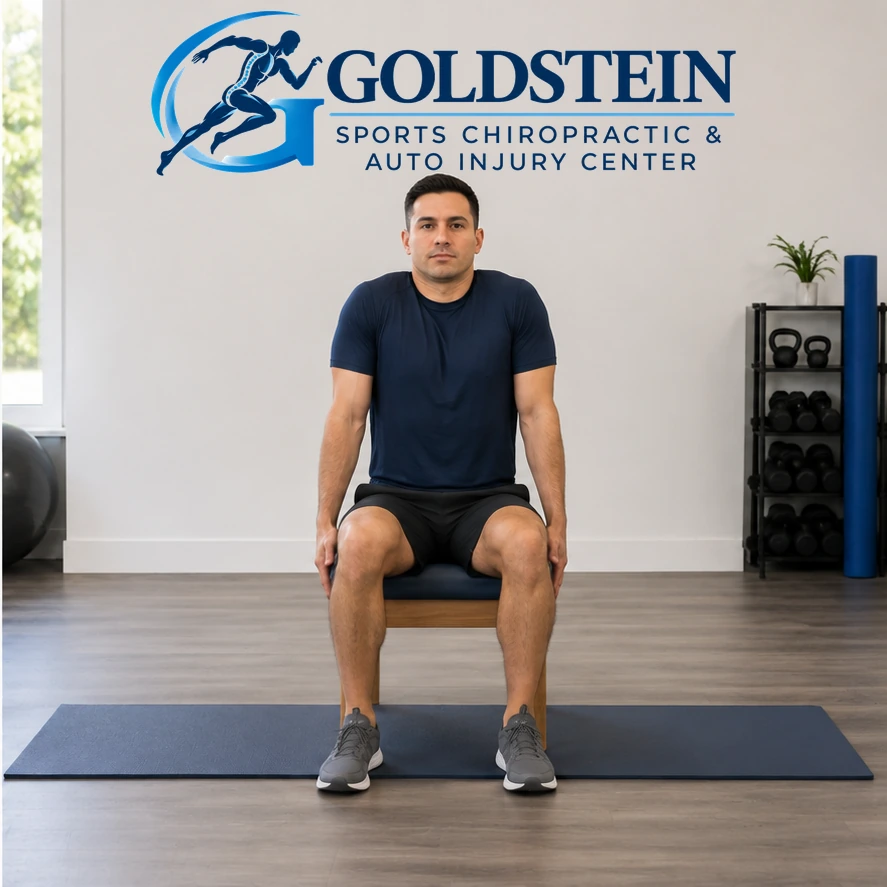
Starting Position

Begin upright with your shoulders relaxed. Use only the comfortable range shown during your visit.

How to Do It

  1. Move your head slowly through a small comfortable circle.
  2. Do not force any part of the circle.
  3. Repeat in the opposite direction.

What You Should Feel

Gentle neck movement, not pain.

Common Mistake

Do not force the head backward or rush the movement.

Stop or Modify If

Do not perform with vertigo or severe neck pain. Stop for dizziness, arm symptoms or increasing pain.
Back to Exercise Menu

Neck

Cervical Retraction with Extension

Practice the neck movement selected during care.

Reps
10
Hold
2 sec
Frequency
As needed; at least 3 times/day
Neutral. Temporary AI demonstration of Cervical Retraction with Extension; anonymous model, not Dr. Goldstein or a patient.

Neutral

Straight-back retraction. Temporary AI demonstration of Cervical Retraction with Extension; anonymous model, not Dr. Goldstein or a patient.

Straight-back retraction

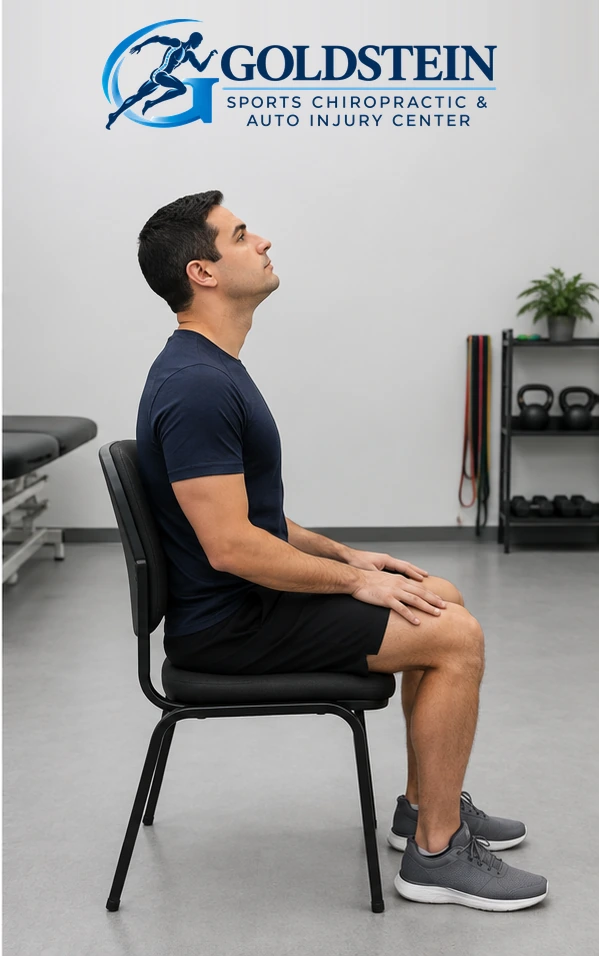
Gentle extension. Temporary AI demonstration of Cervical Retraction with Extension; anonymous model, not Dr. Goldstein or a patient.

Gentle extension

Exercise videoComing soon

Starting Position

Sit upright.

How to Do It

  1. Draw the chin straight backward while keeping your eyes level; do not nod downward.
  2. From that retracted position, gently look upward.
  3. Hold, then return with control.

What You Should Feel

Gentle controlled neck movement.

Stop or Modify If

Stop for pain, significant dizziness or new arm symptoms.

Back to Exercise Menu

Neck

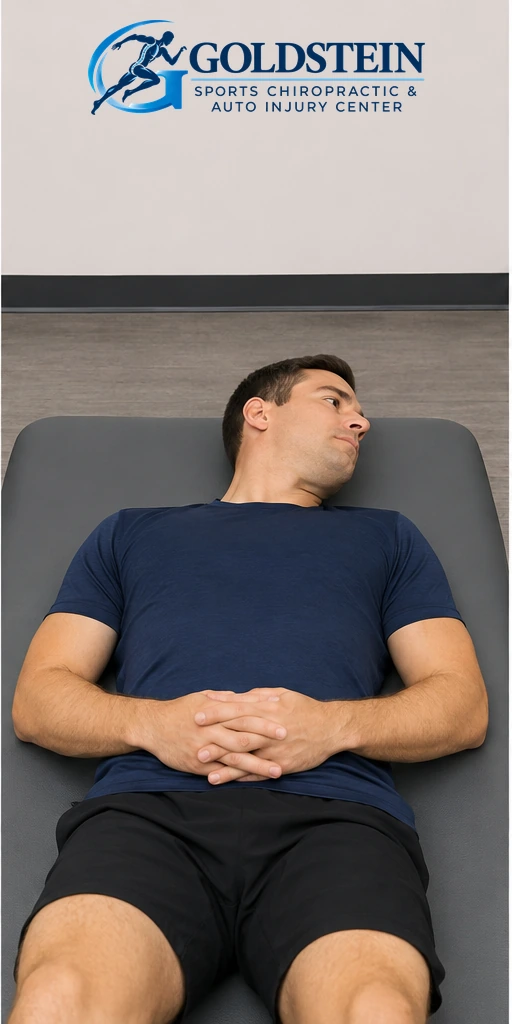
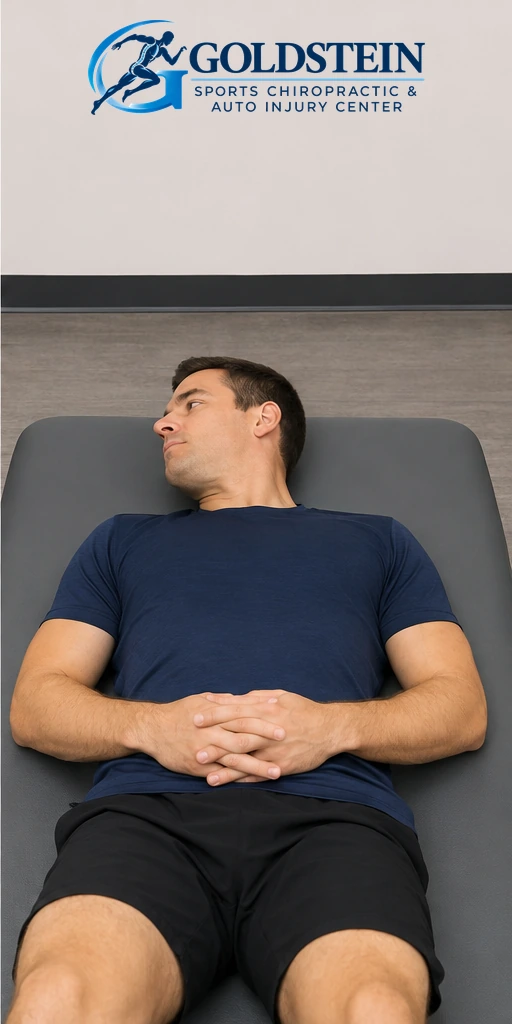
Supine Cervical Side Bend

Practice controlled movement within your selected range.

Reps
10 each side
Frequency
As needed; at least 3 times/day
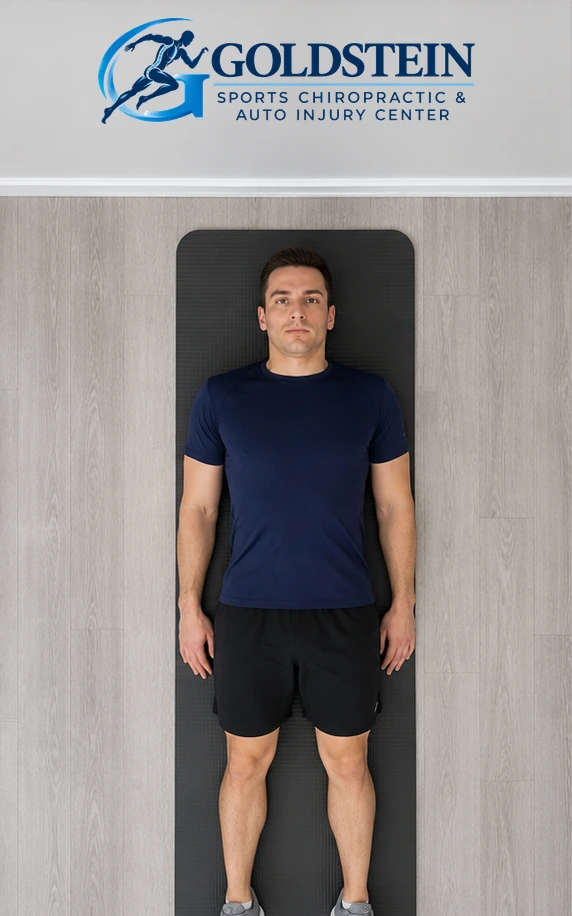
Center — head supported. Temporary AI demonstration of Supine Cervical Side Bend; anonymous model, not Dr. Goldstein or a patient.

Center — head supported

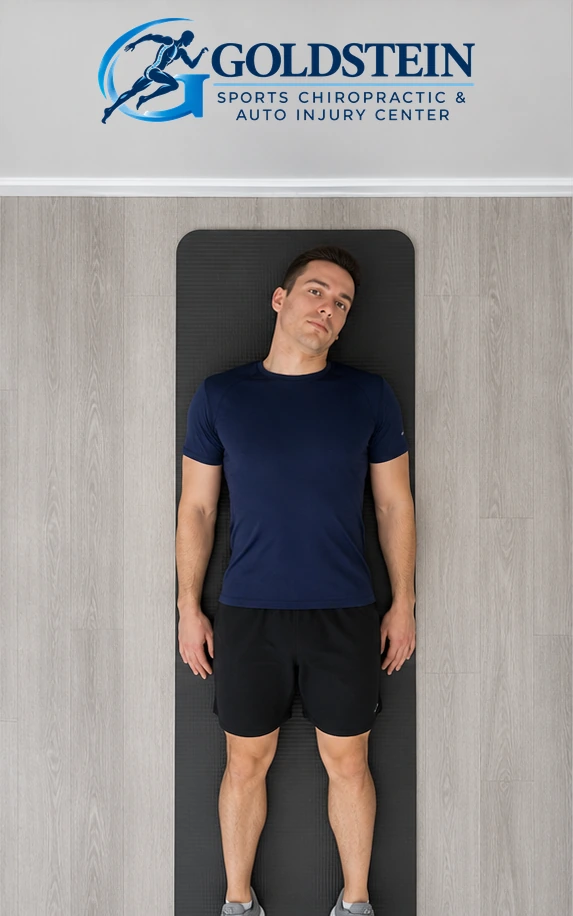
Side bend. Temporary AI demonstration of Supine Cervical Side Bend; anonymous model, not Dr. Goldstein or a patient.

Side bend

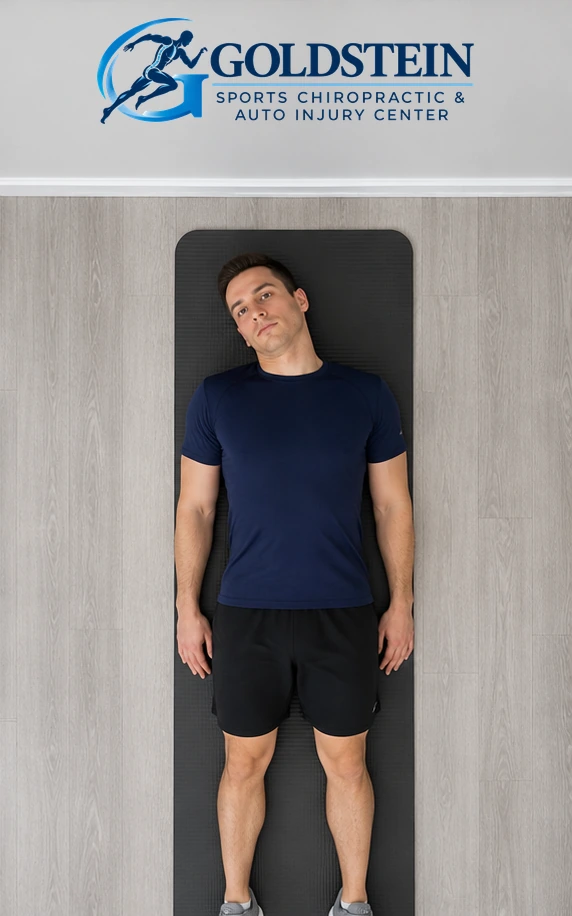
Opposite side. Temporary AI demonstration of Supine Cervical Side Bend; anonymous model, not Dr. Goldstein or a patient.

Opposite side

Exercise videoComing soon

Starting Position

Lie on your back without a pillow and retract the chin.

How to Do It

  1. Keep the retraction while tilting an ear toward the shoulder with the head supported.
  2. Return to center and repeat on the opposite side.

What You Should Feel

Controlled muscle effort or a gentle stretch, without pain.

Stop or Modify If

Stop for sharp or increasing pain, new numbness, tingling or weakness.

Back to Exercise Menu

Neck

Supine Neck Rotation

Practice controlled movement within your selected range.

Reps
10 each side
Frequency
As needed; at least 3 times/day
Center — chin retracted. Temporary AI demonstration of Supine Neck Rotation; anonymous model, not Dr. Goldstein or a patient.

Center — chin retracted

Rotate to one side. Temporary AI demonstration of Supine Neck Rotation; anonymous model, not Dr. Goldstein or a patient.

Rotate to one side

Opposite side. Temporary AI demonstration of Supine Neck Rotation; anonymous model, not Dr. Goldstein or a patient.

Opposite side

Exercise videoComing soon

Starting Position

Lie on your back without a pillow and retract the chin.

How to Do It

  1. Turn gently toward one shoulder while keeping the head supported.
  2. Return to center and repeat on the opposite side.

What You Should Feel

Controlled muscle effort or a gentle stretch, without pain.

Stop or Modify If

Stop for sharp or increasing pain, new numbness, tingling or weakness.

Back to Exercise Menu

Neck

Upper Trapezius Lacrosse Ball

Review gentle, selected upper-trapezius pressure.

Duration
30 sec each side

Exercise pictures

Follow the written steps below. A reviewed visual demonstration will be added here.

Exercise videoComing soon

Starting Position

Place the ball on the upper trapezius against the wall or floor as demonstrated.

How to Do It

  1. Use gentle sustained pressure, or move the arm and shoulder while maintaining it.
  2. Repeat on the opposite side. Keep the ball away from the cervical spine.

What You Should Feel

Comfortable pressure, not reproduced nerve pain.

Stop or Modify If

Stop for increasing pain, dizziness, numbness or tingling; never press directly over the cervical spine.

Back to Exercise Menu

Neck

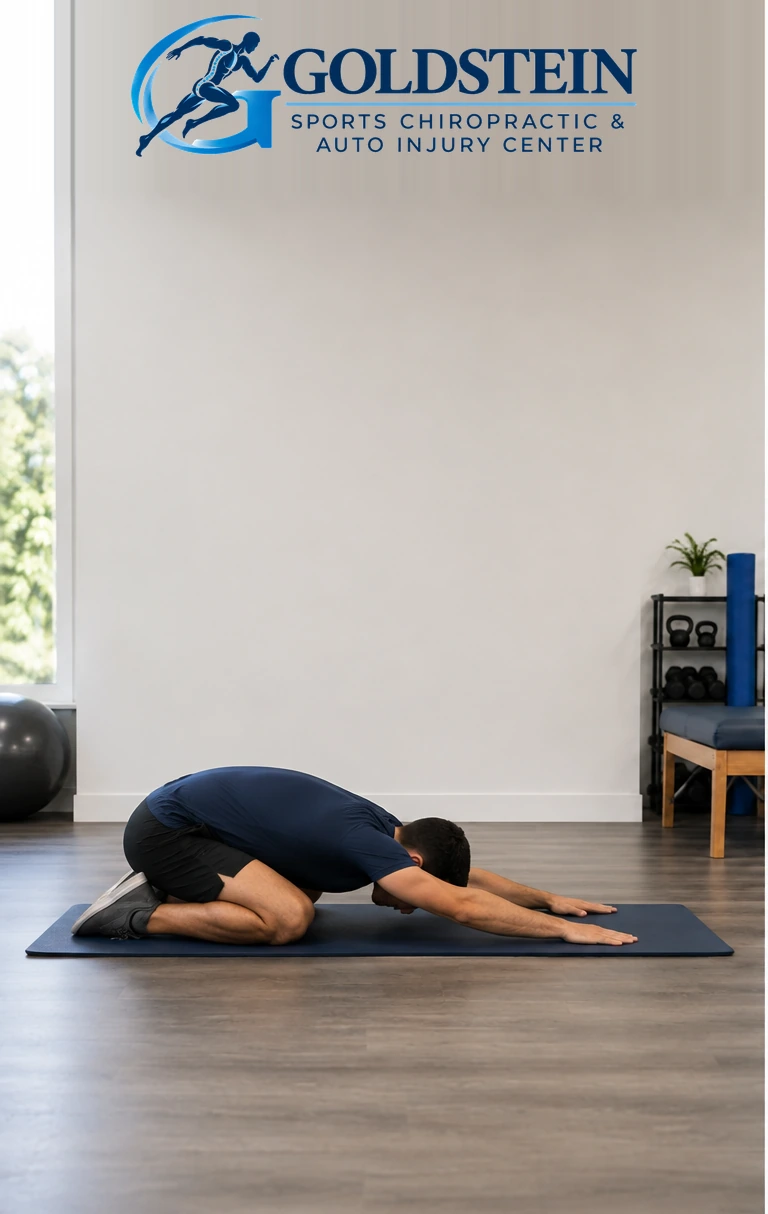
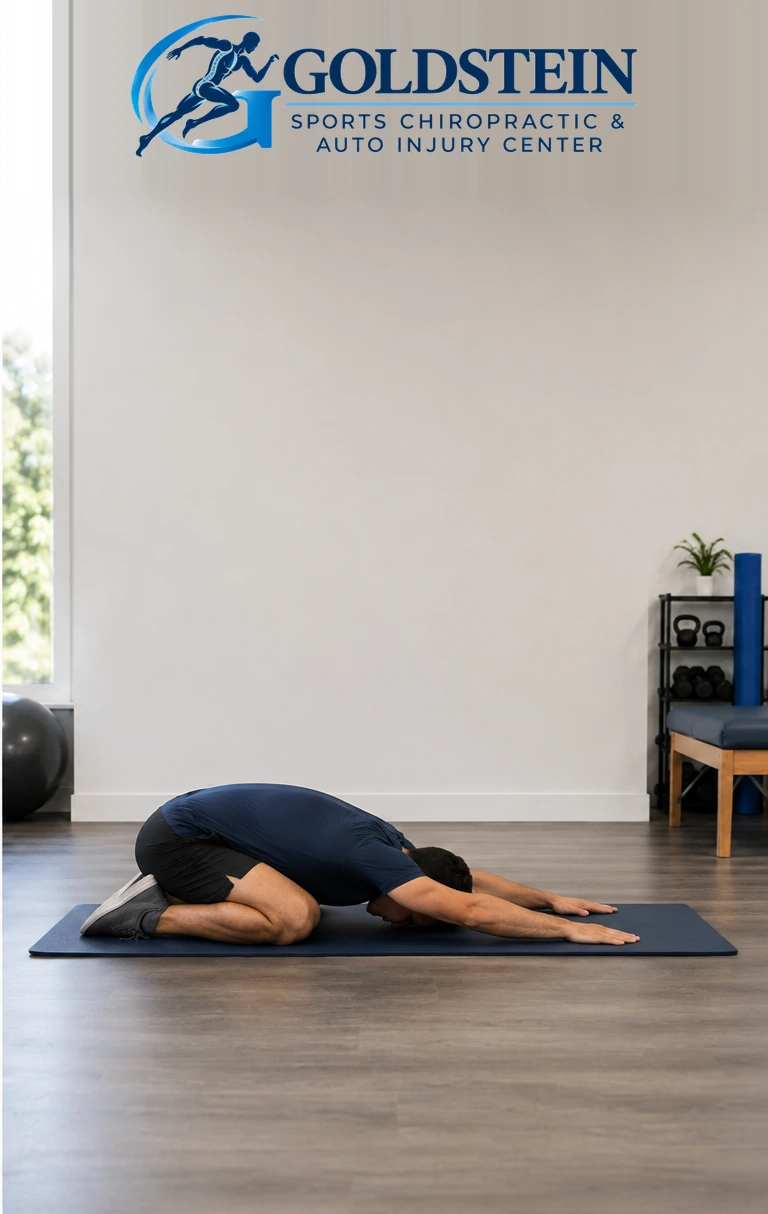
Child’s Pose

Practice controlled movement within your selected range.

Hold
30 sec
Repetitions
2
Setup position. Temporary AI demonstration of Child’s Pose; anonymous model, not Dr. Goldstein or a patient.

Setup position

Hold position. Temporary AI demonstration of Child’s Pose; anonymous model, not Dr. Goldstein or a patient.

Hold position

Exercise videoComing soon

Starting Position

Kneel and sit toward your heels with your arms reaching forward.

How to Do It

  1. Ease into the comfortable position shown during care.
  2. Hold, then release without forcing the hips or shoulders.

What You Should Feel

Controlled muscle effort or a gentle stretch, without pain.

Stop or Modify If

Stop for sharp or increasing pain, new numbness, tingling or weakness.

Back to Exercise Menu

Medical Information & Sources

These movement reminders do not diagnose a condition or replace an evaluation, personalized rehabilitation plan or emergency care. Dosage reflects the office’s legacy exercise materials and Dr. Goldstein’s clarifications; it is not a recommendation to complete every movement.

Questions about your exercises?

Questions About an Exercise?

Ask which movements, range and repetitions are right for you. Follow the guidance provided during your care.