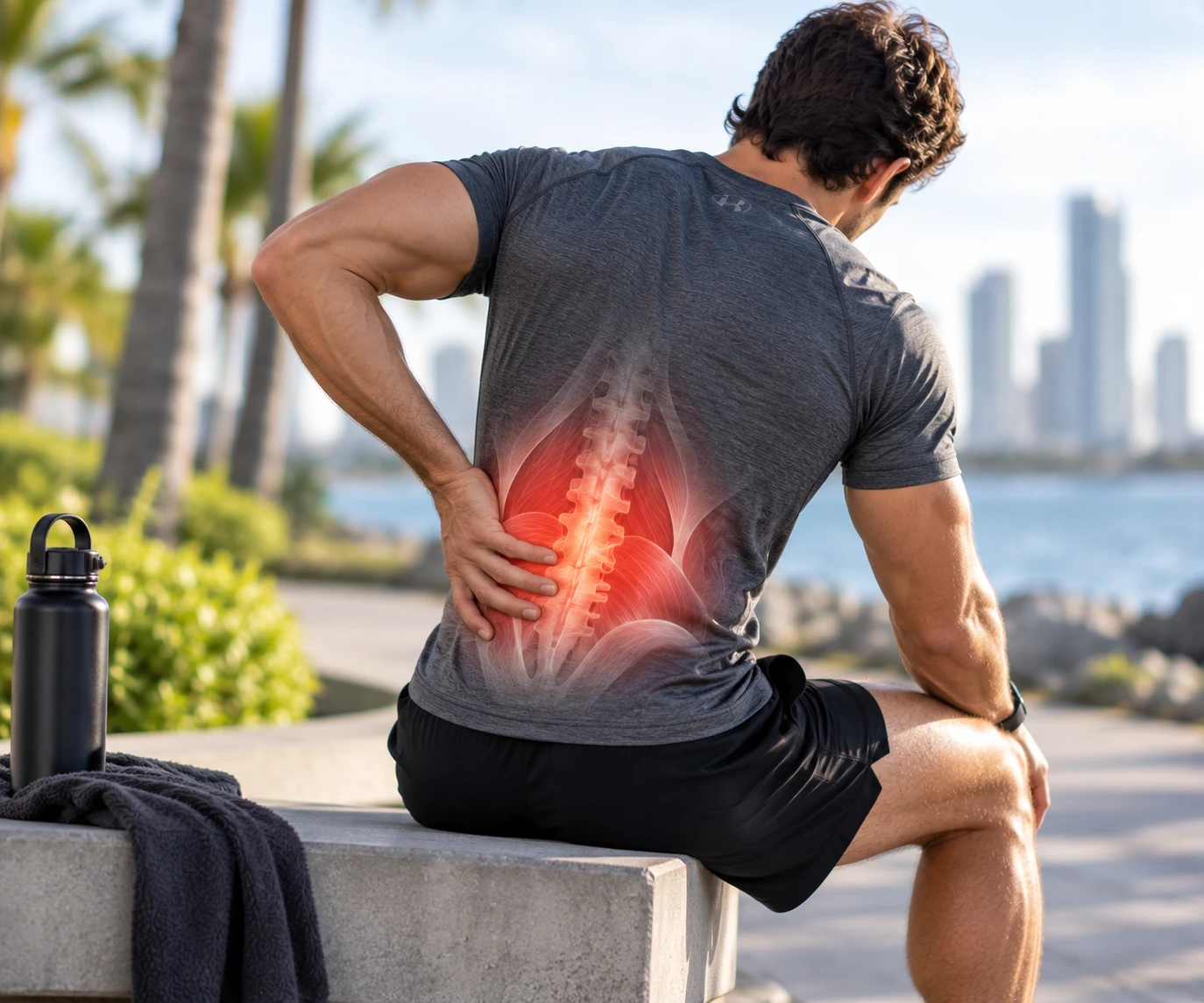
Muscles & supporting tissues
Strains and sprains may involve muscles or ligaments. Spasm may accompany an injury.

Auto accident back pain
What It May Mean and When to Get Evaluated
Back pain after a collision can have several explanations. The cause and severity vary, and an evaluation can help determine whether testing, referral or treatment is appropriate.
Understanding your symptoms
Sudden forces may affect muscles, ligaments and other structures. Possible contributors include soft-tissue strain, joint-related pain or another injury.
Pain alone cannot identify which tissue is involved. Your history and examination help put symptoms in context.
Possibilities, not a diagnosis
Strains and sprains may involve muscles or ligaments. Spasm may accompany an injury.
Joint-related pain, disc conditions or nerve irritation may contribute. Existing back problems can also be relevant.
The collision and examination may raise concern for a fracture or another injury requiring different medical care.
Notice what has changed
Describe where you feel discomfort and which activities are difficult. Symptoms alone do not establish a diagnosis.
Discomfort may feel dull, sharp or burning.
Bending or standing straight may feel restricted.
Certain movements or everyday tasks may aggravate symptoms.
The back may feel tight or cramp with movement.
Pain may travel into a leg. Numbness, tingling or weakness also need assessment rather than an assumption that they are ordinary soreness.
Also experiencing neck pain? Read the separate guide to whiplash.
Know when to seek help
If symptoms are severe, rapidly worsening, or potentially life-threatening, seek emergency medical care. Call 911 in an emergency.
Back pain after an injury should be assessed promptly. New or worsening weakness, numbness or walking difficulty, or fever and feeling unwell, also require medical attention.
Do not wait for a routine chiropractic appointment when warning signs are present.
NHS: Urgent and emergency signs · Mayo Clinic: When to seek care
The assessment may cover the accident, symptom onset, prior health and daily limitations, followed by examination of:
Available emergency-care records and imaging can help. Findings guide whether additional testing, referral or treatment is appropriate.
Testing with a purpose
Not everyone needs imaging. Trauma severity, history, examination and neurological or other warning signs guide the decision. A serious collision may require urgent investigation.
Different tests assess different structures. Imaging findings must be interpreted alongside your symptoms and examination; a visible disc change does not automatically explain pain.
Keep symptoms and findings separate
No. Disc-related conditions are one possible explanation, but muscles, supporting tissues and other structures may be involved. Disc abnormalities can also exist without symptoms.
Neither a pain pattern nor an imaging report alone establishes that a collision caused a disc injury.
An individual care plan
Recommendations depend on examination findings, symptom severity, neurological concerns, function and health history. Serious injury needs assessment before conservative care.
These are options, not a package everyone receives. Progress should be reviewed.
For selected musculoskeletal back symptoms after evaluation, it may be one component of conservative management. Dr. Brett Goldstein, D.C. may consider adjustments, manual therapy, rehabilitation exercises and mobility work when appropriate.
Research on general low back pain does not establish that manipulation is suitable for every accident injury. Discuss benefits, alternatives and risks: temporary soreness can occur, and rare serious complications have been reported.
Decompression or traction should not be assumed necessary. NICE recommends against traction for low back pain with or without sciatica; it should not be presented as a way to repair discs.
Findings requiring other medical evaluation or testing may lead to referral or co-management.
Care begins with listening
Dr. Brett Goldstein, D.C. evaluates back pain and related musculoskeletal symptoms after motor vehicle collisions.
At Goldstein Sports Chiropractic & Auto Injury Center, Dr. Goldstein considers your history, examination findings, movement, neurological screening and available records when recommending appropriate next steps.
That may mean conservative care, further evaluation or coordination with another provider.
Meet Dr. Goldstein →Recovery is individual
Some episodes improve relatively quickly; others persist. The type of injury, severity and individual findings help shape expectations and the pace of returning to activities.
Discuss prior back problems, neurological symptoms, general health and work or activity demands. Persistent or changing symptoms deserve reassessment, not a promised deadline.
Prepare for the conversation
Keep personal records secure. This page does not request sensitive medical uploads.
Separate information about Florida PIP →Common questions
Muscles, supporting tissues, joints or other structures may be involved. An examination helps assess the possibilities.
If pain becomes noticeable days later, have it assessed. Timing alone cannot establish its cause or relationship to the collision.
No. Back pain has several possible causes, and disc changes can exist without symptoms.
Back pain after a serious accident, new bladder or bowel problems, groin numbness or symptoms in both legs needs emergency assessment.
Not automatically. The trauma and examination findings guide whether imaging is needed and which test is appropriate.
MRI may investigate certain soft-tissue or neurological concerns. It is not required for everyone.
Back injuries may be accompanied by leg symptoms. New tingling or weakness needs assessment; it does not by itself prove nerve damage or sciatica.
It may be considered for selected musculoskeletal symptoms after evaluation, alongside exercise and other care.
Have serious injury assessed first. Then follow individual advice about returning to activity. Prolonged bed rest is generally discouraged for uncomplicated low back pain.
Some episodes settle relatively quickly; others persist. The cause and individual findings matter more than a fixed deadline.
Available medical and accident records, imaging reports, medication information, and your symptoms and questions.
This page provides general educational information and does not replace an individual medical evaluation or emergency care.
Sources accessed September 6, 2026: Mayo Clinic: Back pain; Mayo Clinic: Evaluation; NHS: Back pain; MedlinePlus: Acute back pain; Cleveland Clinic: Strains and sprains; NIH NCCIH: Manipulation; NICE: Low back pain guidance.
Auto injury care
If you are experiencing back pain, stiffness, reduced movement, or other physical symptoms after a motor vehicle accident, an evaluation can help determine appropriate next steps.