Patient Exercise Library

Shoulder Exercise Resources

Review the shoulder movements and resistance options selected during your visit.

A reminder of movements you may have been shown in the office—not an individual exercise prescription for every visitor. Your personal care instructions come first.

Exercise pictures use AI demonstration models—not Dr. Goldstein or real patients. Follow your individual care instructions.

Before You Begin · Safety & Setup

Use the band and comfortable range shown during care. Follow any injury or surgical restrictions. Do not add resistance on your own.

Do not exercise a suspected fracture, dislocation or major new injury. New significant weakness, inability to move the arm, deformity, persistent numbness or severe pain needs medical assessment first.

Shoulder

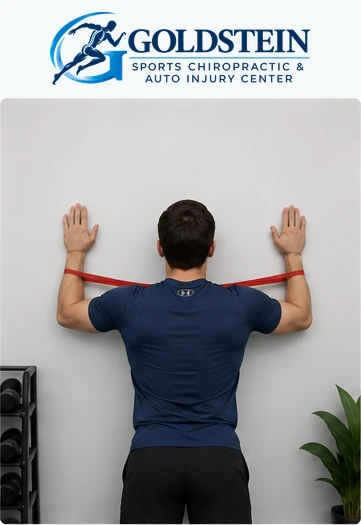
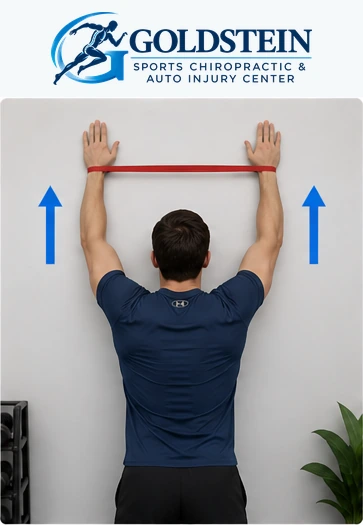
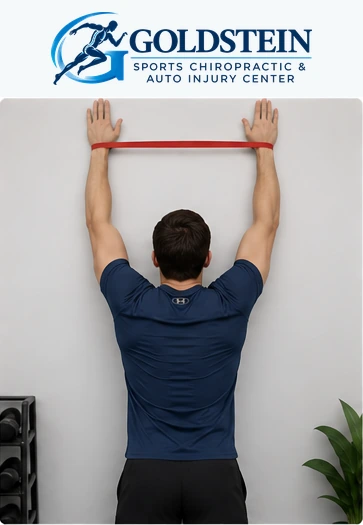
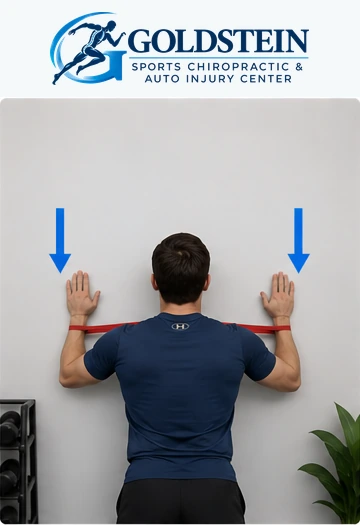
Wall Slides with Band

Practice controlled shoulder elevation with wall support.

Sets
2
Reps
10
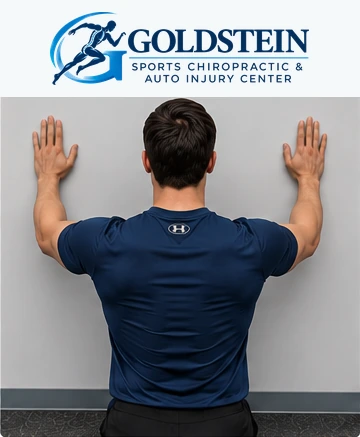
Demonstration 1. Temporary AI model demonstrating Wall Slides with Band, not Dr. Goldstein. Start and movement positions are described in the instructions.

Demonstration 1

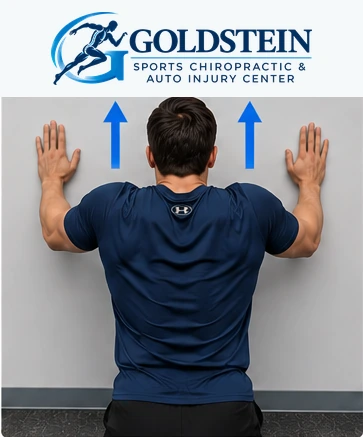
Demonstration 2. Temporary AI model demonstrating Wall Slides with Band, not Dr. Goldstein. Start and movement positions are described in the instructions.

Demonstration 2

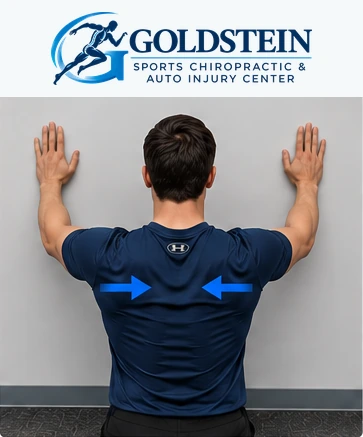
Demonstration 3. Temporary AI model demonstrating Wall Slides with Band, not Dr. Goldstein. Start and movement positions are described in the instructions.

Demonstration 3

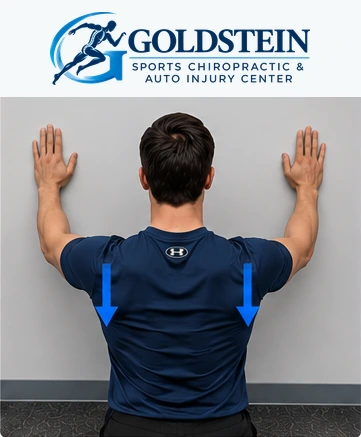
Demonstration 4. Temporary AI model demonstrating Wall Slides with Band, not Dr. Goldstein. Start and movement positions are described in the instructions.

Demonstration 4

Exercise videoComing soon

Starting Position

Stand facing a clear wall with the selected band around both wrists and hands at shoulder height.

How to Do It

  1. Apply gentle pressure into the wall.
  2. Slide the hands upward into a Y within a comfortable reach, maintaining wall contact.
  3. Return slowly to the starting position.

What You Should Feel

Gentle effort around the shoulder blades.

Common Mistake

Avoid shrugging or arching the lower back.

Stop or Modify If

Stop for shoulder pinching, neck pain or arm symptoms.
Back to Exercise Menu

Shoulder

Resistance-Band External Rotation

Practice controlled movement within your selected range.

Sets
3
Reps
10
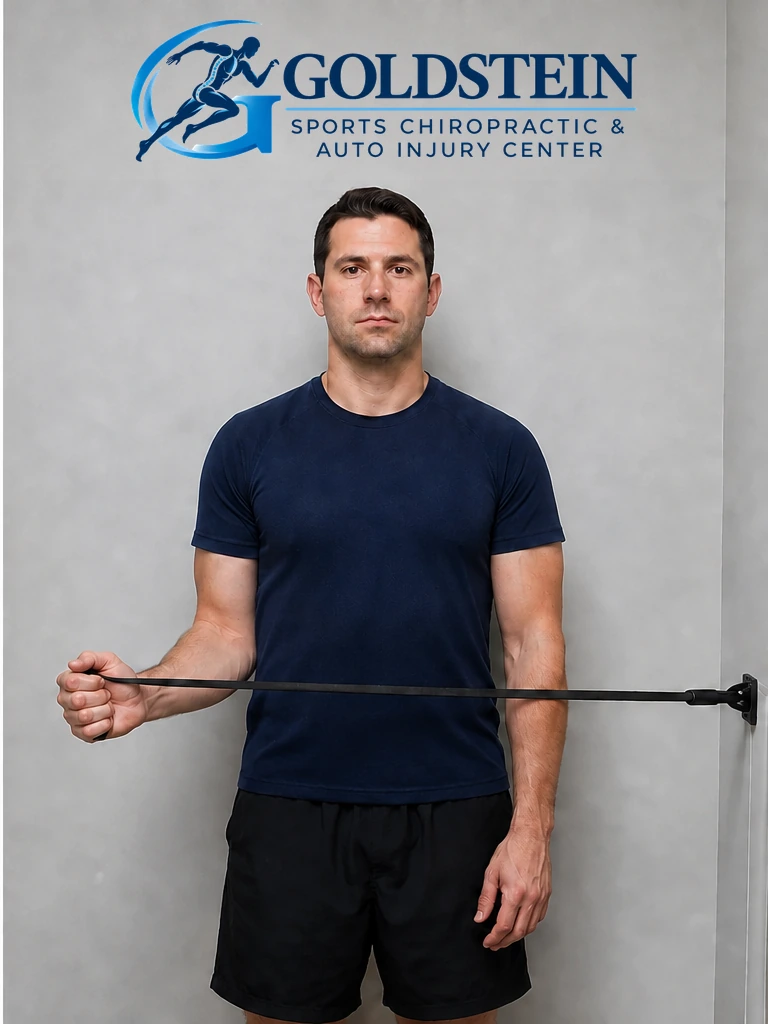
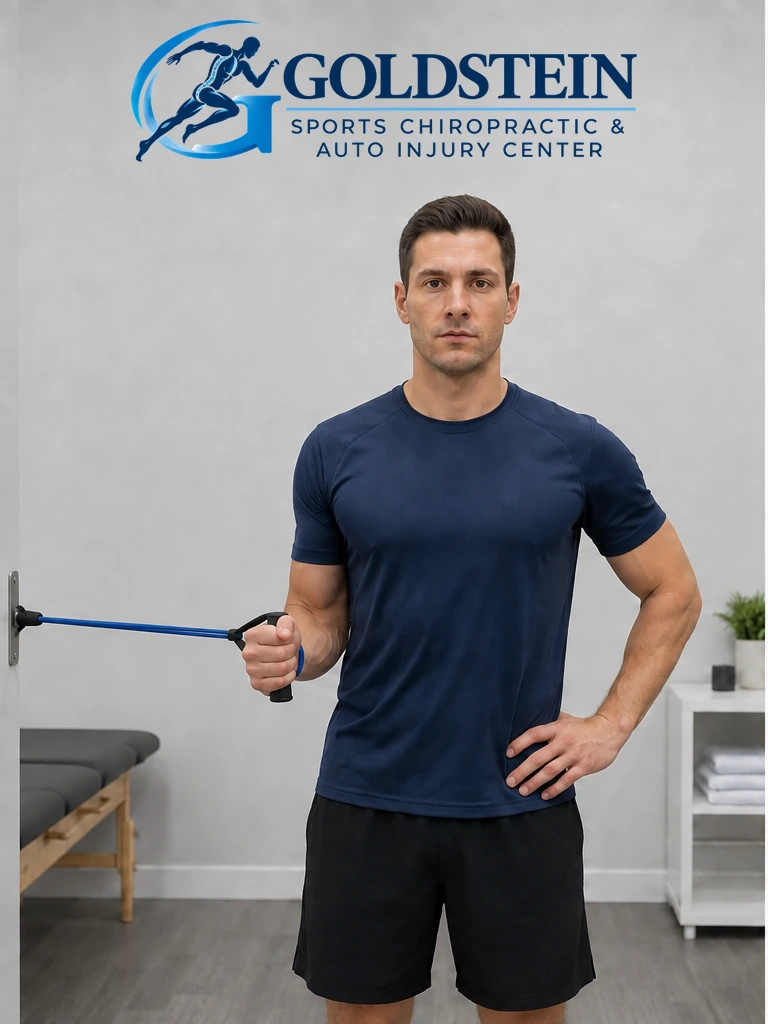
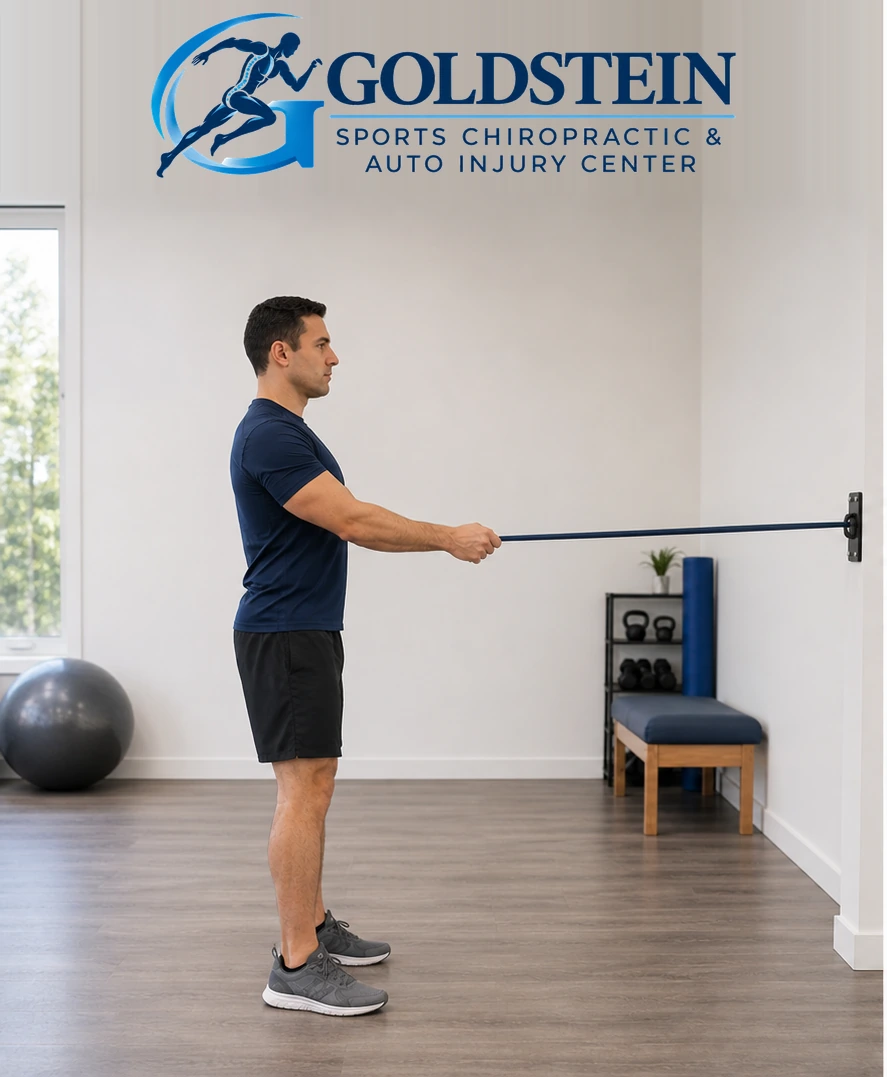
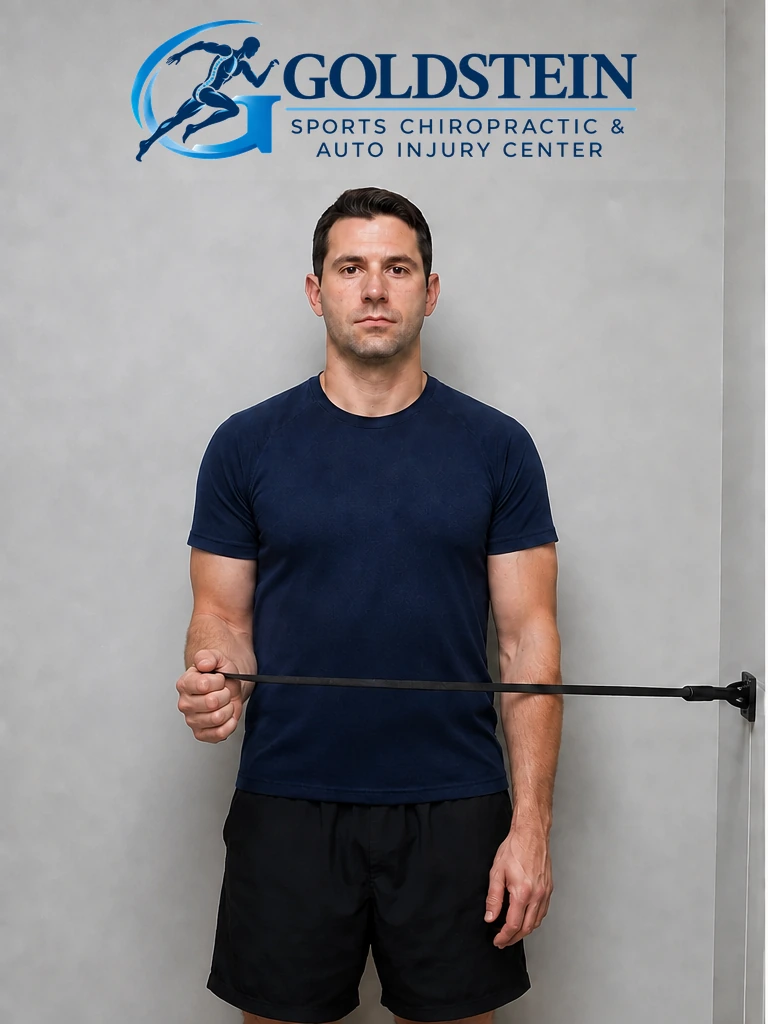
Elbow tucked — start. Temporary AI demonstration of Resistance-Band External Rotation; anonymous model, not Dr. Goldstein or a patient.

Elbow tucked — start

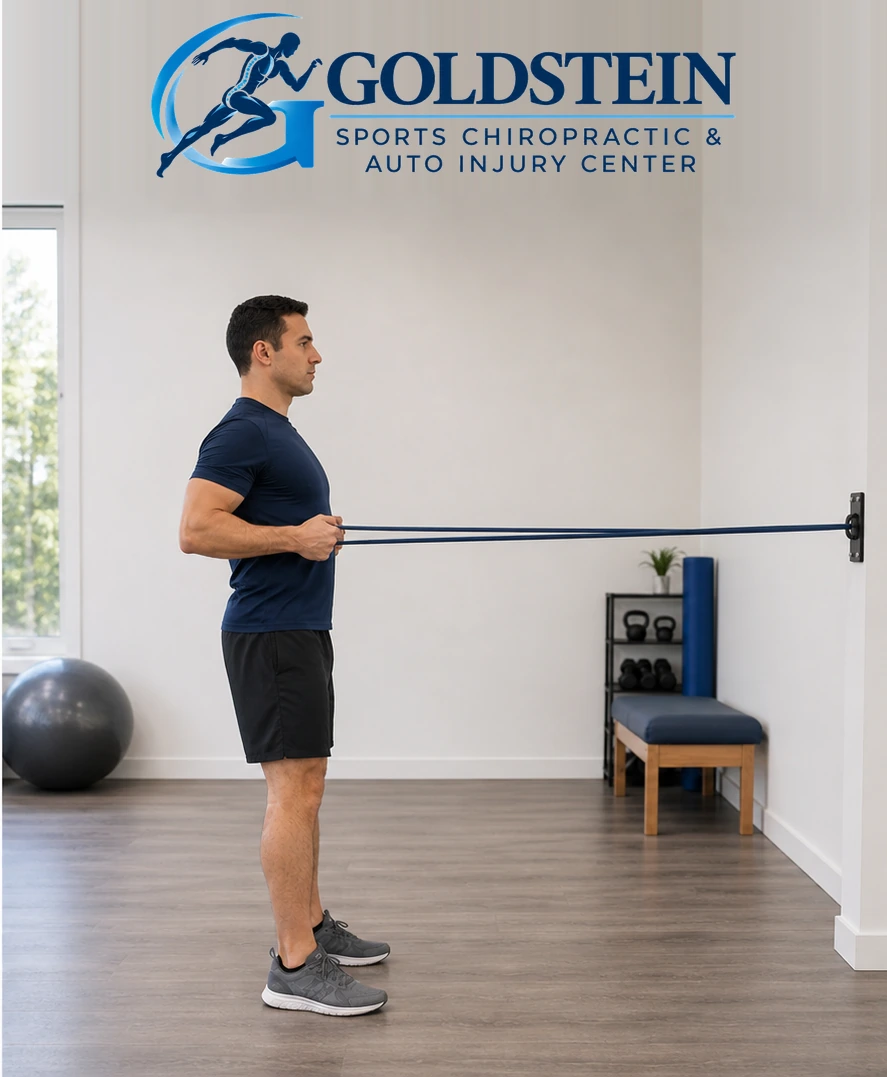
Rotate outward — elbow stays tucked. Temporary AI demonstration of Resistance-Band External Rotation; anonymous model, not Dr. Goldstein or a patient.

Rotate outward — elbow stays tucked

Exercise videoComing soon

Starting Position

Stand with the working elbow tucked at your side and the band secured so it resists outward forearm movement.

How to Do It

  1. Rotate the forearm outward while keeping the elbow close.
  2. Return slowly; use the side selected during care.

What You Should Feel

Controlled muscle effort or a gentle stretch, without pain.

Stop or Modify If

Stop for sharp or increasing pain, new numbness, tingling or weakness.

Back to Exercise Menu

Shoulder

Resistance-Band Internal Rotation

Practice controlled movement within your selected range.

Sets
3
Reps
10
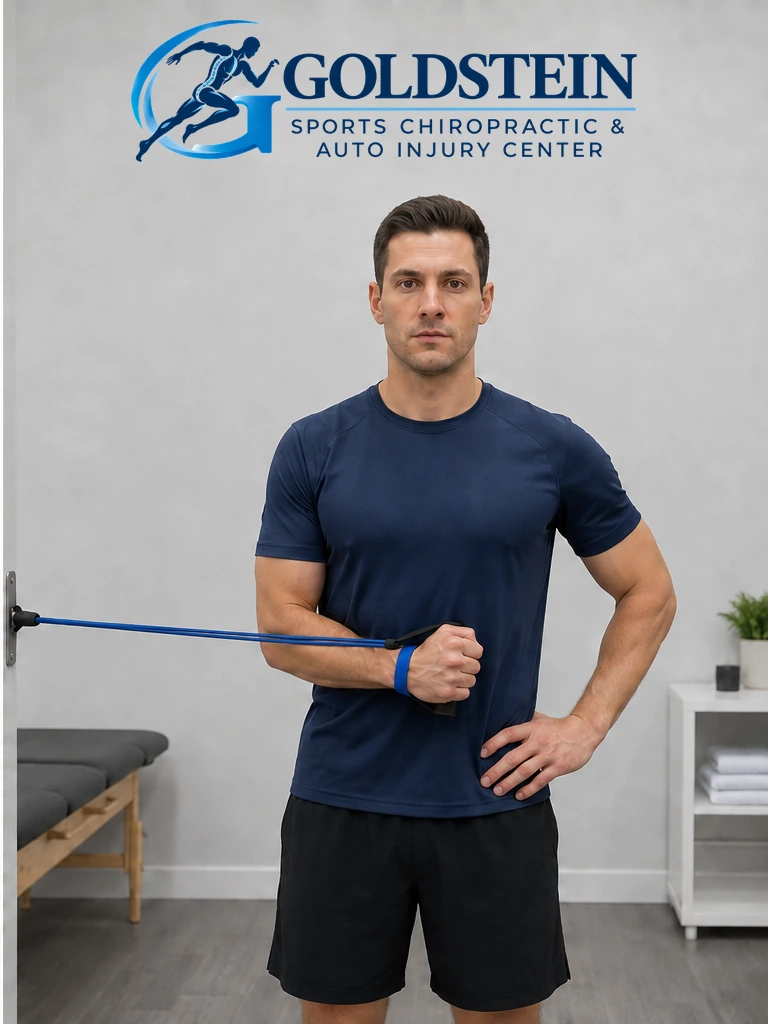
Elbow tucked — start. Temporary AI demonstration of Resistance-Band Internal Rotation; anonymous model, not Dr. Goldstein or a patient.

Elbow tucked — start

Rotate inward — elbow stays tucked. Temporary AI demonstration of Resistance-Band Internal Rotation; anonymous model, not Dr. Goldstein or a patient.

Rotate inward — elbow stays tucked

Exercise videoComing soon

Starting Position

Stand with the working elbow tucked at your side and the band secured so it resists inward forearm movement.

How to Do It

  1. Rotate the forearm inward across the body while keeping the elbow close.
  2. Return slowly; use the side selected during care.

What You Should Feel

Controlled muscle effort or a gentle stretch, without pain.

Stop or Modify If

Stop for sharp or increasing pain, new numbness, tingling or weakness.

Back to Exercise Menu

Shoulder

Prone Y, T and I

Practice controlled movement within your selected range.

Sets
3
Reps
10 each position
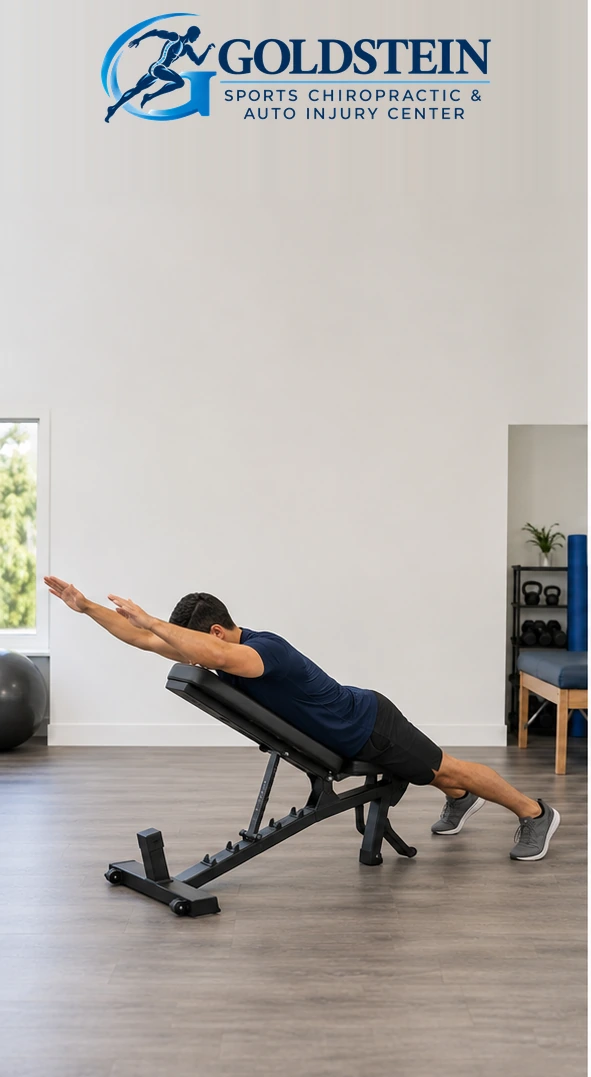
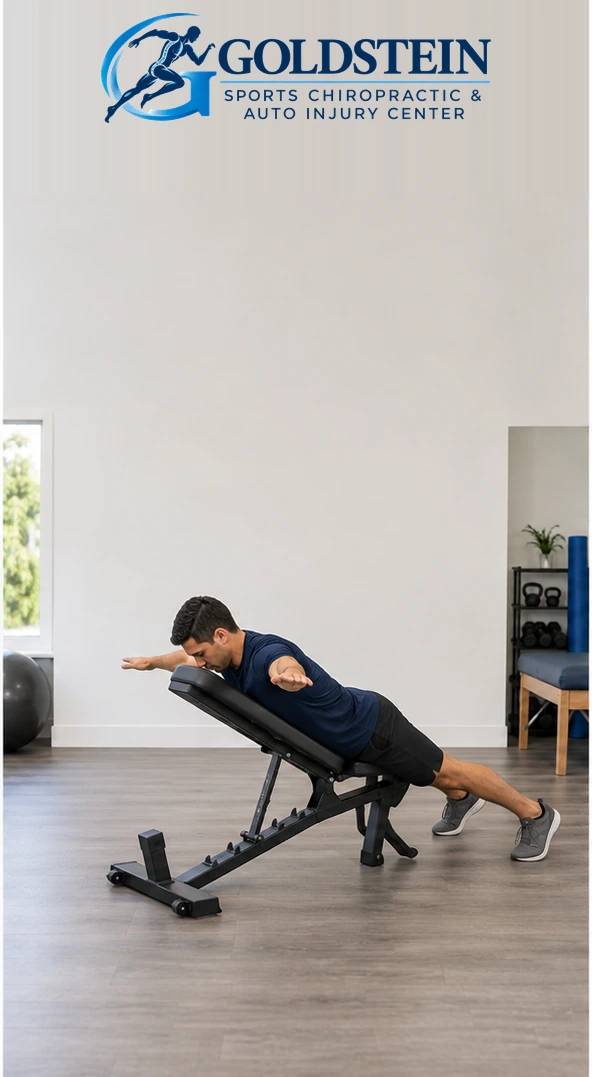
Y position. Temporary AI demonstration of Prone Y, T and I; anonymous model, not Dr. Goldstein or a patient.

Y position

T position. Temporary AI demonstration of Prone Y, T and I; anonymous model, not Dr. Goldstein or a patient.

T position

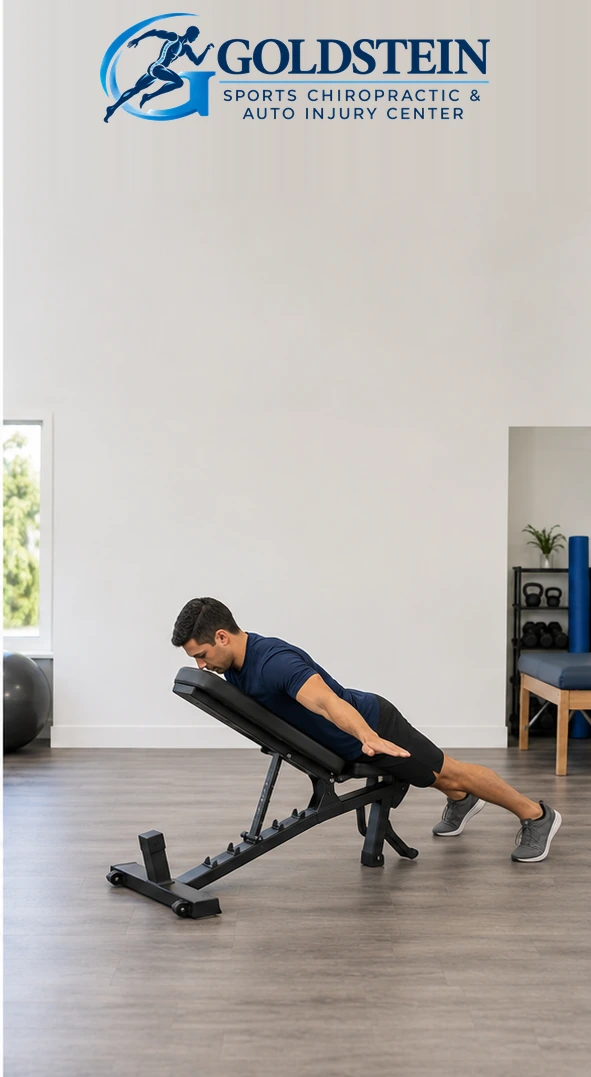
I position. Temporary AI demonstration of Prone Y, T and I; anonymous model, not Dr. Goldstein or a patient.

I position

Exercise videoComing soon

Starting Position

Lie face down on the incline bench, stability ball or flat bench selected during care.

How to Do It

  1. Lift and lower the arms in a Y position.
  2. Repeat in a T position, then in an I position.
  3. Keep the neck relaxed and movement controlled.

What You Should Feel

Controlled muscle effort or a gentle stretch, without pain.

Stop or Modify If

Stop for sharp or increasing pain, new numbness, tingling or weakness.

Back to Exercise Menu

Shoulder

Standing Band Row

Practice controlled movement within your selected range.

Sets
3
Reps
10
Start position. Temporary AI demonstration of Standing Band Row; anonymous model, not Dr. Goldstein or a patient.

Start position

Movement position. Temporary AI demonstration of Standing Band Row; anonymous model, not Dr. Goldstein or a patient.

Movement position

Exercise videoComing soon

Starting Position

Stand facing a securely anchored band at chest height, holding one end in each hand.

How to Do It

  1. Pull toward your torso with elbows close to your sides.
  2. Return slowly without leaning or shrugging.

What You Should Feel

Controlled muscle effort or a gentle stretch, without pain.

Stop or Modify If

Stop for sharp or increasing pain, new numbness, tingling or weakness.

Back to Exercise Menu

Shoulder

Scapular Clock

Practice controlled movement within your selected range.

Sets
2
Rounds
5
Demonstration 1. Temporary AI demonstration of Scapular Clock; anonymous model, not Dr. Goldstein or a patient.

Demonstration 1

Demonstration 2. Temporary AI demonstration of Scapular Clock; anonymous model, not Dr. Goldstein or a patient.

Demonstration 2

Demonstration 3. Temporary AI demonstration of Scapular Clock; anonymous model, not Dr. Goldstein or a patient.

Demonstration 3

Demonstration 4. Temporary AI demonstration of Scapular Clock; anonymous model, not Dr. Goldstein or a patient.

Demonstration 4

Exercise videoComing soon

Starting Position

Face a wall with both hands supported around shoulder height. Keep your hands in place and use no band or added resistance.

How to Do It

  1. With your hands supported, gently move your shoulder blades upward toward 12 o’clock, then return to the starting position.
  2. Gently draw your shoulder blades together for the demonstrated 3 and 9 o’clock directions, then return.
  3. Gently move your shoulder blades downward toward 6 o’clock, then return. Move slowly within a comfortable range, keeping your torso still.

What You Should Feel

Controlled muscle effort or a gentle stretch, without pain.

Stop or Modify If

Stop for sharp or increasing pain, new numbness, tingling or weakness.

Back to Exercise Menu

Shoulder

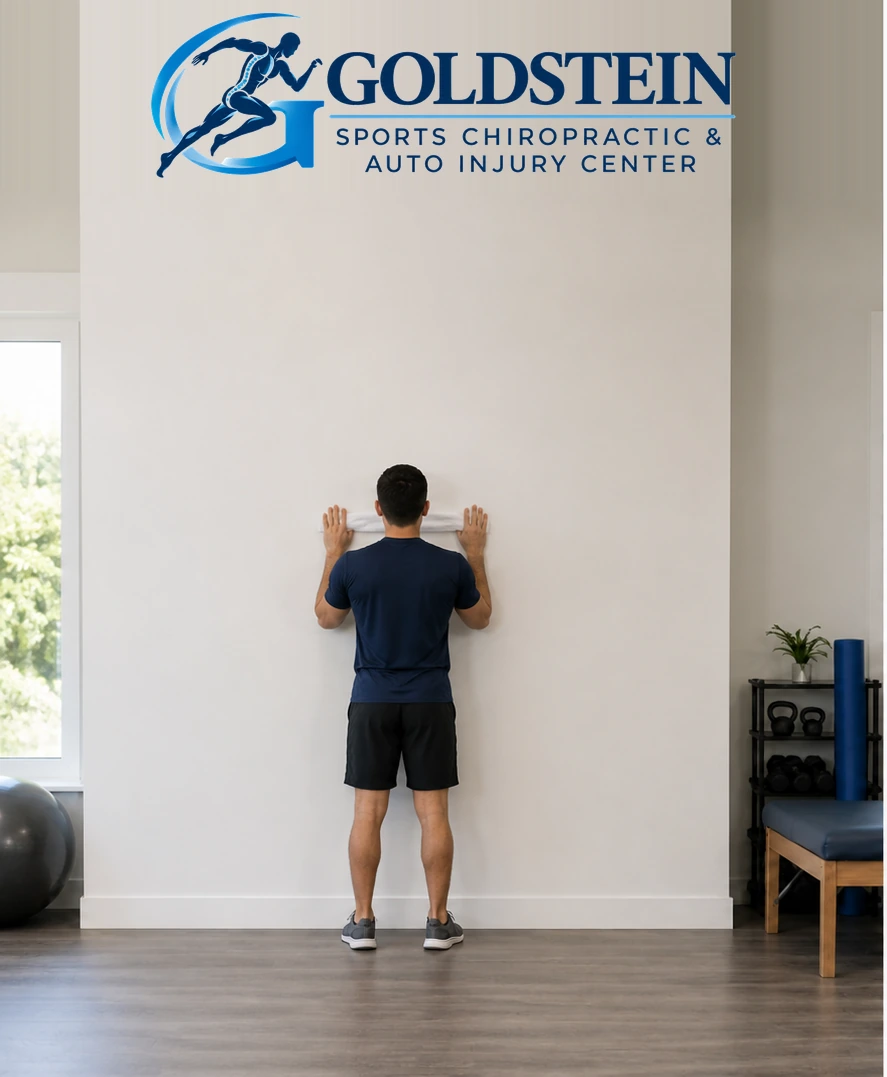
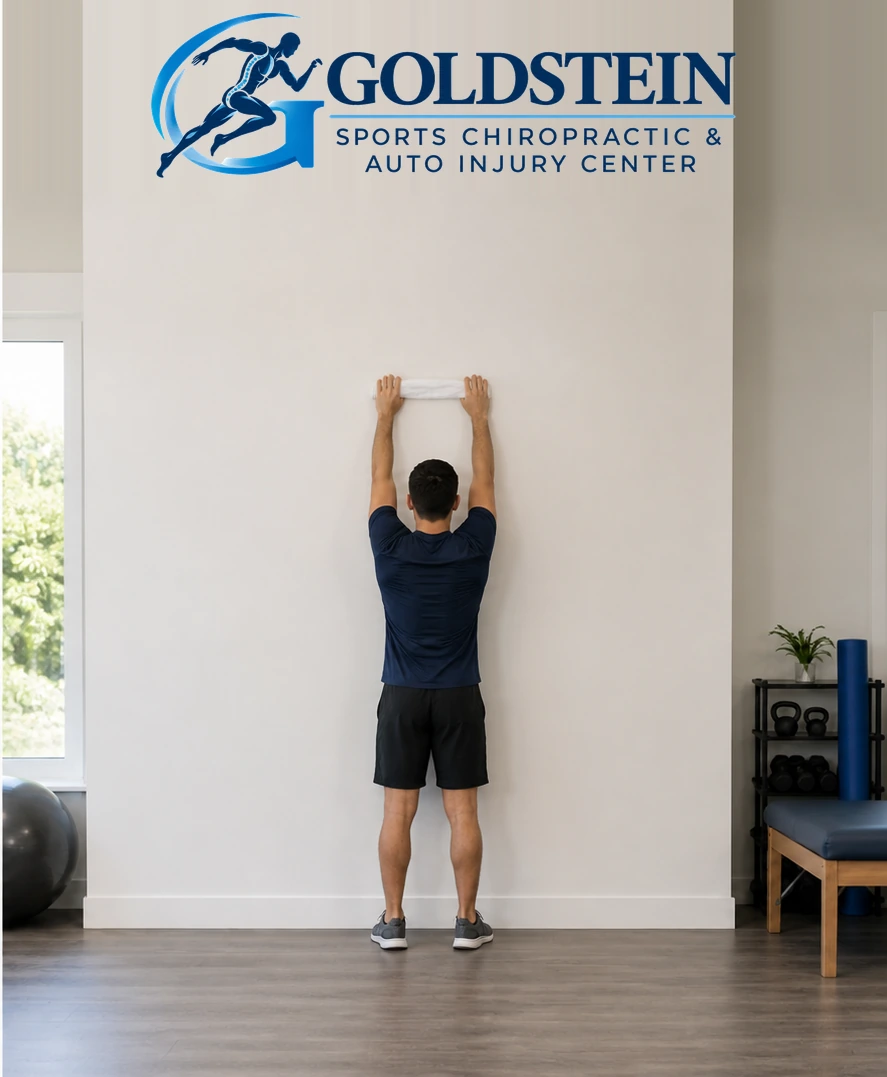
Wall Slide with Towel

Practice controlled movement within your selected range.

Sets
2
Reps
10
Start position. Temporary AI demonstration of Wall Slide with Towel; anonymous model, not Dr. Goldstein or a patient.

Start position

Movement position. Temporary AI demonstration of Wall Slide with Towel; anonymous model, not Dr. Goldstein or a patient.

Movement position

Exercise videoComing soon

Starting Position

Face the wall with a small towel between both hands and the wall at shoulder height.

How to Do It

  1. Slide both arms upward together as far as comfortable without shrugging.
  2. Return slowly.

What You Should Feel

Controlled muscle effort or a gentle stretch, without pain.

Stop or Modify If

Stop for sharp or increasing pain, new numbness, tingling or weakness.

Back to Exercise Menu

Medical Information & Sources

These movement reminders do not diagnose a condition or replace an evaluation, personalized rehabilitation plan or emergency care. Dosage reflects the office’s legacy exercise materials and Dr. Goldstein’s clarifications; it is not a recommendation to complete every movement.

Questions about your exercises?

Questions About an Exercise?

Ask which movements, range and repetitions are right for you. Follow the guidance provided during your care.