Patient Exercise Library

Shoulder Internal Rotation Resources

Review the movements selected during your visit.

A reminder of movements you may have been shown in the office—not an individual exercise prescription for every visitor. Your personal care instructions come first.

Exercise pictures use AI demonstration models—not Dr. Goldstein or real patients. Follow your individual care instructions.

Before You Begin · Safety & Setup

Use the setup, support and comfortable range shown during care. You do not need to perform every exercise.

Follow injury or surgical restrictions. Stop for sharp or increasing pain, new numbness, tingling, weakness or significant dizziness.

Shoulder Internal Rotation

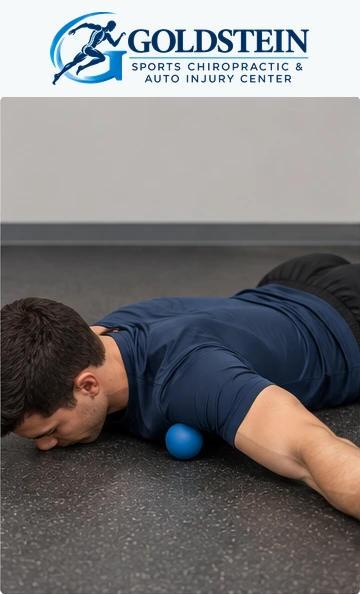
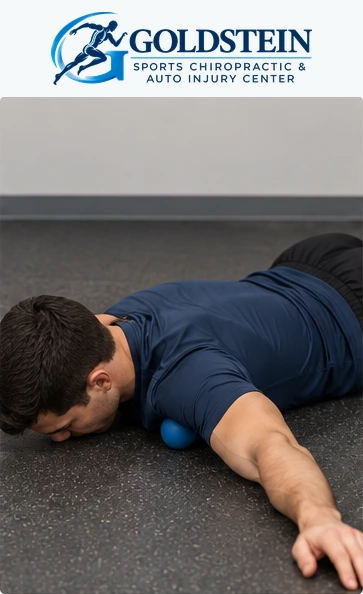
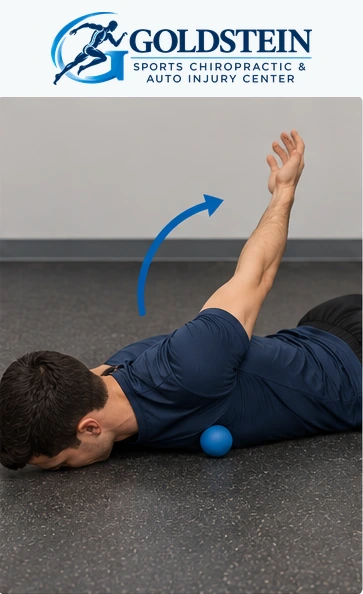
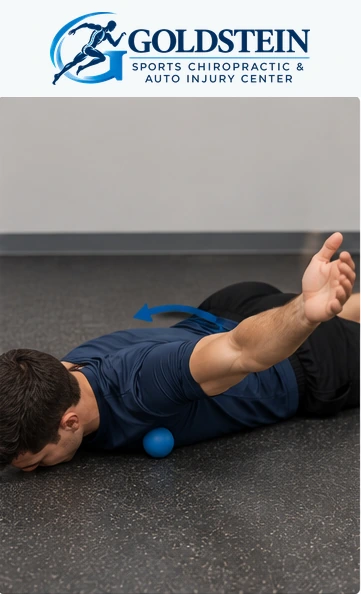
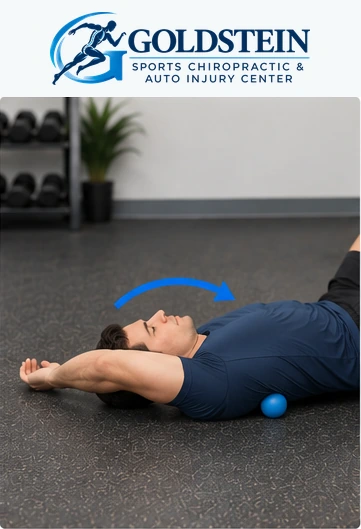
Shoulder Smash

Practice controlled movement within your selected range.

Duration
15 sec each side
Demonstration 1. Temporary AI demonstration of Shoulder Smash; anonymous model, not Dr. Goldstein or a patient.

Demonstration 1

Demonstration 2. Temporary AI demonstration of Shoulder Smash; anonymous model, not Dr. Goldstein or a patient.

Demonstration 2

Demonstration 3. Temporary AI demonstration of Shoulder Smash; anonymous model, not Dr. Goldstein or a patient.

Demonstration 3

Demonstration 4. Temporary AI demonstration of Shoulder Smash; anonymous model, not Dr. Goldstein or a patient.

Demonstration 4

Exercise videoComing soon

Starting Position

Place the lacrosse ball against the back of the shoulder using the support shown during care.

How to Do It

  1. Maintain comfortable pressure while moving the arm and shoulder.
  2. Repeat on the opposite side.

What You Should Feel

Controlled muscle effort or a gentle stretch, without pain.

Stop or Modify If

Stop for sharp or increasing pain, new numbness, tingling or weakness.
Back to Exercise Menu

Shoulder Internal Rotation

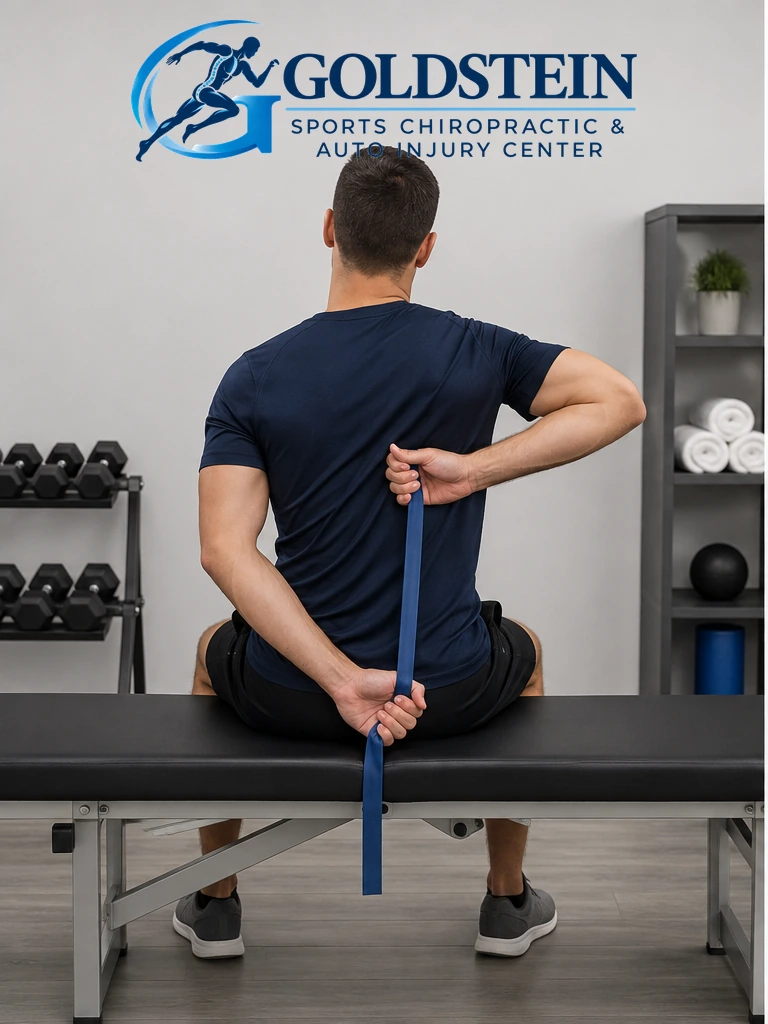
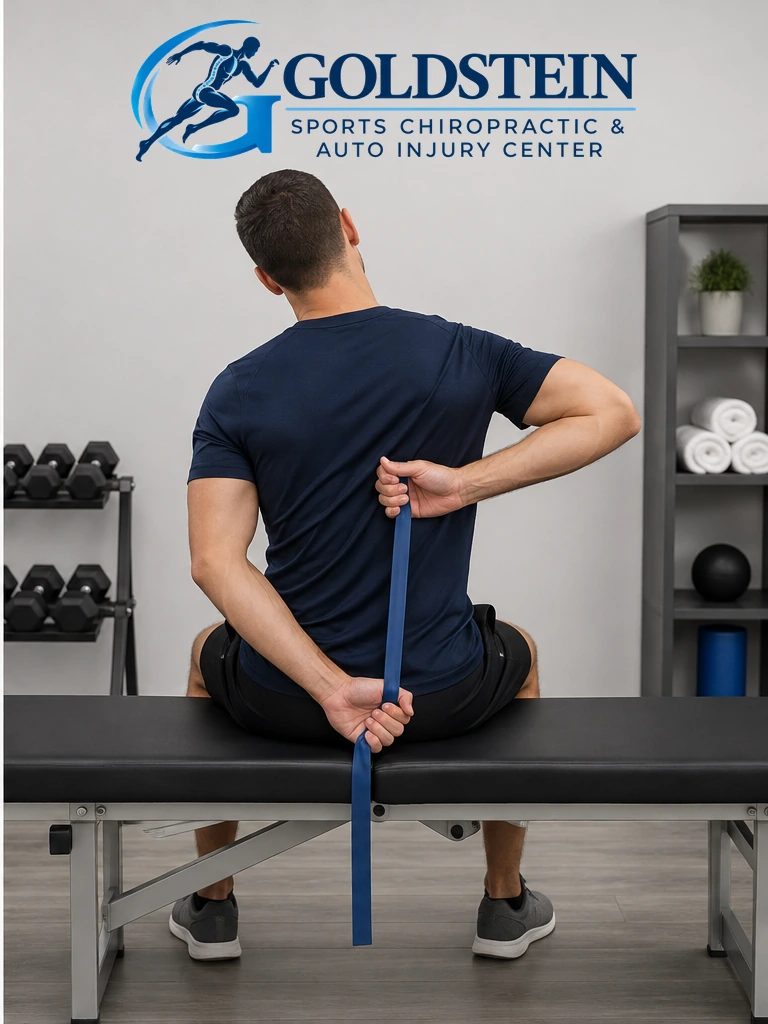
Internal Stretch with Head Flexion

Practice controlled movement within your selected range.

Sets
3
Hold
10 sec each side
Band behind back. Temporary AI demonstration of Internal Stretch with Head Flexion; anonymous model, not Dr. Goldstein or a patient.

Band behind back

Head away from lowered shoulder. Temporary AI demonstration of Internal Stretch with Head Flexion; anonymous model, not Dr. Goldstein or a patient.

Head away from lowered shoulder

Exercise videoComing soon

Starting Position

Hold the band behind your back with one hand, as shown during care.

How to Do It

  1. Allow a gentle downward pull on that shoulder and arm.
  2. Tilt your head away from that side.
  3. Release and repeat on the opposite side.

What You Should Feel

Controlled muscle effort or a gentle stretch, without pain.

Stop or Modify If

Stop for sharp or increasing pain, new numbness, tingling or weakness.
Back to Exercise Menu

Shoulder Internal Rotation

Sleeper Stretch

Practice controlled movement within your selected range.

Sets
3
Hold
10 sec each side

Starting Position

Lie on your side with the shoulder and elbow around 90 degrees.

How to Do It

  1. Use the opposite hand to guide the forearm gently toward the surface into internal rotation.
  2. Hold, release and repeat on the opposite side.

What You Should Feel

Controlled muscle effort or a gentle stretch, without pain.

Stop or Modify If

Stop for sharp or increasing pain, new numbness, tingling or weakness.
Back to Exercise Menu

Shoulder Internal Rotation

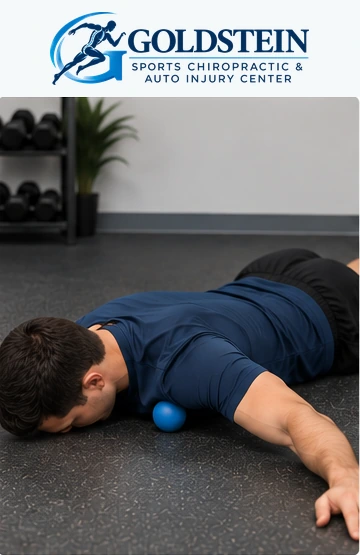
Pectoral Smash

Practice controlled movement within your selected range.

Rounds
2
Duration
15 sec each side
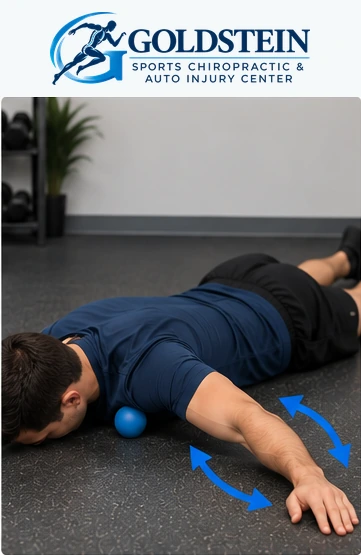
Demonstration 1. Temporary AI demonstration of Pectoral Smash; anonymous model, not Dr. Goldstein or a patient.

Demonstration 1

Demonstration 2. Temporary AI demonstration of Pectoral Smash; anonymous model, not Dr. Goldstein or a patient.

Demonstration 2

Demonstration 3. Temporary AI demonstration of Pectoral Smash; anonymous model, not Dr. Goldstein or a patient.

Demonstration 3

Demonstration 4. Temporary AI demonstration of Pectoral Smash; anonymous model, not Dr. Goldstein or a patient.

Demonstration 4

Exercise videoComing soon

Starting Position

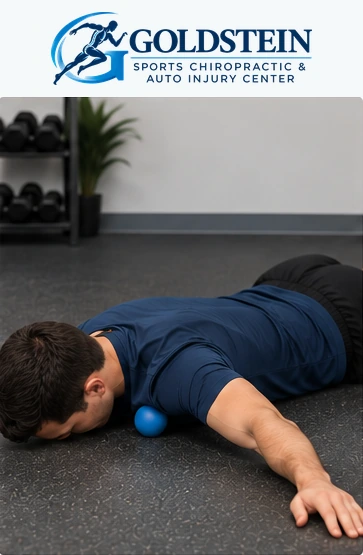
Lie on your stomach with a lacrosse ball under the pectoral/chest soft tissue shown during care. Let your body weight provide gentle, comfortable pressure.

How to Do It

  1. Maintain comfortable pressure while slowly moving your arm through the demonstrated range. Keep the movement controlled and do not force it.
  2. Release the pressure and repeat on the opposite side.

What You Should Feel

Controlled muscle effort or a gentle stretch, without pain.

Stop or Modify If

Stop for sharp or increasing pain, new numbness, tingling or weakness.
Back to Exercise Menu

Shoulder Internal Rotation

Lacrosse Ball Scapular Mobilization

Practice controlled movement within your selected range.

Rounds
2
Duration
15 sec each side
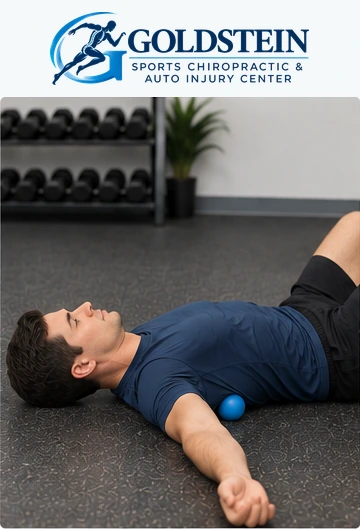
Demonstration 1. Temporary AI demonstration of Lacrosse Ball Scapular Mobilization; anonymous model, not Dr. Goldstein or a patient.

Demonstration 1

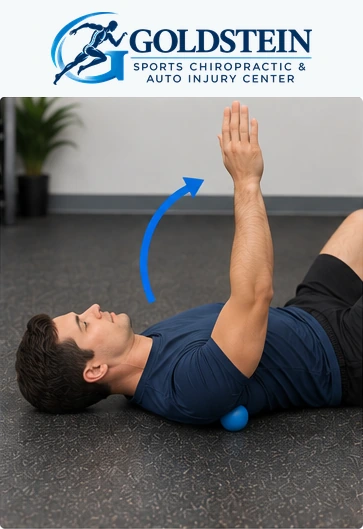
Demonstration 2. Temporary AI demonstration of Lacrosse Ball Scapular Mobilization; anonymous model, not Dr. Goldstein or a patient.

Demonstration 2

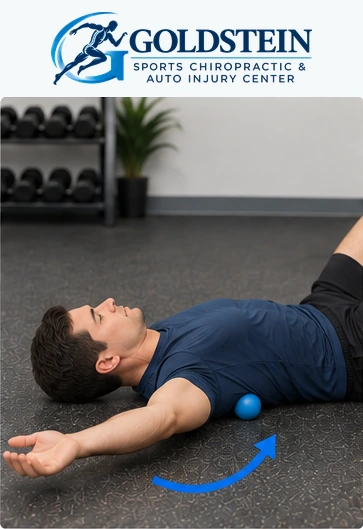
Demonstration 3. Temporary AI demonstration of Lacrosse Ball Scapular Mobilization; anonymous model, not Dr. Goldstein or a patient.

Demonstration 3

Demonstration 4. Temporary AI demonstration of Lacrosse Ball Scapular Mobilization; anonymous model, not Dr. Goldstein or a patient.

Demonstration 4

Exercise videoComing soon

Starting Position

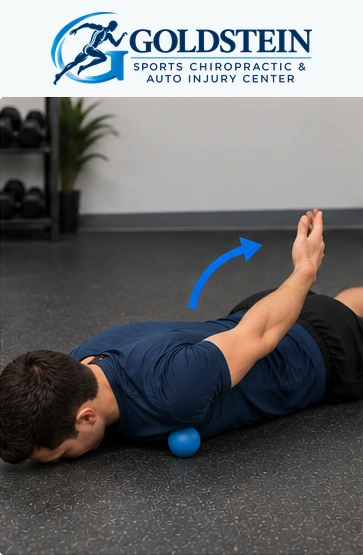
Lie on your back on the floor with a lacrosse ball under the soft-tissue region around the shoulder blade shown during care. Let your body weight provide comfortable pressure.

How to Do It

  1. Maintain comfortable pressure while slowly moving your arm upward, out to the side or overhead within the demonstrated comfortable range. Return with control.
  2. Avoid direct pressure on the spine or bony shoulder-blade prominences.
  3. Release the pressure and repeat on the opposite side.

What You Should Feel

Controlled muscle effort or a gentle stretch, without pain.

Stop or Modify If

Stop for sharp or increasing pain, new numbness, tingling or weakness.
Back to Exercise Menu

Medical Information & Sources

These movement reminders do not diagnose a condition or replace an evaluation, personalized rehabilitation plan or emergency care. Dosage reflects the office’s legacy exercise materials and Dr. Goldstein’s clarifications; it is not a recommendation to complete every movement.

Questions about your exercises?

Questions About an Exercise?

Ask which movements, range and repetitions are right for you. Follow the guidance provided during your care.